
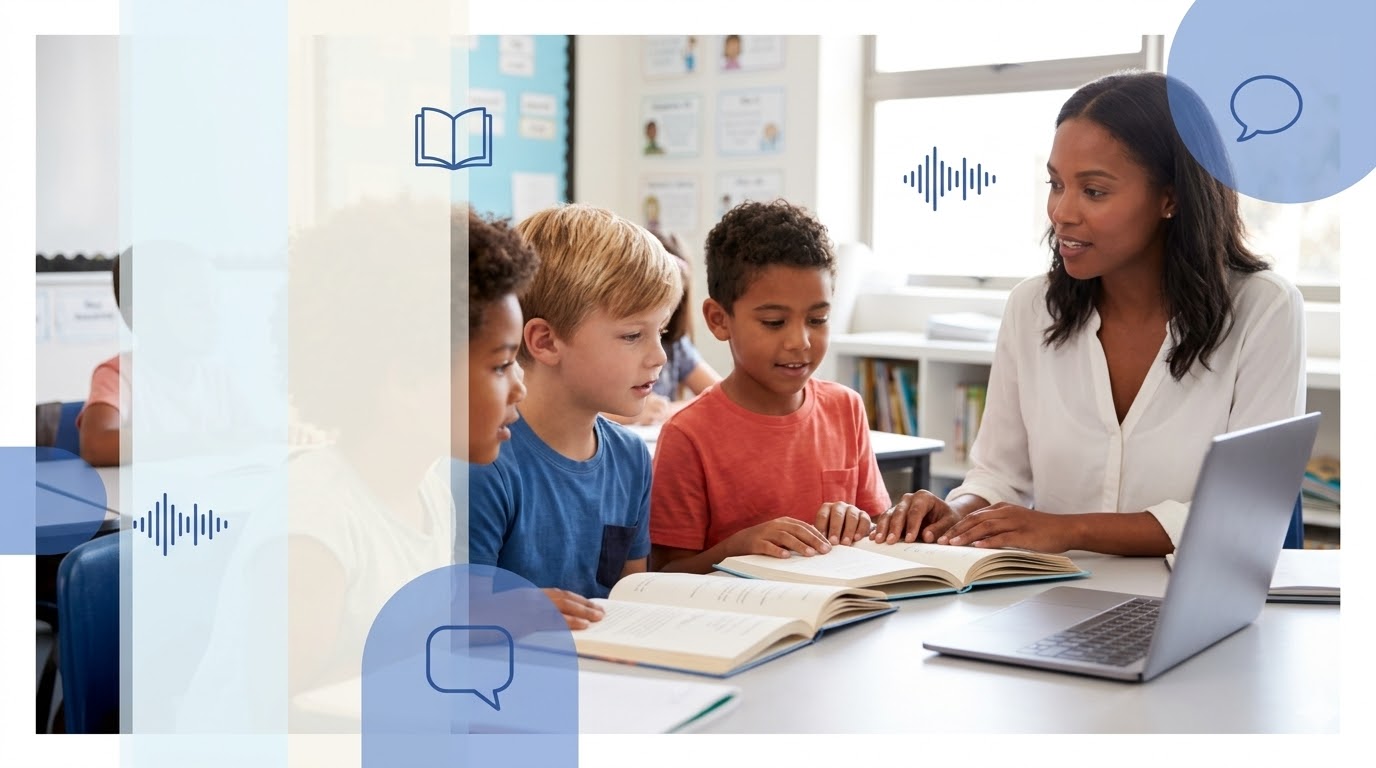
For decades, the dominant approach to supporting struggling students, particularly in reading and literacy, has been the pull-out model. In this traditional setup, students are removed from the general education classroom to receive specialized instruction in small groups or one-on-one sessions. While this model has its benefits, especially for targeted remediation, it also carries significant drawbacks: fragmented instruction, social stigma, lost class time, and a lack of generalization back to the core classroom environment.
As educational models shift toward inclusive practices, schools are increasingly questioning whether pull-out is the most effective or equitable way to meet the diverse needs of students. Teachers are facing growing pressure to close skill gaps within the classroom itself without disrupting the flow of instruction or isolating students from their peers. This is where the value of classroom interventions comes into sharper focus.
But what are intervention strategies when they happen in the classroom setting? And how can they be structured to benefit not just students who are behind, but the entire class?
This article will explore what classroom interventions are, why they’re crucial for today’s inclusive classrooms, and how whole-class strategies and interventions can improve literacy outcomes for all learners, especially those with learning differences, English language learners, and students needing extra support. Whether you’re a classroom teacher, instructional coach, or school leader, the following evidence-based insights and examples will help you bring interventions directly into your teaching practice where they can have the greatest impact.
What Are Intervention Strategies in the Classroom?
At its core, intervention strategies in education are structured actions taken to address specific learning challenges. These strategies are often designed to help students who struggle to meet academic benchmarks, particularly in foundational skills such as reading, writing, and math. While intervention has traditionally been associated with specialized or one-on-one instruction outside the classroom, a growing body of research and practice now supports teaching interventions that occur within the general education environment.
In a classroom setting, intervention strategies are intentional, evidence-based instructional techniques embedded into daily teaching routines. They may include differentiated instruction, targeted small-group work, visual supports, scaffolded questioning, or real-time feedback systems. These strategies are not only reactive (responding to existing struggles) but also proactive, preventing students from falling behind in the first place.
This shift reflects a broader movement away from isolated support models toward inclusive teaching interventions that happen right where students are learning. Rather than pulling students out of class for extra help, educators are now using responsive practices to support students without removing them from their peer group or core instruction. This keeps students more engaged, ensures continuity in learning, and reduces the stigma often associated with remediation.
Classroom interventions are also a critical component of broader school frameworks, such as Multi-Tiered Systems of Support (MTSS) and Response to Intervention (RTI). In these models, classroom-based strategies serve as Tier 1 and Tier 2 interventions, where all students benefit from high-quality, differentiated instruction, and those needing additional support receive targeted help without leaving the classroom. These layered supports create a more equitable learning environment, especially for students with learning differences, English Language Learners, and those at risk of academic failure.
By embedding intervention strategies into everyday teaching, educators not only support struggling students but also strengthen learning outcomes for the entire class.
The Limitations of Pull-Out Models
While pull-out programs have long been a standard intervention method, their effectiveness is increasingly being questioned, especially when measured against long-term outcomes and equity. These programs often aim to provide individualized attention, but the reality is more complex.
One of the most persistent issues with pull-out instruction is the stigma it can create. When students are removed from their peers to receive help, it can unintentionally send the message that they are behind or different. Over time, this can affect self-esteem, motivation, and participation, particularly for students who already struggle with confidence or language barriers. In literacy development, where confidence plays a significant role in oral reading and fluency, this stigma can be particularly detrimental.
Another concern is the loss of instructional time. Students who are pulled out for interventions often miss key lessons, discussions, or collaborative work that are happening in the general classroom. Even if the intervention itself is high quality, it may come at the cost of core instruction, making it harder for students to apply new skills in real academic contexts. This disconnect contributes to the lack of generalization. Students may show progress in isolation but struggle to transfer those gains to everyday classroom tasks or assessments.
Research backs these concerns. According to findings cited in the National Reading Panel Report and echoed in studies supporting MTSS models, students benefit most when intervention is integrated with regular instruction, not separated from it. In contrast, pull-out models often operate as a parallel system, making it a challenge for both teachers and learners to align with classroom goals and pacing.
These limitations are why many educators and literacy leaders are shifting toward embedded, whole-class strategies. Instead of separating intervention from instruction, these approaches integrate targeted support directly into the classroom experience. By doing so, teachers can meet diverse needs while maintaining classroom cohesion, peer relationships, and instructional flow.
Classroom-based interventions are not only more inclusive, they’re often more effective. They enable teachers to respond in real-time, differentiate instruction with intention, and monitor progress without disrupting the learning process. As the demand for equity and evidence-based practice grows, whole-class interventions are gaining momentum as the next evolution in supporting student success.

Benefits of Whole-Class Intervention Strategies
Whole-class classroom interventions are transforming the way educators support diverse learners. By embedding support into the core of instruction, these strategies create learning environments where all students, not just those receiving targeted help, can thrive. Below are three key benefits that explain why whole-class strategies and interventions are gaining traction across classrooms nationwide.
Foster Equity and Reduce Stigma
One of the most compelling reasons to shift toward embedded interventions is the positive impact on educational equity. When support happens within the classroom, students no longer feel singled out or separated from their peers. Instead of being pulled aside, they are included and participate in the same learning experiences, with scaffolds and supports tailored to their needs.
This inclusive approach reduces the stigma often associated with being “pulled out” for extra help. For students who are English Language Learners, have learning differences, or struggle with self-esteem, this matters tremendously. They can grow in confidence while benefiting from supports that feel seamless and normalized.
Increase Instructional Continuity
Whole-class teaching interventions also promote greater continuity in learning. When students remain in the general education classroom, they are more likely to stay connected to the day’s lessons, collaborative discussions, and real-time feedback from their teacher.
This is particularly important for literacy and reading development, where missed instructional time can quickly widen skill gaps. Embedding intervention strategies into the whole-class structure ensures that students get the help they need without missing the foundational instruction that frames those skills.
Instructional continuity also supports teacher planning. Rather than designing entirely separate lessons for intervention groups, educators can integrate tiered supports directly into whole-class instruction, maximizing time and impact.
Promote Peer Modeling and Collaboration
Learning is social. When classroom interventions are delivered in a shared setting, students benefit from watching and working alongside their peers. Stronger readers model fluent reading and vocabulary use, while students who need more support can observe strategies in context.
This kind of peer modeling is especially powerful during reading aloud, group discussions, or shared writing activities. It not only reinforces academic skills but also builds classroom community and collaboration.
Additionally, whole-class intervention strategies make it easier for teachers to structure cooperative learning, pair students strategically, and create an environment where every learner feels like a contributor, not a recipient of remediation.
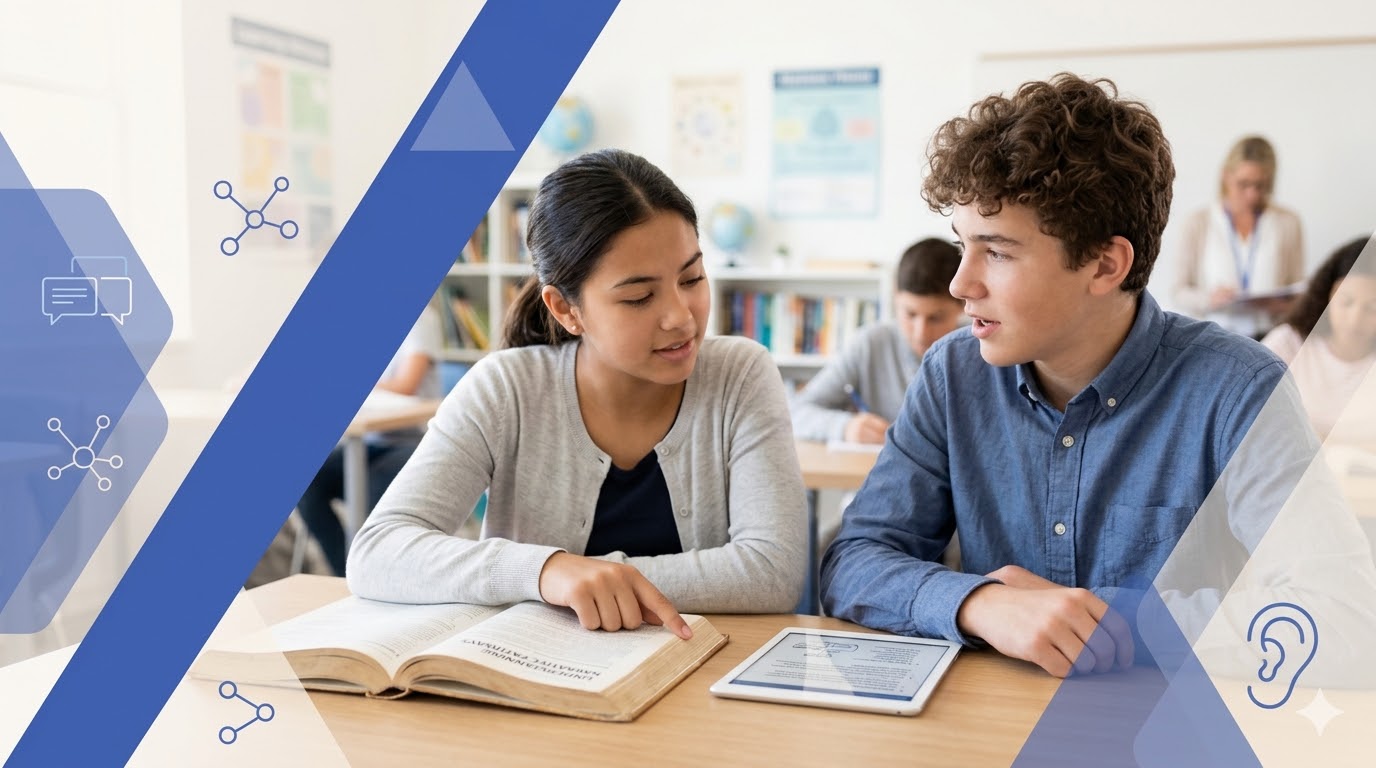
Whole-Class Intervention Strategies That Work
Effective classroom interventions don’t have to take students out of the room. In fact, many of the most impactful strategies can be embedded directly into whole-class instruction. Below are several intervention strategies examples that are evidence-based, easy to implement, and supportive of diverse learners, including students with reading challenges, English Language Learners (ELLs), and those with attention or processing difficulties.
These strategies and interventions promote engagement, language development, fluency, and comprehension without requiring a separate setting or schedule.
Choral Reading for Fluency
What it is: Choral reading involves the whole class reading a passage aloud together, guided by the teacher’s pace and tone.
Why it works: This strategy is especially beneficial for students who struggle with decoding, fluency, or confidence. By reading in unison, all students participate in a safe, non-judgmental environment where they can hear fluent reading modeled in real-time.
Who benefits:
- English Language Learners
- Students with dyslexia
- Readers with anxiety or low oral fluency
Classroom tip: Use predictable, rhythmical texts like poetry, short nonfiction passages, or reader’s theater scripts to make choral reading feel engaging and accessible.
Vocabulary Journals
What it is: Students create personalized journals where they record new vocabulary words, define them in their own words, draw a related image, and use the word in a sentence.
Why it works: Vocabulary journals help students internalize academic language by providing structured opportunities to interact with new words across multiple contexts. They also serve as valuable study tools for review and reinforcement.
Who benefits:
- Students with limited vocabulary exposure
- ELLs building academic language
- Students who need multisensory learning
Classroom tip: Incorporate vocabulary journals into daily routines by assigning 1–2 new words per day based on content-area reading or class discussions.
Think-Pair-Share
What it is: After being presented with a question or prompt, students take a moment to think individually, discuss their ideas with a partner, and then share their responses with the class.
Why it works: This routine encourages active processing, strengthens comprehension, and provides structured practice in oral language. It also helps quieter students develop confidence by allowing them to rehearse their thoughts before speaking to the whole group.
Who benefits:
- ELLs needing conversational scaffolding
- Students dare eveloping comprehension and inferencing skills
- Learners with social anxiety or processing delays
Classroom tip: Use this strategy during read-alouds, after short informational texts, or in response to comprehension questions to boost engagement and critical thinking.
Daily Spiral Review in Literacy
What it is: A brief, consistent practice routine that revisits foundational literacy skills such as phonics patterns, grammar rules, or comprehension strategies each day.
Why it works: Spiraling reinforces retention by revisiting prior learning over time. This reduces the “forgetting curve” and provides students with ongoing exposure to essential skills they may not have mastered initially.
Who benefits:
- Struggling readers who need more repetition
- Students with executive function challenges
- Learners who need to build automaticity
Classroom tip: Start each day with a 5-minute warm-up using whiteboards, digital slides, or journals to review one or two targeted literacy skills from past lessons.

Integrating Technology for Inclusive Interventions
Technology is reshaping the landscape of literacy instruction by making classroom interventions more accessible, adaptive, and inclusive. For educators seeking scalable, evidence-based solutions that reach every learner, especially those who require additional support, digital tools are becoming essential partners in the classroom.
Platforms like Readability stand out for their ability to deliver personalized, real-time instruction aligned with the Science of Reading, while integrating seamlessly into whole-class teaching.
Adaptive Tools That Elevate Whole-Class Instruction
Unlike traditional pull-out programs or standalone apps, Readability functions as a dynamic, AI-powered reading platform designed to support all learners within the general education classroom. It listens as students read aloud, delivering instant feedback on pronunciation, fluency, and comprehension. Because it adapts to each student’s reading level and pace, it serves as a virtual co-teacher one that never misses a cue.
This technology enables personalized and inclusive teaching interventions. Students who need additional support can receive it discreetly, without being pulled away from their peers. Meanwhile, advanced readers are challenged appropriately, ensuring that instruction is always targeted and responsive.
Real-Time Feedback and AI Dashboards Make Data Actionable
One of the most powerful advantages of integrating tools like Readability into classroom interventions is the access to real-time data. The platform continuously tracks reading accuracy, speed, comprehension, and time on task. These metrics are displayed through intuitive dashboards, giving both teachers and parents actionable insights.
For educators, this means they can monitor fluency growth, identify areas of need, and adjust instruction accordingly without relying solely on periodic assessments or subjective observations. For students, real-time corrections and praise provide immediate reinforcement, strengthening motivation and independence.
Aligning Technology with the Science of Reading
Readability’s design is rooted in the five essential components of literacy outlined by the Science of Reading: phonemic awareness, phonics, fluency, vocabulary, and comprehension. The platform supports all five pillars through speech recognition, guided oral reading, and comprehension questioning all delivered through a user-friendly interface that students can navigate independently.
This alignment ensures that teaching interventions delivered via technology are not just convenient, they’re also research-backed and instructionally sound. Students build foundational skills systematically, while experiencing the kind of multimodal engagement proven to support deeper learning.
By blending technology with evidence-based pedagogy, Readability exemplifies how digital tools can transform strategies and interventions from reactive supports into proactive, scalable solutions, making effective literacy instruction possible for every learner, in every classroom.

Measuring Success: What to Look For
Effectively implementing classroom interventions is only half the equation; measuring their impact is just as essential. Without consistent and meaningful data, it becomes challenging to determine which strategies are effective, which students require additional support, and how instruction should be adjusted.
By monitoring key literacy indicators, educators can ensure that their teaching interventions are driving real progress and promoting equitable outcomes. Below are three high-leverage metrics to guide your evaluation process.
Reading Fluency (Words Correct Per Minute)
What to track: Reading fluency refers to the ability to read with speed, accuracy, and proper expression. One of the most reliable ways to measure this is by calculating Words Correct Per Minute (WCPM) during a timed reading passage.
Why it matters: Fluency serves as a bridge between decoding and comprehension. Students who read fluently are more likely to understand what they read, retain information, and stay engaged. Monitoring WCPM growth over time provides a clear snapshot of how well a student is internalizing phonics patterns, sight words, and pacing.
How to use the data:
- Track WCPM weekly or biweekly.
- Look for steady upward trends, especially after implementing new intervention strategies.
- Use results to group students for additional fluency practice or adjust text difficulty.
Comprehension Accuracy
What to track: Comprehension accuracy is measured by how well students understand and retain what they read. This can include verbal responses to questions, written summaries, or performance on comprehension quizzes especially those integrated into tools like Readability.
Why it matters: A student may be fluent but still miss key ideas or struggle with inferencing. Comprehension data helps determine whether interventions are supporting deeper reading not just surface-level decoding.
How to use the data:
- Track accuracy on comprehension questions after shared readings or independent reading sessions.
- Analyze which question types (literal, inferential, vocabulary-in-context) cause the most difficulty.
- Adjust instruction to reinforce comprehension strategies, such as questioning, visualizing, or summarizing.
Vocabulary Acquisition
What to track: Vocabulary acquisition can be assessed through formal quizzes, observation during class discussions, or student-created tools like vocabulary journals and word maps. Key indicators include the number of new words learned, correct usage in context, and ability to define or apply words independently.
Why it matters: Strong vocabulary knowledge is a predictor of reading comprehension and academic success across content areas. For English Language Learners and students with language processing challenges, intentional vocabulary tracking is especially crucial.
How to use the data:
- Set weekly or monthly word acquisition goals.
- Evaluate growth in both expressive (spoken/written) and receptive (understood) vocabulary.
- Integrate targeted vocabulary review into spiral review sessions or warm-ups.
When these three areas fluency, comprehension, and vocabulary are monitored consistently, educators can make data-informed decisions that refine their classroom interventions. Whether using paper-based checklists or AI-powered dashboards, tracking these metrics ensures that teaching interventions are not only implemented but effective.
Conclusion
The landscape of literacy instruction is evolving and so are the tools and approaches used to support it. As we’ve explored throughout this article, effective classroom interventions no longer require pulling students out of their learning environment. In fact, some of the most powerful strategies happen within the classroom, embedded into daily routines, supported by peers, and aligned with high-quality instruction.
From choral reading and vocabulary journals to adaptive technologies like Readability, today’s teaching interventions are more inclusive, measurable, and scalable than ever before. They meet students where they are, promote equity, and foster lasting growth in reading fluency, comprehension, and vocabulary.
For educators and school leaders seeking to improve literacy outcomes, especially for English Language Learners, struggling readers, and students with diverse learning needs, investing in whole-class, research-backed strategies is not just a best practice. It’s a path to lasting impact.
Looking to implement classroom interventions that truly work? Explore how Readability equips your whole class with real-time, evidence-based support backed by AI, grounded in research, and designed for diverse learners.
Empower every reader. Support every teacher. Transform your literacy instruction right from your classroom.
Frequently Asked Questions (FAQ)
What are classroom interventions?
Classroom interventions are instructional strategies and supports implemented directly within the general education classroom to help students meet grade-level expectations. They are designed to be proactive, inclusive, and embedded into daily instruction, supporting all learners, not just those who are struggling.
How are teaching interventions different from pull-out programs?
Teaching interventions occur during regular classroom instruction and are integrated into the learning environment. In contrast, pull-out programs remove students from the classroom for specialized help. While both can be effective, classroom-based interventions promote inclusion, reduce stigma, and maintain instructional continuity.
What are examples of effective classroom intervention strategies?
Some effective intervention strategies examples include:
- Choral reading to build fluency and confidence
- Vocabulary journals for word acquisition
- Think-Pair-Share to enhance comprehension and discussion
- Daily spiral review to reinforce foundational literacy skills
How can I tell if an intervention is working?
You can evaluate the success of an intervention by tracking metrics such as:
- Reading fluency (Words Correct Per Minute)
- Comprehension accuracy
- Vocabulary growth
Using tools like Readability can help automate this tracking with real-time data dashboards.
Do classroom interventions support students with learning differences?
Yes! Inclusive classroom interventions are highly effective for students with dyslexia, ADHD, autism, speech and language delays, and English Language Learners. These strategies are designed to be flexible and responsive to diverse learning profiles.
How does Readability fit into classroom-based interventions?
Readability is an AI-powered reading platform that supports classroom interventions by:
- Listening to students read aloud
- Providing real-time feedback on fluency and pronunciation
- Tracking comprehension and vocabulary
- Aligning with the Science of Reading. It’s designed to function as a whole-class support tool, helping all students grow without requiring them to leave the classroom.
 Español