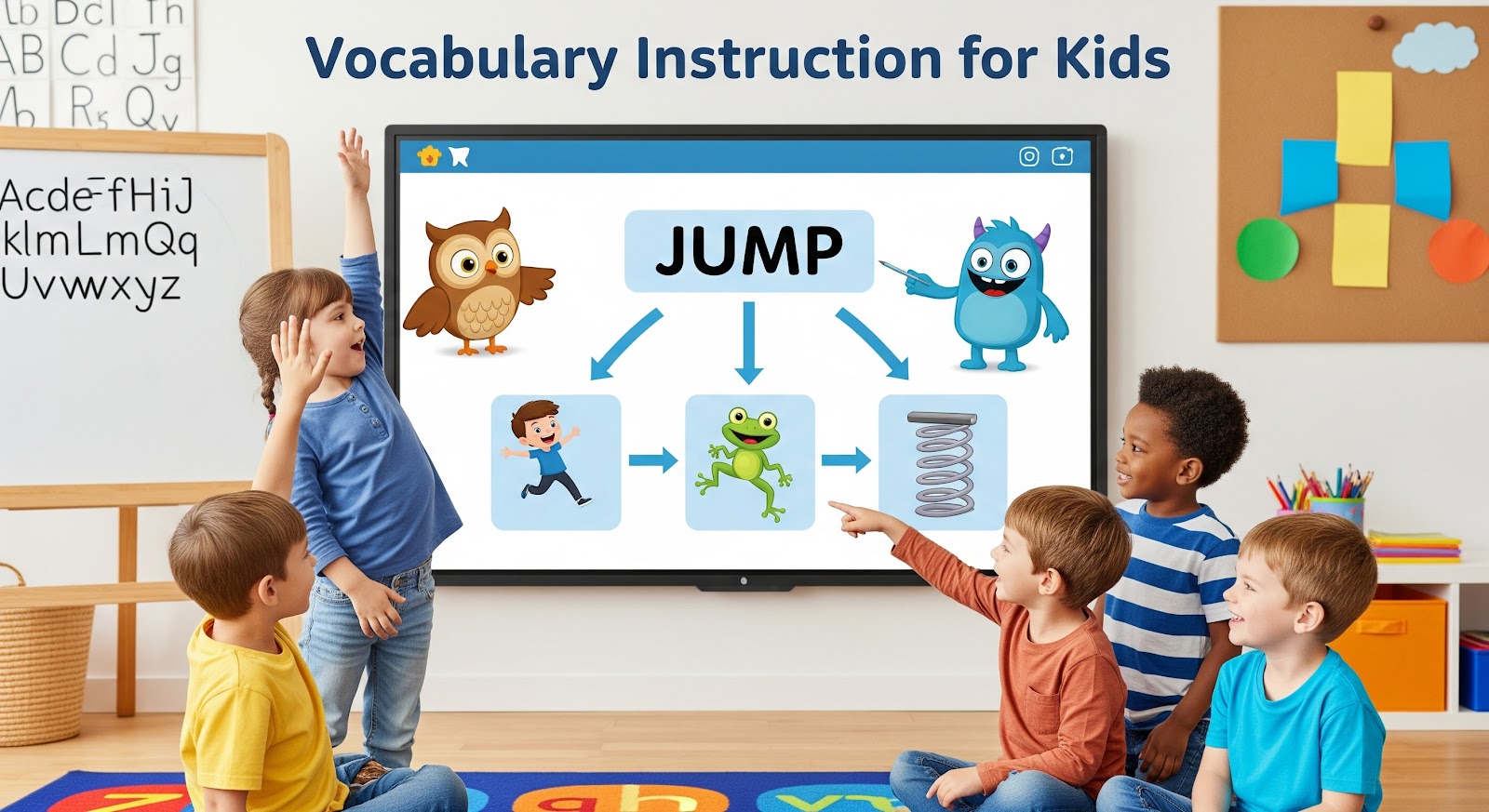
Vocabulary is the key that unlocks reading success. Children who have a strong vocabulary are better equipped to understand what they read, express themselves clearly, and engage with the world around them. In fact, research consistently shows that vocabulary is one of the strongest predictors of reading comprehension and academic achievement.The importance of vocabulary in early literacy cannot be overstated. From kindergarten onward, children are exposed to a wide range of texts, conversations, and classroom instructions. Without a solid foundation in word knowledge, they can quickly fall behind not just in reading, but across all subjects. A limited vocabulary hinders comprehension, while a rich vocabulary fuels curiosity, confidence, and a love of learning.That’s where vocabulary instruction comes in. When vocabulary is taught intentionally and systematically, not left to chance, children gain the tools they need to decode new words, grasp complex ideas, and build connections between concepts. Effective instruction goes beyond memorization; it empowers young readers to understand, use, and retain words in meaningful ways.In the sections that follow, we’ll explore how educators and caregivers can make vocabulary instruction a daily practice, using proven strategies that foster lasting growth. As kids grow their vocabulary, they become stronger, more confident readers.
Why Vocabulary Instruction Matters
Reading is more than decoding letters on a page, it’s about making meaning. Vocabulary plays a central role in this process. When children encounter words they understand, they are more likely to grasp the whole message of a sentence, paragraph, or story. The stronger their vocabulary, the more fluidly they can make sense of what they read.A robust vocabulary also helps students transition from learning to read to reading to learn. Once children reach third grade and beyond, they are expected to extract meaning, analyze texts, and synthesize information, all tasks that require a strong command of language. Without word knowledge, comprehension suffers, and so does academic confidence.
The Cost of a Limited Vocabulary
Children with a limited vocabulary often struggle to keep up with classroom instruction and academic content. They may misinterpret texts, skip over unfamiliar words, or disengage from reading altogether. These challenges can compound over time, leading to gaps in learning across all subjects, not just language arts.Studies show that by the time students enter school, there are already vast differences in word exposure. Children from language-rich environments may know up to 30 million more words than their peers. Without targeted vocab development, those gaps can widen, affecting not only reading proficiency but also writing, speaking, and test performance.
The Long-Term Benefits of Early Vocab Development
Investing in vocabulary instruction early pays lifelong dividends. Children who receive consistent, meaningful exposure to new words develop stronger language networks in the brain. They become better communicators, stronger critical thinkers, and more adaptable learners.Early vocabulary development is also closely tied to future success. It supports literacy achievement in upper grades, builds background knowledge across subjects, and empowers children to engage deeply with content. In short, teaching vocabulary isn’t just about words it’s about equipping kids for the demands of school and life.Whether you're a parent, teacher, or reading specialist, understanding the importance of vocabulary gives you a powerful starting point. Next, we’ll look at how to turn that understanding into action with effective and engaging vocabulary instruction strategies.
Effective Vocabulary Teaching Strategies That Work
Vocabulary growth doesn’t happen by accident; it's built through intentional, engaging, and research-based methods. When children are given opportunities to interact with words in meaningful ways, they don’t just remember them, they own them.Let’s explore proven strategies that work across learning environments and age groups. These practices bring vocabulary instruction to life and support every type of learner.
Use Read-Alouds, Visual Aids, and Student-Friendly Definitions
One powerful strategy to teach vocabulary is to connect new words to rich language experiences. Read-alouds allow children to hear sophisticated vocabulary in context, modeled with expression and clarity. Before or during a reading session, pause to highlight key words, provide brief explanations, and invite discussion.Pairing new vocabulary with visual aids like illustrations, photos, or physical gestures reinforces meaning and engages visual learners. These cues help anchor the word in memory.Offering student-friendly definitions is just as important. Instead of relying on textbook definitions, use simple, relatable explanations that make sense to a child’s world. Then, let them restate the word in their own terms or draw what it means.These layered strategies build comprehension and confidence, making them a cornerstone of effective vocabulary teaching strategies.
Integrate Semantic Mapping, Word Games, and Repeated Exposure
Learning words in isolation rarely leads to mastery. That’s why interactive vocabulary learning strategies are so effective; they provide repeated, meaningful exposure in fun and engaging ways.
- Semantic mapping helps students visualize how a word connects to related terms, categories, or examples. This builds depth and breadth of word knowledge.
- Word games like charades, memory, or bingo make vocabulary practice active and enjoyable.
- Multiple exposures to the same word across books, discussions, writing, and play are essential. Research shows that children often need to encounter a new word 6–12 times in different contexts before it becomes part of their vocabulary.
These techniques not only improve retention but also help children transfer new words into their own speaking and writing.
Use Interactive and Multisensory Techniques
Every child learns differently, which is why multisensory vocabulary instruction is so effective. Combining sight, sound, movement, and touch helps engage multiple areas of the brain and supports deeper learning.Here are a few multisensory ideas:
- Have students clap out syllables or tap out sounds in multisyllabic words.
- Let them draw pictures to represent word meanings.
- Use movement, such as acting out verbs or using hand motions, for definitions.
- Incorporate technology for interactive word-building activities.
These approaches are especially helpful for students with learning differences, such as dyslexia or ADHD, but they benefit all learners. They make vocabulary instruction dynamic, memorable, and inclusive.When learners are actively involved, vocabulary grows stronger and so does overall literacy.
Putting It All Together
There’s no one-size-fits-all strategy to teach vocabulary, but the best instruction always includes variety, consistency, and connection. By blending read-alouds, games, visuals, and repeated meaningful use, educators and caregivers can turn vocabulary learning into a habit that sticks.As we move forward, we’ll explore how to adapt these strategies across age groups and learning levels to ensure every child gets what they need from vocabulary instruction.
Vocabulary Development Strategies Across Ages
Children develop language at different paces and in different ways, which means vocabulary instruction should never be one-size-fits-all. The most effective vocabulary development strategies are responsive to a child’s age, stage, and individual learning needs. By tailoring our approach, we give every child a better chance at success, whether they’re just starting to speak in full sentences or reading chapter books independently.
Meeting Vocabulary Needs in K–2 Learners
For students in kindergarten through second grade, vocab development is closely tied to oral language and play-based learning. At this stage, children are still building the foundational skills of phonemic awareness and decoding, so vocabulary instruction should be visual, hands-on, and embedded in meaningful conversations.
- Use songs, rhymes, and picture books to expose children to new words naturally.
- Incorporate vocabulary into routines like naming objects, labeling feelings, or describing actions.
- Reinforce words through repetition and storytelling, helping students connect meaning to real-world experiences.
These early years are also a prime time to build Tier 1 and Tier 2 vocabulary, common and high-utility words that will support reading comprehension as students progress.
Expanding Vocabulary in Grades 3–5
By upper elementary, students are expected to understand more complex texts and academic language. That means vocabulary instruction should become more strategic and intentional.
- Focus on Tier 2 words that students will encounter across subjects, like analyze, predict, or consequence.
- Encourage independent reading and teach strategies for figuring out word meanings using context clues, word parts, and reference tools.
- Introduce content-area (Tier 3) vocabulary during science, social studies, and math instruction, using visuals and discussions to support understanding.
At this stage, vocabulary development strategies should help students not just learn words, but also apply them in writing, discussion, and deeper comprehension.
The Role of Scaffolded Instruction in Vocabulary Growth
Scaffolded instruction is essential for all learners, but especially for those developing vocabulary. Scaffolding means providing the right level of support at the right time introducing words gradually, modeling their use, and giving students repeated opportunities to practice.
- Pre-teach key vocabulary before reading a new text.
- Use sentence frames or word banks to help students incorporate new words into writing.
- Check for understanding frequently, and revisit words over time to strengthen retention.
Scaffolding builds independence. As support is gradually reduced, students gain the confidence and tools they need to tackle unfamiliar words on their own.
Supporting English Language Learners and Students with Learning Differences
Effective vocab development must also address the diverse needs of English Language Learners (ELLs), students with dyslexia, ADHD, and other learning differences. These learners benefit most from explicit, structured vocabulary instruction combined with plenty of visual, auditory, and kinesthetic support.
- For ELLs, focus on academic language and oral practice. Pair visuals with vocabulary, and encourage speaking through structured activities like partner talk or word games.
- For students with learning differences, break words into parts, use repetition generously, and incorporate movement or tactile learning tools.
- Leverage technology, audiobooks, and speech recognition tools to provide alternative pathways to vocabulary mastery.
Inclusive and differentiated vocabulary instruction ensures that all children, regardless of background or learning profile, can build the language skills they need to thrive.
Why Developmental Appropriateness Matters
Vocabulary isn’t just about learning words; it’s about using them to think, connect, and express. When we choose vocabulary development strategies that align with a child’s age, ability, and experience, we create opportunities for deeper learning and lasting success.Next, we’ll dive into how to bring all of this together through effective, flexible lesson planning that keeps vocabulary instruction fresh, fun, and impactful.
Turning Strategies into Daily Success
At every stage of a child’s reading journey, vocabulary instruction plays a critical role. It’s not just about learning new words; it’s about unlocking meaning, building comprehension, and giving students the language they need to express themselves with clarity and confidence.When children are exposed to rich, intentional vocabulary instruction through read-alouds, discussion, play, and writing, they don’t just improve their reading; they grow into stronger thinkers and learners. From kindergarten through upper elementary, vocabulary development lays the groundwork for academic success across all subjects.The good news? Teaching vocabulary doesn’t have to be complicated. With consistent daily habits like mini-lessons, word journals, and meaningful conversations, parents and educators can build a language-rich environment that supports every learner, every day.
Ready to Make Vocabulary Instruction Easier and More Effective?
If you're looking for a tool that brings these strategies to life with innovative technology, Readability can help. Readability is an AI-powered reading platform that provides real-time feedback, comprehension checks, and personalized reading support. It’s designed to accelerate vocabulary growth and fluency, turning daily reading into real, measurable progress.Try Readability today and give your child the confidence to read, learn, and thrive.