
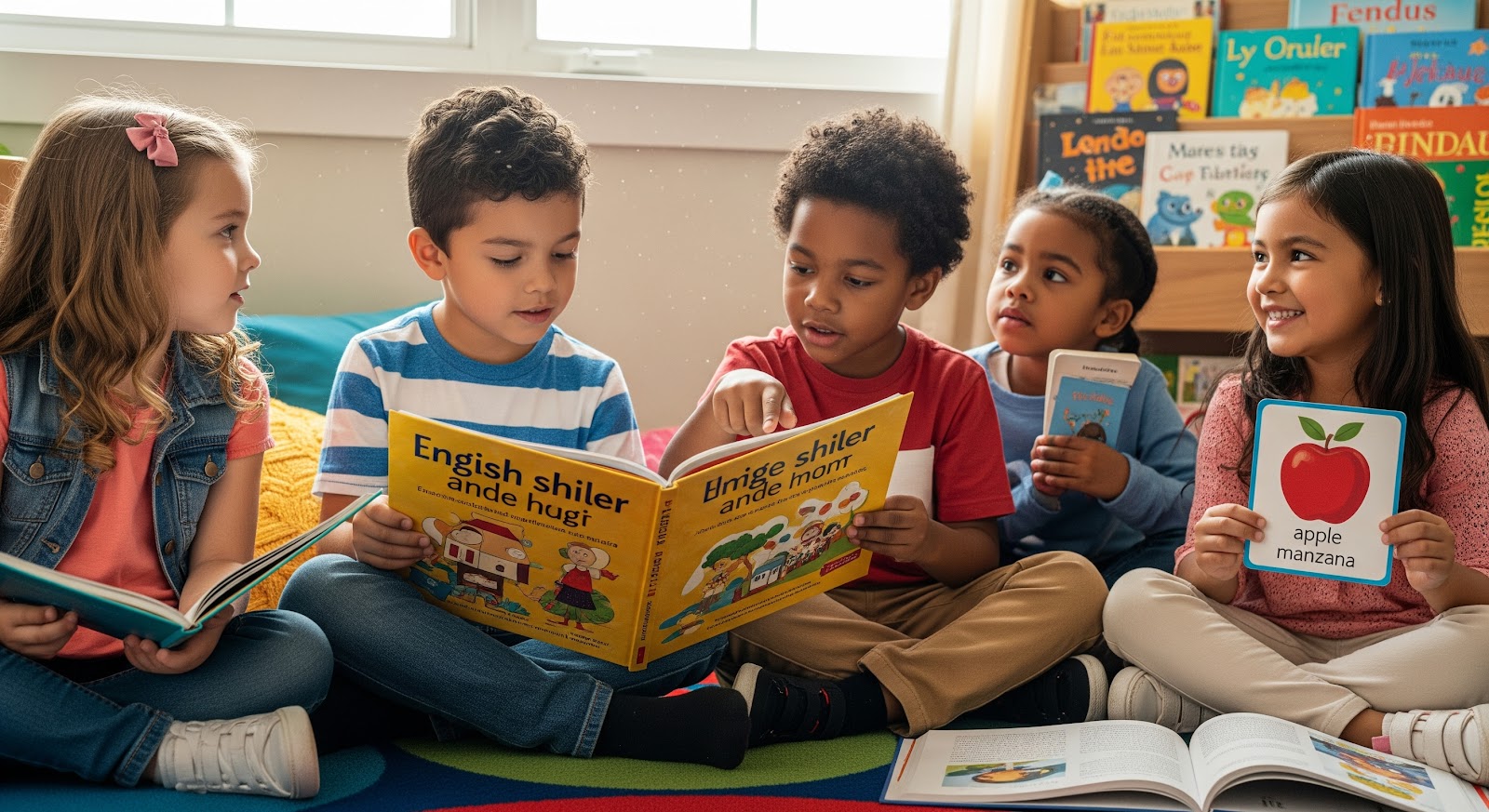
Only 14% of English Language Learners (ELLs) achieve reading proficiency by 4th grade. That’s a staggering statistic, but unfortunately, it’s true. According to the National Center for Education Statistics, a vast majority of ELL students in U.S. public schools struggle to reach grade-level reading benchmarks, putting them at a significant disadvantage not only in literacy but across all academic subjects.
They are not only learning to read, they are learning to read in a second language. This means they must simultaneously build decoding skills, expand their vocabulary, and master the nuances of English syntax and pronunciation. Many also face added pressure from standardized testing, classroom participation, and the need to “catch up” with native English-speaking peers. For these students, reading isn’t just an academic skill, it’s a bridge to confidence, belonging, and opportunity.
While the market is full of reading apps, few are designed specifically to meet the needs of bilingual or multilingual learners. Most prioritize silent reading, offer minimal feedback, or focus heavily on assessment without delivering ongoing instruction. What bilingual readers need is targeted, research-backed support that adapts to their pace, provides real-time guidance, and helps them grow both fluently and confidently.
Why Bilingual Readers Need Specialized Support
Cognitive and Academic Challenges of Bilingualism
Bilingualism is a powerful asset, but for students learning to read in their second language, it also introduces complex cognitive demands. Bilingual readers must process sounds, words, and sentence structures that may not exist in their native language. This can impact phonemic awareness, decoding, and overall reading fluency. They often have to work harder to make sense of unfamiliar vocabulary and grammar, all while learning core academic content in English.
Additionally, bilingual students may struggle with reduced exposure to English outside the classroom, especially if their home language is not English. This creates a disconnect between their oral language development and the literacy expectations placed on them in school. Without intentional support, this gap can widen over time, affecting performance in every subject, not just reading.
Gaps in Traditional Reading Tools and Instruction
Traditional reading instruction, particularly in digital apps, is often built with monolingual learners in mind. These tools may assume a foundational understanding of English phonics or overlook the importance of pronunciation modeling. They may rely heavily on silent reading or written comprehension questions, which can disadvantage bilingual students still developing oral fluency.
Moreover, many platforms prioritize assessment over instruction, offering data without the guided, adaptive support students need to grow. Bilingual readers benefit most from structured, scaffolded practice with immediate feedback, features that are too often missing in general reading apps.
The Role of Language Transfer, Vocabulary Acquisition, and Pronunciation Practice
One of the most significant factors in bilingual reading development is language transfer, the way skills from a student’s first language influence their ability to learn a second language. While some aspects transfer positively (e.g., recognizing cognates or shared phonics patterns), others create confusion. For example, Spanish-speaking students may mispronounce English vowel sounds due to phonemic differences between the two languages.
To succeed, bilingual readers need explicit instruction in vocabulary acquisition, including word meaning, context usage, and syntax. Repeated exposure to academic vocabulary, synonyms, and definitions supports reading comprehension and expressive language development.
Equally important is pronunciation practice. When students are expected to read aloud but aren’t corrected in real-time, they may form incorrect speech patterns that persist. Readability addresses this by providing instant, AI-powered feedback on pronunciation, helping students learn to speak clearly and confidently, crucial for both fluency and classroom participation.
Key Features to Look for in Apps Supporting Bilingual Readers
Not all reading apps are designed with bilingual learners in mind. To truly support students who are navigating two (or more) languages, a literacy tool must do more than offer books, it must provide dynamic, research-based support that builds fluency, comprehension, and confidence. Here are the key features to prioritize when choosing an app for bilingual readers:
1. Real-Time Pronunciation Feedback
One of the most critical challenges for bilingual readers is mastering the sounds of the English language. Many English phonemes don’t exist in a learner’s first language, making pronunciation especially difficult. An effective app should listen as the child reads aloud and provide immediate feedback on mispronounced words.
Readability, for example, uses AI-driven speech recognition to detect errors in real time and gently prompt students to self-correct, building stronger phonemic awareness and reducing the chance of fossilized speech errors.
2. Adaptive Learning Paths
Bilingual learners vary widely in their English proficiency. A one-size-fits-all reading level simply doesn’t work. Look for apps that offer adaptive learning paths, customized reading experiences that adjust based on each student’s fluency, comprehension, and vocabulary growth.
Readability tracks fluency (measured in words correct per minute), comprehension accuracy, and reading time, then automatically adjusts the difficulty and content to match the learner’s current level. This ensures ongoing challenge without overwhelming the student.
3. Vocabulary Support with Definitions & Context
Bilingual readers often lack the background knowledge or exposure to academic English vocabulary. A strong reading app should provide in-text vocabulary support, including:
- Definitions in kid-friendly language
- Synonyms or word families
- Visual aids or contextual examples
This type of embedded support deepens understanding, builds word banks, and boosts retention, critical for both ELL students and native speakers from low-literacy households.
4. Bilingual or Multilingual Content Access
For emerging bilinguals or those with limited English proficiency, having access to bilingual books or side-by-side translations can make a major difference. It helps bridge the gap between home and school language, supports comprehension, and encourages independent reading.
While Readability offers leveled English texts, its design supports multilingual learners by focusing on oral fluency and comprehension in English, skills that can transfer back into academic performance across subjects.
5. Speech Recognition for Accents
Accent variation is natural among bilingual learners, especially those new to English. Many voice-based tools struggle to understand these speech patterns, frustrating students and giving inaccurate feedback.
Apps like Readability use accent-inclusive AI, trained on diverse voices, to recognize a range of English pronunciations, including regional accents and non-native speech. This makes reading aloud a more affirming, less anxiety-inducing experience for ELLs.
6. Comprehension Checks in Oral Format
Many bilingual readers struggle more with writing than speaking. When comprehension assessments are purely written, it may mask what a student actually understands.
An ideal app should offer oral comprehension checks, where students can speak their answers aloud. This supports verbal language development, reduces writing anxiety, and gives a more accurate picture of the student’s understanding. Readability does this by asking verbal comprehension questions after each story, with AI analyzing the student’s spoken responses.
7. Progress Dashboards for Parents and Teachers
Bilingual students often receive additional support at home and school, making communication between parents and educators essential. A strong literacy app should include clear, easy-to-use dashboards that show:
- Books read
- Time spent reading
- Words read per minute (WCPM)
- Comprehension scores
- Vocabulary growth
Readability’s dashboard makes it easy for parents to track daily progress and for teachers to identify trends and intervene early, ensuring a truly collaborative literacy journey.

Overview: Top Apps for Supporting Bilingual Readers
There are hundreds of literacy apps on the market, but only a few are genuinely equipped to support the unique needs of bilingual readers. The best tools combine evidence-based instructional strategies with intuitive technology, while offering flexibility for home or classroom use. Below is a neutral, research-based summary of four leading platforms, including how they support (or fall short in supporting) English Language Learners (ELLs) and bilingual students.
A. Readability
Readability is an AI-powered reading tutor designed specifically to help diverse learners, including bilingual students, ELLs, and those with dyslexia or ADHD, build fluency, vocabulary, and comprehension through daily, structured reading.
Key Strengths:
- Real-Time Feedback on Pronunciation and Fluency: Readability listens as children read aloud, correcting mispronunciations and measuring fluency (words correct per minute) with instant feedback. This supports bilingual learners in refining their spoken English, a critical step in developing reading fluency.
- Oral Comprehension Support: Instead of relying on written quizzes, Readability asks students verbal comprehension questions, which they answer aloud. This reduces the burden on written language and supports oral language development, especially useful for bilingual students who are stronger speakers than writers.
- Grounded in the Science of Reading: The app aligns with all five pillars of literacy, phonemic awareness, phonics, fluency, vocabulary, and comprehension, offering a systematic, multisensory approach backed by research.
- Proven Results: In a 2023 data study, 74% of students showed significant fluency improvement, and on average, each student read 138 books per year, a pace far beyond that of most struggling readers.
Ideal For:
Parents, schools, and districts looking for an instruction-first reading app that provides personalized, daily practice with measurable progress tracking.
B. Amira Learning
Amira Learning is a well-known assessment-first platform that focuses on automating oral reading fluency tests and providing data analytics for teachers.
Key Features:
- Automated Reading Assessments: Students read aloud while Amira listens, records errors, and generates a fluency score, typically used for benchmarking or RTI (Response to Intervention) tracking.
- Data-Driven Progress Reports: Designed with educators in mind, the platform provides teacher dashboards and reporting tools that align with classroom goals.
- Some Embedded Coaching: While Amira does offer brief corrective feedback, it is not structured as an instructional tool. Most reading sessions are evaluation-focused rather than practice-based.
Limitations for Bilingual Readers:
- Limited Real-Time Scaffolding: Amira is built for screening, not sustained instruction. Bilingual learners who need daily guidance, pronunciation support, or vocabulary development may find it insufficient for independent learning.
C. Homer
Homer is a literacy app geared toward younger children and early learners, with a strong emphasis on phonics, storytelling, and vocabulary building.
Key Features:
- Engaging Early Literacy Content: Homer uses a library of interactive stories and games to teach basic reading and listening skills.
- Phonics and Vocabulary Focus: Lessons introduce letters, sounds, and early sight words through colorful, play-based activities.
Limitations for Bilingual Readers:
- Limited Real-Time Feedback: Homer does not listen to children read or provide spoken feedback on pronunciation or fluency, which is a major gap for learners developing oral English skills.
- Static Pathways: The learning journey is more linear and less personalized based on a student’s actual reading aloud performance.
D. Epic!
Epic! is a digital reading library for kids, offering access to thousands of eBooks, audiobooks, and “Read-To-Me” titles.
Key Features:
- Huge Library of Children’s Books: Students can choose from 40,000+ titles, including popular fiction, nonfiction, and bilingual books.
- Read-Aloud Mode: Many books come with narration, which can support listening comprehension and model fluent reading.
Limitations for Bilingual Readers:
- Lacks Instructional Support: Epic! is not a tutoring tool. It doesn’t assess fluency, provide pronunciation feedback, or offer adaptive scaffolding for struggling readers.
- Limited Insight for Educators or Parents: There are few built-in metrics for tracking oral reading progress, comprehension accuracy, or reading habits over time.
How Readability Stands Out
While many literacy apps offer helpful resources, Readability distinguishes itself by addressing the specific, multifaceted needs of bilingual readers. Its design integrates the latest in AI technology, cognitive learning theory, and the Science of Reading to offer daily, real-time instruction, not just passive reading. Below, we break down the key differentiators that make Readability a standout solution for English Language Learners (ELLs), dual-language students, and bilingual families.
A. Real-Time Speech Feedback for Bilingual Readers
One of the most pressing challenges bilingual readers face is pronunciation and fluency development in English, a language filled with irregular spelling patterns and sounds not found in many other languages. Readability addresses this directly with real-time speech recognition technology that listens to the student as they read aloud and provides immediate feedback.
Even more importantly for bilingual learners, the AI is designed to recognize and respond to a variety of accents, ensuring students aren’t penalized or misunderstood due to regional speech differences or second-language interference. This accent-inclusive design builds confidence and reduces the anxiety many ELL students feel when speaking English aloud.
B. Built-In Comprehension Assessments (Verbal)
Unlike many tools that rely solely on multiple-choice or written quizzes, Readability offers spoken comprehension assessments. After reading a story, students are asked comprehension questions orally, and they respond using their own voice.
This format:
- Encourages oral language development
- Reduces dependence on writing skills
- Provides more authentic insight into what the student truly understands
For bilingual readers, especially those who may be more fluent in spoken English than written, this approach ensures their comprehension is accurately assessed while also improving verbal expression and academic vocabulary use.
C. Adaptive, Personalized Reading Paths
One of Readability’s most powerful features is its adaptive learning engine, which tailors reading content to each child’s skill level. As students progress, the app automatically adjusts:
- Text complexity
- Vocabulary
- Fluency goals
- Comprehension difficulty
This ensures bilingual students are neither bored nor overwhelmed, and that their reading journey evolves alongside their growth. Whether a student starts below grade level or above, Readability ensures each session offers the right balance of challenge and support, promoting steady fluency and comprehension gains.
D. Inclusive Design for ELL, Dyslexia, ADHD, and Autism
Bilingual learners are often part of overlapping groups, many may also have learning differences like dyslexia, ADHD, or autism. Readability is intentionally built to support diverse learners through:
- Scaffolded instruction that gradually increases complexity
- Repetition and re-reading to strengthen retention
- Immediate, non-judgmental feedback that encourages rather than penalizes mistakes
- Simple, user-friendly design that reduces cognitive overload
Because of this inclusive structure, Readability is not just a reading app, it functions as a personalized reading coach, meeting learners where they are and helping them advance confidently, no matter their starting point.
E. Parental and Educator Dashboards
Supporting bilingual readers requires strong home-school collaboration. Readability makes this easy with robust dashboards for both parents and teachers, tracking:
- Fluency (Words Correct Per Minute)
- Books completed
- Time spent reading
- Accuracy
- Comprehension scores
This transparency helps adults:
- Monitor growth over time
- Identify areas of strength or concern
- Celebrate milestones to reinforce motivation
As one teacher noted in the Readability white paper:
“I can see more growth in the students who are using it consistently than the students who are not… Readability has leveled the playing field for my students.”
Readability doesn’t just teach kids to read, it provides bilingual learners with a complete ecosystem for literacy success, grounded in best practices and powered by intelligent feedback, personalization, and support.
Supporting bilingual readers requires more than access to books, it requires intentional, research-backed strategies that foster both language development and literacy growth. While many reading apps offer basic support, only a few rise to meet the unique cognitive, linguistic, and emotional needs of bilingual learners.
Among them, Readability stands out as the most comprehensive and inclusive platform.
It goes beyond passive reading or standard assessment by offering:
- Real-time pronunciation feedback that helps bilingual students speak English with clarity and confidence
- Oral comprehension assessments that build academic vocabulary and verbal fluency
- Adaptive learning pathways that evolve with the reader, providing just the right level of challenge
- Inclusive design that supports ELLs, students with dyslexia, ADHD, autism, and other learning differences
- Data-rich dashboards that bring parents and teachers into the learning journey through clear, actionable insights
With proven results, 74% of users showing fluency gains and students reading an average of 138 books per year, Readability doesn’t just help children read more. It helps them read better, speak with confidence, and develop a lasting love of learning.
Ready to see the difference?
Help your bilingual learner read with confidence and joy. Try Readability free and experience what personalized, AI-powered literacy support can do for your child or students. Start your free trial today.
 Español