10 Best Reading Apps for Kids
With so many options available, finding the right app comes down to what your child is learning and the type of practice they need. Some kids reading apps focus on foundational skills like phonics, while others provide reading-aloud practice, comprehension activities, or access to digital books.
Here are 10 reading apps for kids worth exploring, starting with an option designed to provide personalized reading practice and support as your child reads aloud.
1. Readability Tutor — Personalized Reading Practice
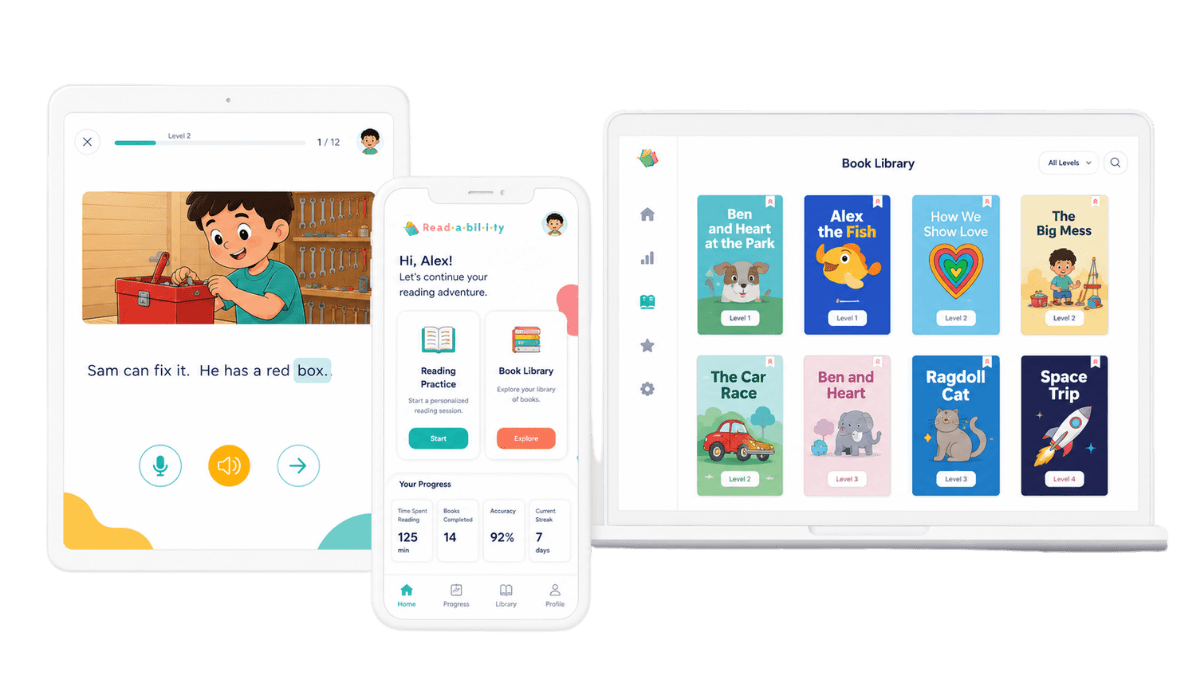
Readability Tutor gives your child personalized reading practice with an AI-powered tutor that listens as they read aloud. When your child has trouble with a word, Readability Tutor provides real-time pronunciation support so they can keep reading rather than getting stuck.
The app also helps your child build vocabulary and comprehension through interactive questions and support while providing access to a large library of leveled books. Reading levels adapt as your child develops their skills, and a parent dashboard lets you follow their reading activity and progress over time.
- Best for: Personalized reading-aloud, fluency, vocabulary, and comprehension practice
- Grades: K–6
- Standout features: Real-time reading feedback, adaptive reading levels, comprehension questions, vocabulary support, leveled book library, and parent progress tracking.
Give your child reading support that meets them where they are:
Try 30 Days Free
2. Khan Academy Kids — Early Reading and Phonics Practice
Khan Academy Kids offers free reading and language arts activities for children ages 2–8. Its literacy content covers early skills such as phonemic awareness, letter recognition, phonics and decoding before progressing into vocabulary, comprehension, writing, and spelling.
The app also includes a library of fiction, nonfiction, early readers, and decodable texts. Children can listen to narration with word highlighting, while personalized activities adjust to their level. Because Khan Academy Kids covers subjects beyond reading, it can be a good option for families looking for broader early-learning practice rather than a reading-only program.
- Best for: Early readers who need foundational literacy practice
- Grades: 2–8
- Cost: Free
- Standout features: Phonics and decoding activities, vocabulary and comprehension practice, books, read-to-me audio, word highlighting, and personalized activities.
3. Duolingo ABC — Early Literacy Through Short, Interactive Lessons
Duolingo ABC is a free literacy app designed to help young children develop early reading skills through short, interactive lessons and stories. Activities cover foundational skills such as phonemic awareness, phonics, decoding, sight words, vocabulary, fluency, and comprehension.
Lessons use narration, animation, and interactive activities to keep practice approachable for beginning readers. Its learning path progresses through literacy concepts, making it a useful option for children who are still building the foundations they need to read independently.
- Best for: Beginning readers building foundational literacy skills
- Grades: 3–8
- Cost: Free
- Standout features: Phonemic awareness, phonics, decoding, sight words, interactive stories, vocabulary, and comprehension practice.
4. Epic! — Digital Library for Kids
Epic! gives children access to a large digital library with more than 40,000 books, including ebooks, Read-To-Me books, and audiobooks. Families can explore books by age, interests, and reading level, making it especially useful for children who benefit from having plenty of choices.
Rather than focusing primarily on teaching foundational reading skills, Epic! is designed to give children greater access to books and encourage regular independent reading.
- Best for: Exploring books and independent reading
- Grades: Up to 12
- Cost: Free and paid options available
- Standout features: Large digital library, Read-To-Me books, audiobooks, and personalized book discovery.
5. Teach Your Monster to Read — Phonics Through Play
Teach Your Monster to Read turns early reading practice into an interactive game where children create a monster and guide it through reading adventures. Activities progress from recognizing letter sounds to blending sounds, reading words and sentences, and developing early comprehension skills.
The game-based format makes it a useful option for beginning readers who could use extra practice with phonics and decoding while staying actively engaged.
- Best for: Beginning readers practicing phonics and decoding
- Level: Early/beginning readers
- Cost: Free to play on the website; app pricing varies
- Standout features: Letter-sound practice, blending and segmenting, sight words, sentences, comprehension activities, and targeted practice.
6. Starfall — Phonics and Early Reading Skills
Starfall offers a step-by-step learn-to-read program that moves children from learning the alphabet into phonics, fluency, and comprehension. Early activities introduce letter-sound relationships, short and long vowels, sight words, and blending before children progress to fiction and nonfiction reading.
The combination of books, games, songs, and interactive activities makes Starfall particularly useful for beginning readers who benefit from practicing the same foundational skills in different ways.
- Best for: Phonics and early reading development
- Grades: Pre-K–5, with its Learn-to-Read sequence focused on beginning readers
- Cost: Core Learn-to-Read content is free; membership unlocks additional content
- Standout features: Alphabet practice, phonics, vowel patterns, sight words, interactive books, fluency, and comprehension activities.
7. Vooks — Animated Read-Along Stories
Vooks turns children's books into animated read-along stories with narration, highlighted text, music, and gentle animation. Children can follow the words as they're spoken, combining the experience of storytime with visual exposure to written text.
Vooks is less focused on direct phonics instruction or independent oral reading practice and more focused on engaging children with stories. Its library also includes ebooks and audiobooks, giving families several ways to enjoy books together or independently.
- Best for: Read-along storytime and engaging reluctant readers with books
- Ages: Primarily younger readers, with content extending to older elementary children
- Cost: Paid subscription with a free trial
- Standout features: Animated storybooks, read-aloud narration, highlighted text, ebooks, audiobooks, offline viewing, and ad-free content.
8. Raz-Kids — Leveled Reading Practice
Raz-Kids gives children access to hundreds of interactive ebooks across 29 reading levels. Children can listen to books, read independently, record themselves reading aloud, and complete quizzes that check their understanding of what they read.
As children complete books and comprehension quizzes, they can progress to increasingly challenging reading levels. This makes Raz-Kids useful for structured, leveled practice at school or at home.
- Best for: Leveled reading and comprehension practice
- Grades: K–5
- Cost: Paid subscription
- Standout features: 29 reading levels, 800+ ebooks, read-aloud audio, oral reading recordings, comprehension quizzes, and progress tracking.
9. Sora — Ebooks and Audiobooks Through School
Sora is a student reading app from OverDrive that lets children borrow ebooks, audiobooks, magazines, and other digital reading materials available through participating schools. Children can read or listen in the app, look up unfamiliar words, take notes, highlight passages, and track their reading activity.
Because access is connected to a child's school, the selection will depend on what their school or district offers. Sora is particularly useful for children who want more books to read independently rather than direct reading instruction.
- Best for: Independent reading and borrowing digital books through school
- Grades: K–6
- Cost: Free for students through participating schools
- Standout features: Ebooks, audiobooks, read-alongs, vocabulary definitions, notes and highlights, reading goals, achievements, and accessibility options.
10. PBS KIDS Games — Literacy Practice Through Familiar Characters
PBS KIDS offers free educational games featuring characters from shows children may already know, including Super Why!, Sesame Street, and more. Literacy-focused games give younger children opportunities to practice skills such as letter recognition, phonics, spelling, vocabulary, reading, and storytelling through interactive play.
Because the app covers many learning areas beyond literacy, it works well as a supplemental option for families looking for short, engaging activities rather than a dedicated reading program.
- Best for: Fun, supplemental literacy practice
- Grades: Primarily preschool and early elementary
- Cost: Free
- Standout features: Letter and word games, phonics, spelling, vocabulary, storytelling activities, and familiar PBS KIDS characters.