Free Dyslexia Test: See If Your Child May Need Reading Support

Dyslexia affects 1 in 5 children. If your child is struggling with reading, our free online dyslexia test helps you identify possible signs of dyslexia and understand the next steps. ➡

Signs Your Child May Benefit From Dyslexia Screening

Slow or Difficult Reading

Reading may take longer than expected, with frequent pauses, guessing, or difficulty recognizing familiar words.
Guessing at Words

Instead of sounding out words, your child may rely on pictures, context clues, or the first letter to figure out what a word says.
Difficulty Connecting Letters and Sounds

Your child may struggle to remember letter sounds, blend sounds, or break words into smaller parts.
Trouble Spelling Words

Spelling mistakes may continue even after practice, especially when connecting sounds to letters feels challenging.
Confusing Similar Letters

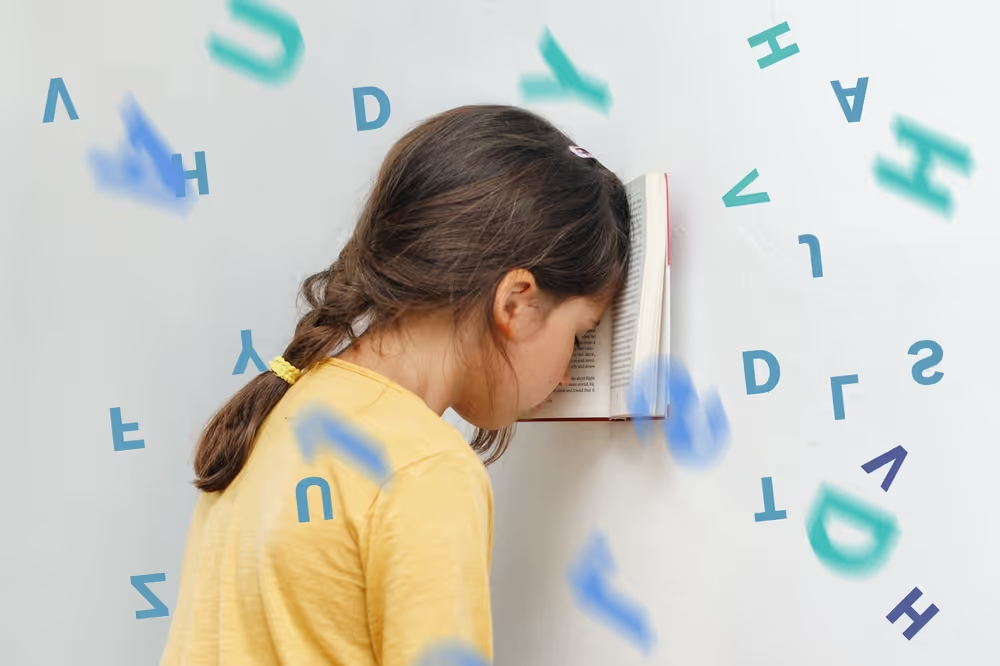
Some children have difficulty distinguishing letters like b and d or p and q, especially when combined with other reading challenges.
Avoiding Reading Activities

Your child may feel frustrated, lose confidence, or avoid reading aloud and activities that make reading feel stressful.

Dyslexia can look different from child to child. Some children are bright, verbal, and creative while still experiencing reading challenges. Understanding dyslexia in your child begins with recognizing these patterns. If they sound familiar, a dyslexia test for kids can be a helpful first step.
How Our Dyslexia Testing Works

This free dyslexia screener helps you better understand your child’s reading challenges and identify possible signs of dyslexia. The results provide insight into your child’s reading strengths, areas for growth, and helpful next steps.
Answer Simple Questions
Complete a short, parent-guided dyslexia reading test with your child to explore common signs related to spelling, word recognition, and more.
Get a Reading Profile
Receive an overview of your child’s skills and areas that may need attention, including phonological awareness, comprehension, and more.
Receive Next-Step Guidance
Review personalized recommendations, practical strategies, and next steps, including resources like our dyslexia app for kids.

What This Test Can and Can’t Tell You

Our dyslexia test is designed to spot possible signs of dyslexia and help you make informed decisions about your child’s reading support, not to replace professional evaluation.

What It Can’t Do

Provide a formal diagnosis
This dyslexia quiz is not a medical, psychological, or educational evaluation and cannot officially diagnose dyslexia or other learning differences.
Define your child’s abilities
Dyslexia is not related to intelligence. Children with dyslexia have a wide range of abilities, and this test does not measure IQ or potential.
Replace professional evaluation
A comprehensive assessment from a qualified professional, such as a reading specialist, educational psychologist, or speech-language pathologist, is needed for an official evaluation.

What It Can Do

Identify possible signs of dyslexia
Recognize common reading patterns and behaviors associated with dyslexia, helping you understand what your child may be experiencing.
Highlight strengths and challenges
Learn more about areas such as phonological awareness, decoding, fluency, and other skills that may affect reading development.
Help guide next steps
Understand whether your child may benefit from additional reading support, a specialized program, assistive technology, or a professional dyslexia assessment.

Dyslexia Screening vs. Dyslexia Testing: What’s the Difference?


A dyslexia screener looks for signs that a child may be at risk for dyslexia. Dyslexia screening can help parents better understand reading difficulties and decide whether further evaluation may be helpful. Professional dyslexia testing is more comprehensive and may assess reading and language skills, educational history, and other factors related to a child’s difficulties.

What Does a Test or Screener Look For?


A dyslexia test looks at reading-related skills that may be difficult for a child with dyslexia. Depending on the type of screening or evaluation, this may include:

Phonological awareness: Recognizing and working with sounds in words
Decoding: Connecting letters and sounds to read unfamiliar words
Reading fluency: Reading accurately and smoothly
Spelling: Recognizing and producing common spelling patterns
Reading comprehension: Understanding what is read
‍
dyslexia test looks at reading comprehension and more

After the Test: What's Next?

After testing for dyslexia using our screener, you'll have a better understanding of your child's reading needs, where they may be struggling, and what steps you can take to provide the right support.
Low Concern
Responses do not suggest immediate evaluation. Keep encouraging reading, monitor progress, and talk with your child's teacher if concerns continue.
Moderate Concern
Assessment findings show some signs worth exploring. This isn't a diagnosis, but it's helpful to learn about the resources available to you.
Take Action
Your child's dyslexia test results suggest it may be time to consider additional reading support or a professional dyslexia evaluation.


Ready? Get a clearer picture of your child’s reading challenges with our free dyslexia screener. It only takes a few minutes and can help you identify possible signs of dyslexia and decide what support may be helpful next:
‍

Take the Dyslexia Symptoms Test!

Want to Know More?

A Parent's Guide to Understanding Dyslexia

This deep dive into dyslexia helps parents understand how reading works, recognize common signs, and support their child with confidence.

Read More
Learning to Read with Dyslexia: Teaching Methods for Parents

Gain a better understanding of how children with dyslexia learn to read through the six core reading skills, with practical teaching methods.

Read More
Multisensory Learning for Dyslexia: How it Helps Your Child

Explore multisensory learning for dyslexia and discover helpful reading techniques, activities, and strategies to encourage your child’s skills and progress.

Read More
How AI can Support Students with Dyslexia
Learn More
Dyslexia reading programs
How Can Parents Find Dyslexia Reading Programs?
Learn More
Young boy reading
How to Help a Child with Dyslexia Read
Learn More
How AI can Support Students with Dyslexia
Learn More
Dyslexia reading programs
How Can Parents Find Dyslexia Reading Programs?
Learn More
Young boy reading
How to Help a Child with Dyslexia Read
Learn More

Dyslexia Test FAQs: What Parents Should Know

How do you test for dyslexia?

Testing for dyslexia typically begins with a screening that looks for signs of reading difficulty. If concerns remain, a professional evaluation can assess skills such as phonological awareness, decoding, reading fluency, spelling, and language. An online dyslexia test can be a useful first step, but it cannot provide a formal diagnosis.

How to test your child for dyslexia?

You can start with a dyslexia screener to identify potential signs and areas of difficulty. If the results suggest your child may need further evaluation, talk with their school or a qualified professional about comprehensive dyslexia testing.

How accurate are dyslexia screeners?

A well-designed dyslexia screener can help identify signs associated with dyslexia and indicate whether further evaluation may be appropriate. However, screening results are not a diagnosis and should be considered alongside your child’s reading development, educational history, and professional evaluation when needed.

At what age should you test for dyslexia?

You don’t have to wait until a child reaches a specific age or falls significantly behind. Screening can begin when persistent difficulties with letter sounds, decoding, spelling, or reading become noticeable. Early identification can help children access appropriate reading support sooner.

Is this online dyslexia test a diagnosis?

No. This test is not a diagnosis. If you’re wondering how to test for dyslexia, this screener can help you understand possible signs and your child’s reading needs.

How do you get diagnosed with dyslexia?

A dyslexia diagnosis requires a comprehensive evaluation rather than an online screening alone. The evaluation may consider your child’s reading and language skills, educational history, observations, and standardized assessments to better understand their learning needs.