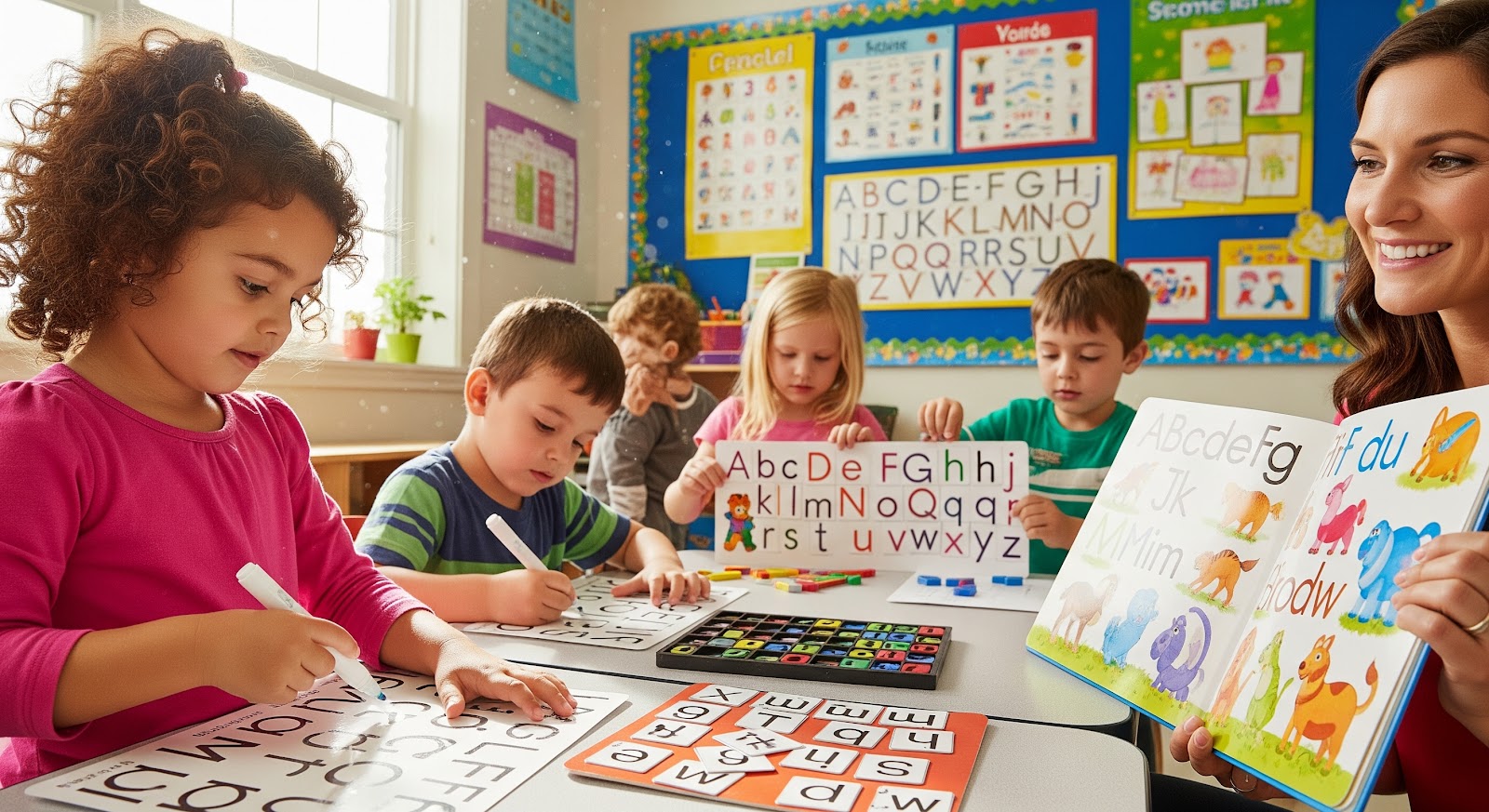
Strong literacy foundations, starting with listening, speaking, and recognizing letters and sounds, set the stage for future academic success across all subjects. In fact, decades of research in early education, including findings from the National Reading Panel and the Science of Reading framework, emphasize that early exposure to reading-related experiences can dramatically improve a child’s long-term learning outcomes.This is where early literacy activities play a vital role. Far beyond worksheets or rote memorization, these activities are designed to engage young learners through play, storytelling, song, conversation, and hands-on learning. Whether it’s singing a rhyming song in the car, pointing out signs at the grocery store, or playing a letter-matching game at home, these simple yet powerful moments help children connect sounds to symbols, build vocabulary, and grow more confident as communicators.
How to Promote Literacy in Early Childhood
Literacy in early childhood is about more than just learning to read. It includes a child’s ability to listen, speak, understand, and eventually make sense of print. When we talk about how to promote literacy in early childhood, we are referring to intentional efforts that nurture these foundational communication skills from birth through the early elementary years. These early efforts directly influence a child’s ability to become a fluent, confident, and motivated reader later on.
What Is Early Childhood Literacy?
Early childhood literacy refers to the development of language, vocabulary, and print awareness in young children, usually from birth to age eight. It encompasses both receptive language (what children hear and understand) and expressive language (what they say). Before children ever decode written words, they must build background knowledge, oral language skills, and an awareness of how books and language work.Key components of early childhood literacy include:
- Recognizing that print carries meaning
- Developing a rich vocabulary through conversations
- Understanding the sounds of spoken language (phonemic awareness)
- Building alphabet knowledge and phonics understanding
- Engaging with stories and informational texts through listening and discussion
The Role of Parents, Caregivers, and Educators
Promoting literacy is a shared responsibility, and the earliest and most meaningful interactions often occur at home. Parents and caregivers are a child’s first teachers. Simple, everyday moments, such as talking during meals, singing lullabies, or naming objects during play, become powerful opportunities to build language. Early educators also play a key role by creating structured environments that support literacy development through intentional instruction, modeling, and daily literacy routines.
These approaches are often shaped by developmental frameworks such as Juniors Journey EYLF outcomes, which guide how play-based experiences nurture a child's identity, communication skills, and confidence as a learner. A well-balanced approach includes direct instruction (such as phonics lessons), rich language experiences, and opportunities for children to explore books independently and with others.Ways adults can support early literacy include:
- Modeling book handling and reading behaviors
- Encouraging open-ended conversations
- Responding to children’s questions with interest and detail
- Exposing children to a variety of vocabulary and sentence structures
- Creating print-rich environments at home and in classrooms
Real-World Strategies That Build Literacy Every Day
The good news is that promoting literacy in early childhood does not require special training or expensive tools. It simply requires consistency, engagement, and a few research-backed strategies that can be easily integrated into daily life.
Shared Reading
Reading aloud with a child is one of the most effective ways to support early literacy. It builds vocabulary, narrative skills, and print awareness. Choose age-appropriate books, pause to ask questions, and encourage the child to talk about the story. Let them turn the pages, point to pictures, or finish familiar phrases.
Dialogic Reading
Dialogic reading takes shared reading a step further by turning the child into the storyteller. Instead of reading straight through a book, the adult prompts the child with questions, encourages predictions, and builds a dialogue around the story. This approach strengthens comprehension and expressive language.
Environmental Print Awareness
Environmental print refers to the words and symbols children see all around them on signs, food packages, clothing, and more. By pointing out and discussing this everyday print, adults help children recognize that print carries meaning and that reading is all around them.Examples of this include:
- Reading road signs while driving
- Identifying cereal boxes and brand logos at the store
- Labeling everyday household items with printed words
These strategies combine fun, relevance, and repetition, key ingredients in building early literacy skills.
Developing Literacy Through Engaging Activities
Children build literacy skills most effectively when learning is joyful, interactive, and developmentally appropriate. During the early years, their brains are highly receptive to language, sound patterns, and visual stimuli. That is why choosing the right activities is essential not just to entertain, but to lay a strong cognitive foundation for reading and writing.Developing literacy in early childhood involves more than practicing letters or decoding simple words. It includes nurturing oral language, phonemic awareness, print recognition, and a genuine interest in stories and language. Purposeful literacy activities encourage exploration, repetition, and play, all of which are essential for retention and growth.
Why Activities Matter in Developing Literacy
Early learners thrive through hands-on engagement. Research supports the idea that literacy development is most effective when children can manipulate language through movement, storytelling, sound, and visuals. These multisensory experiences support various learning styles and are especially helpful for English Language Learners, students with dyslexia, and others with diverse learning needs.Literacy-rich activities provide children with repeated exposure to key concepts in fun and accessible ways. By embedding sound awareness, letter recognition, vocabulary, and sequencing into games and routines, children internalize critical reading skills without feeling pressured or overwhelmed.Below are several activity examples that support developing literacy across multiple domains.
Storytelling with Props
Telling stories using puppets, character cut-outs, or everyday toys transforms passive listening into active participation. When children retell stories or make up their own using visual props, they develop narrative skills, sequencing abilities, and expressive vocabulary.Tips to try:
- Use stuffed animals to act out a favorite book.
- Create a “story bag” filled with random items and have your child invent a story using all the objects.
- Let children draw their own characters and narrate a tale.
This type of storytelling builds comprehension and supports oral language development while encouraging creativity.
Letter Sound Games
Sound-letter correspondence is a foundational skill in learning to read. Games that involve identifying beginning sounds, matching letters to pictures, or sorting objects by sound help children practice phonemic awareness in a meaningful way.Examples include:
- Letter bingo with beginning sound pictures.
- “I Spy” games focused on sounds (e.g., “I spy something that starts with /s/”).
- Letter-sound matching puzzles.
These interactive experiences strengthen children’s ability to connect sounds with symbols, a key step in decoding words.
Rhyming and Clapping Songs
Songs, rhymes, and rhythmic chants are ideal for developing phonological awareness. Clapping along to the beat or tapping syllables helps children hear and manipulate the smaller sounds in words.Ideas to use:
- Sing classic nursery rhymes and emphasize rhyming words.
- Clap out syllables in names, animals, or foods.
- Make up silly rhyming songs together.
Rhyming teaches children to listen for patterns and differences in word sounds, which directly supports early reading success.
Alphabet Scavenger Hunts
Turning letter recognition into a game improves both engagement and retention. Alphabet scavenger hunts can be done indoors, outdoors, or on the go.Fun variations:
- Hunt for items that start with a particular letter.
- Match magnetic letters to labels on items around the house.
- Find letters in signs or packaging during errands.
These activities combine movement, vocabulary building, and visual recognition, all while encouraging curiosity and active exploration.
Make Literacy Playful and Consistent
Ultimately, developing literacy is not a one-time event. It is a process that grows through consistent exposure, variety, and positive reinforcement. By making early literacy activities playful and accessible, adults can help children build strong reading habits from the very beginning.Whether you are a parent at home or an educator in the classroom, the key is to keep things interactive, responsive, and enjoyable. Children who associate reading and language with fun are more likely to become confident, lifelong learners.
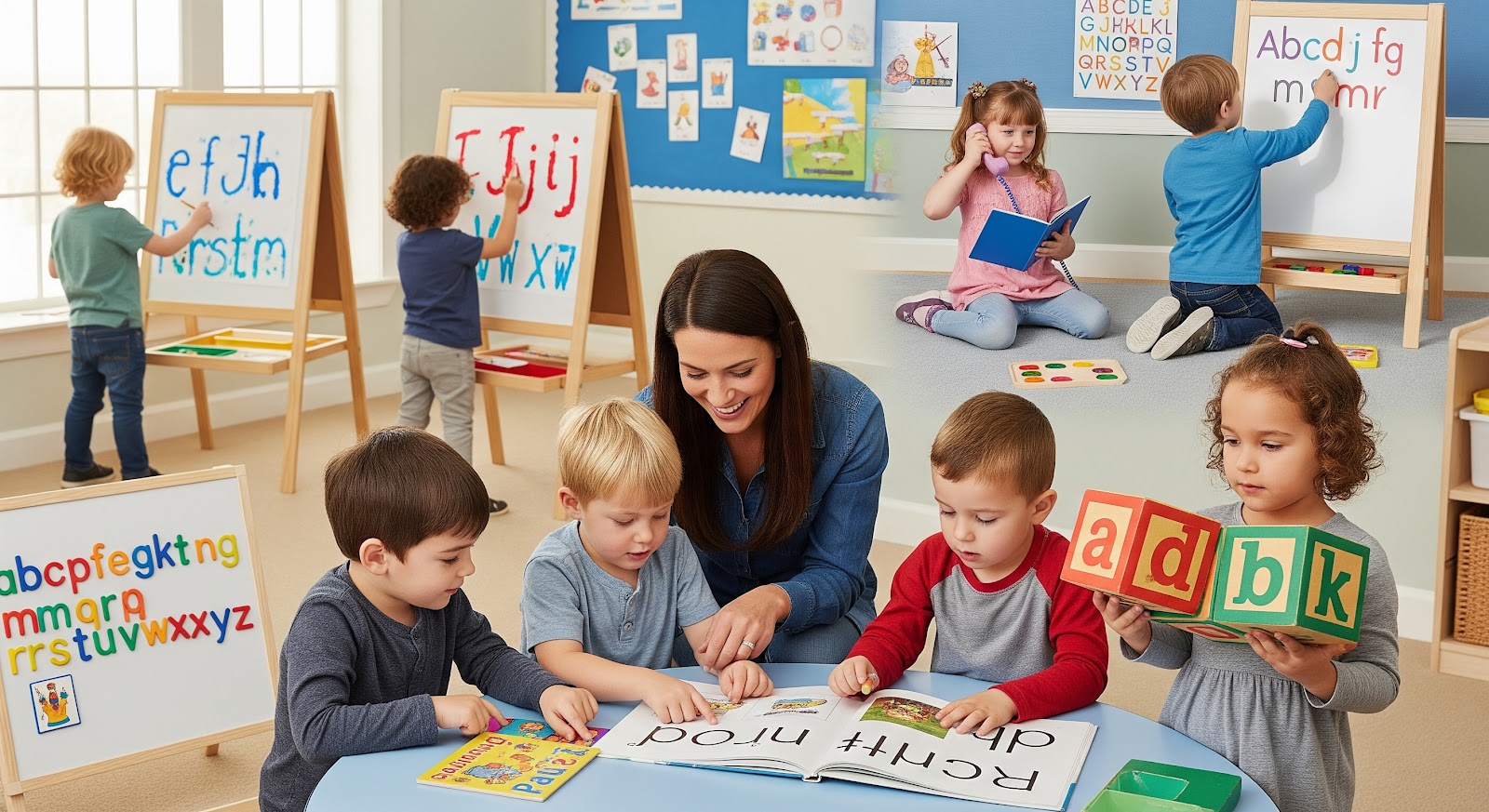
Supporting Literacy Development at Home and School
Literacy does not develop in isolation. It thrives in environments where children are surrounded by language, print, and supportive adults who model, encourage, and celebrate learning. Whether at home or in the classroom, creating a literacy-rich environment provides essential opportunities for children to grow as readers, listeners, speakers, and thinkers.When we talk about literacy development, we are not only referring to reading words on a page. We are referring to a child’s growing understanding of how language works, how words sound, what they mean, how they are structured, and how they convey ideas. Daily exposure to print, purposeful conversations, and hands-on activities helps children build these critical skills in ways that feel natural and engaging.
The Power of Literacy-Rich Environments
A literacy-rich environment is a setting where children see, hear, and interact with written and spoken language throughout their day. These environments promote consistent skill-building by making literacy visible, accessible, and meaningful.At home, this might include:
- Books are placed in every room, including the child’s bedroom and kitchen
- Labels on toy bins, furniture, or clothing
- Regular storytime routines and family conversations
- Magnetic letters on the fridge or written grocery lists, children help with
In classrooms, it includes:
- Print on walls, charts, and student work displays
- Listening centers with audiobooks and headphones
- Reading nooks filled with diverse, high-interest books
- Writing centers with journals, stamps, and letter cards
When children are surrounded by words and given opportunities to explore them in meaningful contexts, they develop an intuitive understanding of literacy concepts such as print directionality, letter formation, vocabulary use, and storytelling structure.
Multisensory Activities That Build Literacy
Young learners often benefit most when instruction is multisensory, that is, when it combines sight, sound, touch, and movement. Multisensory activities allow children to engage different areas of the brain and reinforce learning through multiple channels.
Tracing Letters in Sand or Salt Trays
Children can use their fingers to trace letters in sand, shaving cream, or salt. This tactile experience reinforces letter shapes and supports fine motor development while connecting visual and kinesthetic learning.
Using Letter Tiles or Magnetic Letters
By physically moving letter tiles, children can build words, match letters to sounds, and explore spelling patterns. These manipulatives make abstract concepts more concrete and give children control over their learning process.
Air Writing or Body Letter Formation
Air writing involves forming letters in the air with exaggerated arm movements. It builds muscle memory and letter awareness in a fun, movement-based way. Children can also form letters with their bodies or by using jump ropes or chalk on the ground.
Sound and Motion Pairing
Assign a motion or action to each letter sound. For example, a snake slithers for /s/ or flapping wings for /f/. This combination of sound and movement helps children anchor phonemes in their memory.These types of activities are beneficial for children with learning differences, as they reduce the cognitive load of traditional seatwork and allow learning to feel more like play.
Vocabulary Matters: The Role of Language Exposure
A child’s vocabulary size by age five is one of the strongest predictors of later reading comprehension. The more words children hear and use, the more connections they can make when they begin reading independently.Here are simple ways to improve vocabulary in everyday settings:
- Use descriptive language when talking with children ("Let’s put on your striped, cozy sweater today.")
- Introduce new words while reading books and pause to explain them
- Play naming and guessing games (e.g., “I’m thinking of an animal that hops and has long ears”)
- Visit new places like grocery stores, libraries, or parks, and talk about what you see
Children from homes or classrooms rich in language are better equipped to understand the meaning of texts and express themselves clearly. Exposure to a broad and diverse vocabulary supports literacy development across all areas: phonics, fluency, and comprehension.By creating stimulating literacy environments and integrating multisensory experiences into daily routines, both parents and educators can support the natural progression of literacy development. With intentional planning and interactive learning, children are more likely to build the confidence, curiosity, and skills they need to succeed in reading and beyond.
How to Improve Literacy Skills with Consistency
While engaging activities and tools are essential for sparking interest in reading, nothing replaces the power of consistency. Developing strong literacy habits is much like building muscle; it requires regular, intentional practice over time. When families and educators work together to create daily reading routines, children are more likely to grow into fluent, confident readers.If you're wondering how to improve literacy skills in a way that feels achievable and sustainable, the answer lies in small, consistent efforts paired with progress monitoring and supportive environments.
Daily Practice Builds Lasting Skills
One of the most effective ways to improve literacy is to set aside 10 to 20 minutes each day for focused reading and language activities. This short window is enough to build essential skills while keeping reading time enjoyable and low-pressure.Daily reading supports:
- Phonemic awareness through repeated sound exposure
- Vocabulary development as new words are encountered
- Fluency and comprehension through familiar and increasingly complex texts
- Motivation and confidence, as children see steady progress
Consistency also helps create a sense of routine and expectation. When reading becomes a regular part of the day, just like brushing teeth or getting dressed, children are more likely to participate willingly and benefit from the repetition.Simple ways to integrate daily reading include:
- Reading aloud before bedtime
- Setting a timer for 15-minute reading blocks after school
- Including short storybooks during mealtime or transitions
- Keeping books in the car or on mobile devices for on-the-go reading
Even when life gets busy, short reading bursts can have a powerful cumulative effect.
Monitoring Progress in Meaningful Ways
Tracking progress helps children (and adults) see how far they have come. It also gives insight into which areas may need additional support. Progress monitoring does not need to be complicated. Simple tools and routines can make a big difference in identifying strengths, setting goals, and celebrating growth.Here are a few effective options:
Reading Logs
Encourage children to record what they read each day, either by drawing a picture, writing a sentence, or checking off a chart. Visual progress builds a sense of achievement and ownership.
Fluency Checks
Every couple of weeks, have children read a familiar book aloud. Use a checklist to note fluency, expression, and pacing. Celebrate improvements, even if small.
Comprehension Conversations
Ask open-ended questions after reading:
- What was your favorite part?
- Why do you think the character made that choice?
- What would you do differently?
These discussions provide insight into how well the child is understanding what they read and also reinforce critical thinking.
Mini-Assessments or Goal Setting
Teachers or parents can use quick check-ins (such as identifying letter sounds or retelling a story) to set goals. For example: “Let’s work on reading this book smoothly without stopping.”Monitoring does not need to feel like testing. When presented as part of everyday conversation or reflection, it empowers children to take pride in their literacy growth.
Building a Balanced Reading Routine
A well-rounded reading routine includes a mix of guided support and independent exploration. Children benefit from being read to, reading on their own, and discussing what they have read. This variety keeps literacy time fresh and provides multiple avenues for skill-building.Here is a structure that supports balanced literacy:
1. Shared Reading (with adult support)
- Choose books that are slightly above the child’s independent level
- Read together and pause to discuss or define new words
- Encourage children to participate by repeating phrases or predicting outcomes
2. Independent Reading
- Allow children to choose “just right” books
- Let them read silently, aloud to themselves, or to a sibling or stuffed animal
- Provide cozy, quiet spaces to promote focus
3. Writing Connection
- Pair reading with drawing or writing responses
- Have children write their own endings to a story or keep a reading journal
- Encourage invented spelling and self-expression without judgment
4. Talk About Reading
- Ask questions about the text
- Make personal connections
- Compare books and characters
This balanced approach provides both structure and flexibility. Children get the support they need while also developing the confidence to explore language independently.
Small Steps, Big Results
Improving literacy skills is not about finding the perfect book or completing the most worksheets. It is about showing up every day with a mindset of support, curiosity, and connection. When reading becomes a consistent and meaningful part of a child's life, progress follows naturally.To recap how to improve literacy skills:
- Make daily reading a non-negotiable habit
- Use simple tools to track and celebrate progress
- Create a routine that includes shared, independent, and reflective reading
- Adapt your approach as children grow and their needs change
Consistency turns potential into progress. With just 10 to 20 minutes a day, families and educators can build a foundation for lifelong literacy, one page at a time.
Early Literacy Tips for Parents and Educators
Supporting early literacy does not require complex tools or advanced degrees. Often, the most effective approaches are grounded in simple, intentional actions repeated daily. Parents, caregivers, and educators all play vital roles in helping children become confident readers. The following early literacy tips offer practical, actionable ways to create meaningful literacy experiences both at home and in the classroom.
Model Positive Reading Behaviors
Children learn by watching the adults around them. When they see parents, teachers, or caregivers reading regularly, whether it is a novel, magazine, recipe, or label, they begin to understand that reading is valuable, enjoyable, and part of everyday life.Ways to model reading include:
- Keep books and magazines visible at home or in the classroom
- Let children see you reading and reacting to stories
- Talk about what you are reading and why you enjoy it
- Read aloud with expression to show excitement and curiosity
When adults demonstrate that reading is a meaningful part of life, children are more likely to view it similarly.
Ask Open-Ended Questions While Reading
Rather than focusing solely on right or wrong answers, encourage children to think and talk about stories. Open-ended questions foster deeper engagement, build comprehension skills, and support expressive language development.Examples of questions to ask during reading:
- What do you think will happen next?
- Why did the character feel that way?
- How would you change the ending?
- What does this story remind you of?
These questions help children connect with the story, build critical thinking skills, and expand vocabulary and confidence.
Celebrate Small Wins to Build Confidence
Learning to read takes time, and every child progresses at their own pace. Celebrating small milestones helps build motivation and a sense of accomplishment. This positive reinforcement encourages children to keep trying, even when it is challenging.Ways to celebrate progress:
- Give verbal praise for effort, not just accuracy
- Use sticker charts or goal trackers
- Create a “reading crown” or badge for finishing a book
- Share their reading milestones with family or peers
Whether a child learns a new letter sound or reads a full sentence for the first time, acknowledging growth builds momentum.
Incorporate Reading into Daily Routines
Consistency is key to literacy development. By making reading a natural part of daily life, children receive regular exposure to books, print, and language without it feeling like a chore. Small, scheduled moments make a big difference over time.Ideas for routine-based reading:
- Read a bedtime story every night
- Keep books in the bathroom, kitchen, or car
- Start the morning with a short poem or picture book
- Read recipes, menus, or signs during everyday activities
Embedding reading into daily routines reinforces its value and ensures regular practice, which is essential for progress.
Use Play and Movement to Teach Literacy
Young children learn best through play. Incorporating movement, songs, and games into literacy activities helps them absorb information while having fun. This is especially effective for children who are active or learn best through hands-on experiences.Examples of literacy-through-play:
- Alphabet hopscotch or letter matching games
- Singing rhyming songs or clapping out syllables
- Acting out stories with puppets or props
- Creating letters with clay, pipe cleaners, or their bodies
Playful learning helps children develop skills without pressure and keeps them engaged for longer periods.
Surround Children with Rich Language and Print
A print-rich environment supports early literacy by providing constant exposure to letters, words, and books. Language-rich interactions also help expand vocabulary and comprehension.To create a literacy-rich setting:
- Label everyday objects around the house or classroom
- Post an alphabet wall or word-of-the-week chart
- Display children’s writing and drawings
- Encourage conversations using new and descriptive words
The more children see, hear, and interact with language, the stronger their literacy foundations become.
Encourage Book Choice and Voice
Letting children choose their own reading material gives them a sense of ownership and control. Whether it is a favorite character book, a nonfiction title about dinosaurs, or a simple picture book, allowing choice builds excitement and fosters independence.Tips for supporting choice:
- Visit libraries or bookstores and explore different genres
- Offer a rotating selection of books at home or in the classroom
- Respect their interests, even if the books are not your top pick
- Listen to their thoughts about the books they read
When children feel their voices matter in the reading process, they are more likely to develop a lifelong love of books.These early literacy tips can be applied in a variety of settings and adjusted to fit any schedule, age group, or learning style. By keeping interactions intentional, consistent, and responsive to each child’s needs, both parents and educators can help create strong, joyful readers from the very beginning.
Make Early Literacy a Daily Adventure
By integrating fun and developmentally appropriate early literacy activities into everyday routines, families and educators can make a measurable difference in a child’s reading journey. The key is consistency, encouragement, and adaptability.In today’s digital world, there are even more opportunities to personalize literacy support using technology. From interactive story apps to speech-feedback tools, tech-enhanced resources can make reading more accessible, engaging, and effective for every learner.Looking for a smart way to support your child’s reading journey? Try Readability, an AI-powered platform that listens to your child read aloud, provides real-time feedback, and tracks progress in fluency and comprehension. It’s a powerful tool to complement your daily literacy routines and build confidence, one word at a time.Give your child the improvement they need. Explore Readability today and make reading a joyful habit they’ll carry for life.