
Finding the right tools to support a child's literacy journey is one of the most meaningful things a family or educator can do. Parents want to help children learn to read, practice consistently, and understand what they read. Educators want targeted, repeatable practice that fits into a busy school day. A well-designed reading app for kids can serve both goals, providing structured support that complements print books and adult guidance rather than replacing them.
This guide covers the science behind reading development, the app features that make the biggest difference, daily routines that produce lasting gains, and how to support diverse learners. Whether you are a parent of a beginning reader or a literacy coach supporting a classroom, the information here is grounded in research and designed to be immediately useful.
What is a reading app for kids? A reading app for kids is a digital tool designed to provide interactive, adaptive reading practice. The best apps combine phonics instruction, fluency practice, vocabulary building, and comprehension checks in one platform, giving children the equivalent of personalized tutoring on demand.
What Skills Do Children Need to Learn to Read Effectively?

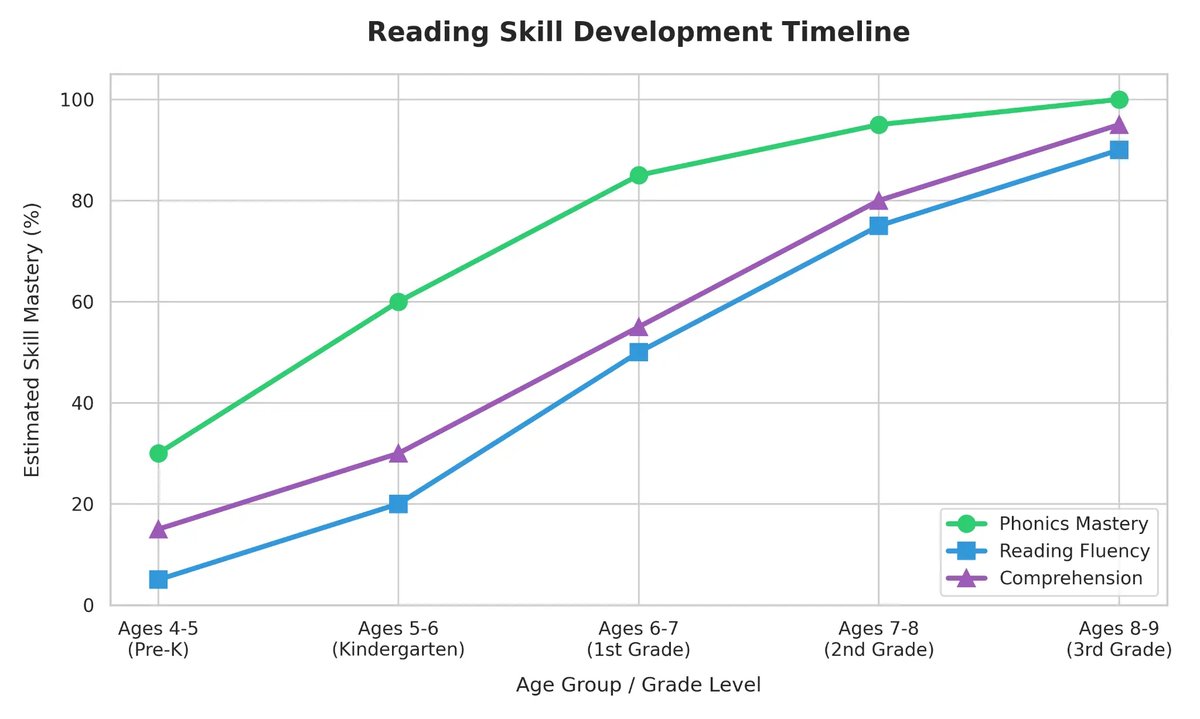
Before evaluating any reading app for kids, it helps to understand what reading actually requires. The National Reading Panel identified five pillars of literacy that form the foundation of every effective reading program. Each pillar builds on the one before it, and technology can support all five when designed thoughtfully.
How Do Phonemic Awareness and Phonics Build the Foundation for Reading?
Phonemic awareness is entirely auditory. It involves hearing the individual sounds, or phonemes, in spoken words and being able to manipulate them. A child who can blend the sounds /c/ /a/ /t/ into "cat" or swap the first sound in "map" to make "cap" has strong phonemic awareness. This skill is the single best predictor of early reading success.
Phonics builds directly on phonemic awareness by connecting those sounds to written letters and letter combinations. When a child learns that the letters "sh" represent the sound /sh/, they gain a tool for decoding thousands of words they have never seen before. A reading app for kids that uses systematic phonics instruction presents these connections in a logical sequence, from simple consonant-vowel-consonant words to complex multisyllabic patterns. To understand the relationship between these two foundational skills, read our in-depth guide on The Role of Phonics and Phonological Awareness in Early Literacy Development.
What Role Does Fluency Play in Reading Success?
Fluency is the bridge between decoding and comprehension. A child who reads word by word, sounding out each letter, uses so much mental energy on decoding that little is left for understanding the meaning. Fluent readers recognize words automatically, read in meaningful phrases, and use expression to convey the emotion and intent of the text.
Research from the National Reading Panel confirms that guided oral reading with immediate feedback is one of the most effective ways to build fluency. A reading app for kids that listens as a child reads aloud and provides real-time correction replicates this guided practice at scale. For practical strategies to support fluency at home, visit our article on How to Improve Reading Fluency at Home.
Why Is Vocabulary Crucial for Young Readers?
Vocabulary is the gateway to comprehension. A child who does not know the meaning of the words they are decoding cannot understand the text, no matter how accurately they pronounce each word. Research shows that children from language-rich environments may know up to 30 million more words than their peers by the time they enter kindergarten, a gap that compounds over time.
A reading app for kids can help close this gap by providing in-context word support. Features like tap-to-define, pronunciation models, and personalized vocabulary lists give children multiple exposures to new words in meaningful contexts. For a deeper exploration of vocabulary strategies, see our guide on Building Stronger Readers: Vocabulary Instruction for Kids.
How Does Comprehension Turn Reading into Learning?
Comprehension is the ultimate goal of reading. It includes literal understanding (what happened?), inferential thinking (why did it happen?), and evaluative judgment (what does it mean?). A reading app for kids that stops at decoding misses the most important part of literacy development.
Strong comprehension instruction requires children to engage actively with text before, during, and after reading. Interactive question-and-answer features, retell prompts, and graphic organizers all push children to process what they have read at a deeper level. For a comprehensive list of comprehension-building strategies, explore our resource on How to Improve Reading Comprehension at Home.
What Features Should You Look For in a Reading App for Kids?
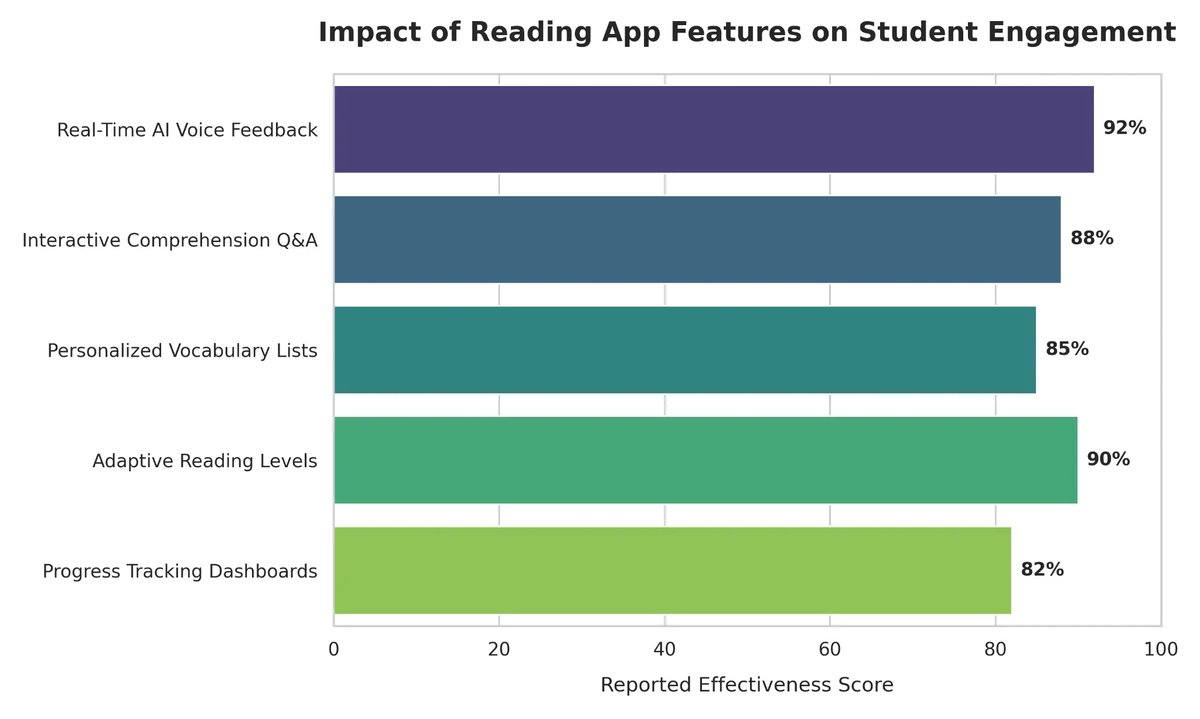
Not all reading apps are created equal. The features that matter most are the ones that translate reading science into daily, repeatable practice. Here is a breakdown of the features that research supports and what each one does for a developing reader.
Why Do Systematic Phonics and Decodable Texts Matter?
Decodable texts are stories written using only the phonics patterns a child has already learned. This means that when a child encounters a word, they have the tools to sound it out successfully. This is very different from leveled readers, which may include words that require guessing based on pictures or context. Systematic phonics instruction sequences skills logically, ensuring each new pattern builds on the last.
A reading app for kids that uses decodable texts gives children a genuine sense of accomplishment. They are not guessing. They are applying real skills. This builds both competence and confidence.
How Does Read-Aloud Narration with Word Highlighting Support Learning?
When a reading app reads aloud while highlighting each word, it models fluent reading and reinforces the connection between spoken and written language. This is especially valuable for early readers who are still developing print awareness. Echo reading, where the child repeats after the narrator, is a particularly effective technique for building prosody and expression.
What Are the Benefits of Tap-to-Define and Morphology Hints?
Efficient vocabulary growth depends on children being able to access word meanings quickly, without losing the thread of the story. A tap-to-define feature allows a child to hear a word's pronunciation and meaning instantly. Morphology hints, which explain prefixes, suffixes, and root words, help children decode the meaning of unfamiliar words independently. These features are especially valuable for English Language Learners who are building vocabulary alongside literacy skills.

Why Are Comprehension Checks Beyond Multiple Choice More Effective?
Multiple choice questions test recognition, not understanding. A child can guess the right answer without having truly comprehended the text. Retell prompts, wh-questions, and graphic organizers require children to construct meaning, which is a far more reliable indicator of comprehension. Interactive voice-based Q&A, where a child responds verbally to questions about the story, is one of the most powerful comprehension tools available in a reading app for kids.
How Do Adaptive Pathways Reduce Frustration and Maximize Growth?
The concept of the "just-right" book is well-established in literacy research. When a text is too easy, a child does not grow. When it is too hard, they become frustrated and disengage. Adaptive placement technology ensures that a child is always working at the edge of their current ability, challenged but not overwhelmed. To understand how reading levels work, read our guide on How to Decode Reading Levels.
What Progress Tracking Features Are Most Useful for Adults?
Parents and educators need data that is actionable, not just impressive-looking. The most useful metrics include words correct per minute, time on task, and comprehension scores. A good reading app for kids presents this data in a clear, accessible format so that caregivers can identify trends and celebrate progress. For guidance on using this data effectively, see our article on The Power of Real-Time Feedback in Developing Fluent Readers.
Which Accessibility Features Are Non-Negotiable?
A reading app for kids should be usable by all children, including those with dyslexia, processing differences, or multilingual backgrounds. Dyslexia-friendly fonts, adjustable audio speed, high-contrast display options, and multilingual support are not extras. They are essential features that ensure every child can access and benefit from the content.
How Can You Build Routines That Turn Short Sessions into Lasting Gains?
The most sophisticated reading app for kids will not produce results without consistent use. Research on spaced practice and distributed learning consistently shows that short, frequent sessions outperform long, infrequent ones. The goal is to make reading a daily habit, not a weekly event.

How Can You Blend Digital and Print Formats Effectively?
A reading app for kids works best as part of a broader literacy diet. Pair decodable app sessions with traditional read-alouds, library books, and print-based activities. This blended approach ensures children experience the full range of reading contexts, from the structured practice of a digital lesson to the shared joy of a bedtime story.
Why Are Co-Reading and Think-Alouds So Powerful?
When an adult reads alongside a child and thinks aloud about the text, they model the invisible cognitive processes that skilled readers use. Saying "I wonder why the character did that" or "Let me re-read this sentence because I am not sure what it means" teaches children to monitor their own comprehension. This kind of adult modeling is one of the highest-impact literacy strategies available, and it costs nothing.
How Do You Design a Sustainable Reading Habit?
Habit design research suggests that new behaviors are most likely to stick when they are attached to an existing routine, made easy to start, and rewarded immediately. Connecting reading practice to a consistent daily trigger, such as after dinner or before bed, and keeping the initial commitment small, just ten minutes to start, dramatically increases the likelihood of follow-through. Visible progress trackers in a reading app for kids can serve as an immediate reward, showing children the tangible results of their effort.
How Do You Build Comprehension, Not Just Decoding?
Decoding is the entry point to reading, but comprehension is the destination. A child who can sound out every word on a page but cannot explain what they read has not yet become a reader in the fullest sense. Moving from accuracy to meaning-making requires deliberate instruction and practice.
What Should You Do Before, During, and After Reading?
The before-during-after framework is one of the most well-researched approaches to comprehension instruction. Before reading, preview key vocabulary, activate prior knowledge, and make predictions. During reading, pause to ask questions, clarify confusing passages, and visualize the action. After reading, summarize the main ideas, connect the story to personal experience, and evaluate the author's choices. This three-part structure can be applied to any text, whether on a screen or a printed page.
Which Question Types Matter Most for Deep Understanding?
Not all questions are equally effective for building comprehension. Literal questions (who did what?) are a starting point, but inferential questions (why did the character make that choice?) and evaluative questions (do you agree with the author's conclusion?) push children to think more deeply. A reading app for kids that uses interactive voice-based Q&A can model all three question types, giving children practice with the full range of comprehension skills.
How Do Retell and Summary Activities Strengthen Comprehension?
Asking a child to retell a story in their own words is one of the most reliable ways to assess and build comprehension. For narrative texts, story grammar provides a useful structure: characters, setting, problem, events, and resolution. For informational texts, text structures such as cause-effect, compare-contrast, and problem-solution help children organize what they have learned. A reading app for kids that prompts retelling after each book builds this skill systematically over time.
How Can You Foster Motivation and a Strong Reading Identity?
A child who does not believe they are a reader will not become one, regardless of how good the app is. Motivation research consistently identifies three factors that drive sustained engagement: autonomy (the sense of choice and control), competence (the feeling of being capable), and relatedness (connection to others through the activity). A reading app for kids that supports all three factors is far more likely to produce lasting results.
How Do Goal Setting and Reflection Build Reading Confidence?
Short-term, achievable goals give children a clear target and a sense of progress. A goal like "read three books this week" or "learn five new vocabulary words today" is concrete, measurable, and within reach. Pairing these goals with regular reflection, asking children what they noticed about their reading, what was hard, and what they are proud of, builds metacognitive awareness and a growth mindset.
How Does a Family Reading Culture Amplify App-Based Practice?
Children who see the adults in their lives reading for pleasure are far more likely to develop a reading identity of their own. Reading alongside your child, discussing books at the dinner table, and celebrating reading milestones as a family creates a culture in which literacy is valued and enjoyable. A reading app for kids is most effective when it exists within this broader culture of reading.
How Does a Reading App for Kids Support Diverse Learners and Needs?

Every child brings a unique combination of strengths, challenges, and background knowledge to the reading process. A reading app for kids that is truly effective must be flexible enough to meet children where they are, whether they are struggling readers, multilingual learners, or students with specific learning differences.
What Strategies Help Struggling Readers Make Progress?
Struggling readers often need more decoding practice, more error analysis, and more spiral review than their peers. They benefit from shorter sessions with more immediate feedback, and from texts that are carefully matched to their current phonics knowledge. A reading app for kids that tracks error patterns and adjusts the difficulty accordingly can provide the targeted support that struggling readers need. For more guidance, see our resource on Reading Programs for Struggling Readers.
How Can a Reading App Support English Language Learners?
English Language Learners face a dual challenge: they are learning to read while simultaneously learning the language itself. A reading app for kids that supports ELLs will include language scaffolds such as visual supports, first-language glossaries, and explicit vocabulary instruction. Oral reading practice with immediate pronunciation feedback is especially valuable for ELLs, who benefit from hearing and producing accurate English sounds. To learn more about supporting multilingual learners, read our guide on Empowering ELL Learners.
What Features Support Children with Dyslexia and Processing Differences?
Children with dyslexia often struggle with phonological processing, the ability to hear and manipulate sounds in words. They benefit from explicit, systematic phonics instruction, multisensory activities, and extended time. A reading app for kids designed with dyslexia in mind will offer dyslexia-friendly fonts that reduce letter confusion, adjustable audio speed for slower processing, chunked text to reduce visual overwhelm, and pacing controls that allow the child to move at their own speed. For a comprehensive overview of dyslexia and its impact on reading, see our article on Understanding Dyslexia.
Frequently Asked Questions: Reading App for Kids
What age is a reading app for kids best suited for?
A reading app for kids is typically designed for children ages 4 to 10, covering the full arc from early phonics through advanced comprehension. The most effective apps adapt to the child's current level, making them suitable for a wide age range. To understand what reading skills to expect at each stage, see our guide on Reading Milestones by Age.
How much time per day should children spend in a reading app for kids?
Short, frequent sessions of 15 to 20 minutes per day are more effective than longer, infrequent sessions. This range is appropriate for most children ages 5 to 10. Younger children may benefit from shorter sessions of 10 to 15 minutes. Consistency matters more than duration.
Can a reading app replace print books or read-aloud time?
No. A reading app for kids is a powerful supplement to print books and adult read-alouds, not a replacement. Children benefit from the full range of reading experiences, including shared reading with a caregiver, independent reading of physical books, and structured digital practice. Each format offers something the others cannot.
How do I know if my child is on the right reading level in an app?
Look for an accuracy rate of 90 to 95 percent on the texts your child is reading. If accuracy falls below 90 percent consistently, the level may be too difficult. If accuracy is consistently above 98 percent with no effort, the level may be too easy. A good reading app for kids will adjust the level automatically based on performance. For more on reading levels, see our article on How to Decode Reading Levels.
What features help most with reading comprehension in a kids' reading app?
Interactive voice-based Q&A, retell prompts, wh-questions, and graphic organizers are the most effective comprehension features. These tools require children to construct meaning rather than simply recognize a correct answer. For 100 additional comprehension strategies, explore our resource on 100 Ways to Help Your Child Improve Their Reading Comprehension Skills.
How can a reading app support English learners who are learning to read?
A reading app for kids supports English Language Learners through read-aloud narration, visual vocabulary supports, immediate pronunciation feedback, and scaffolded comprehension questions. These features provide the language-rich input that ELLs need to build both English proficiency and reading skill simultaneously. Learn more in our guide on Empowering ELL Learners.
What does decodable text mean, and why does it matter for early readers?
Decodable text is written using only the phonics patterns a child has already been taught. This means the child can sound out every word using the skills they have, rather than guessing based on pictures or context. Decodable texts are especially important for beginning readers because they build genuine decoding skill and confidence. For more on foundational reading skills, visit our article on Understanding and Teaching Foundational Reading Skills.
How do I use reading app data to help my child without creating test anxiety?
Focus on growth rather than scores. Celebrate improvements in words per minute, accuracy, or comprehension, even small ones. Use data as a conversation starter, not a report card. Ask your child what they noticed about their reading, and set goals together. The goal is to build a reader who loves books, not a child who is anxious about metrics.
What is the difference between a reading app for kids and a general e-reader?
A general e-reader provides digital access to books but offers no instructional support. A reading app for kids provides structured practice, real-time feedback, adaptive leveling, comprehension checks, and progress tracking. It is the difference between giving a child a book and sitting beside them with a tutor. For a deeper look at what makes a reading app effective, see our guide on What is the Best Reading Help App for Kids?.