How Do Reading Apps Work?
Reading apps work by combining digital books with interactive learning tools that help children improve their reading skills over time. The most effective platforms, like Readability Tutor, go beyond simply displaying text by actively guiding children as they read.
Instead of passive reading, Readability Tutor listens as kids read aloud, identifies mistakes in real time, and provides immediate support with pronunciation and fluency. After reading, it reinforces understanding with targeted comprehension questions.
Behind the scenes, these apps use adaptive technology to adjust difficulty based on performance, ensuring children are always learning at the right level. They also track progress, giving parents insight into accuracy, fluency, and comprehension.
In short, modern reading apps function like a digital tutor, helping kids read, correcting them when needed, and building stronger reading skills through consistent, guided practice.
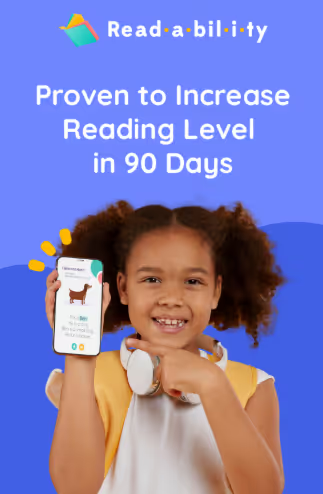
Reading apps may seem simple on the surface, open the app, choose a story, and start reading, but the most effective ones are powered by a combination of technology, learning science, and real-time feedback systems.
At their core, reading apps are designed to do one thing: help children become better readers through consistent, guided practice. But how they accomplish that can vary significantly.
The difference between a basic reading app and a truly effective one comes down to how actively it supports the child during the reading process.
The Three Core Functions of Reading Apps
Most modern reading apps are built around three essential components:
1. Content Delivery (Digital Books)
Every reading app starts with content, stories, passages, or leveled texts. These are typically organized by:
- Age or grade level
- Reading difficulty
- Topics or interests
The goal is to give children access to material that’s appropriate for their skill level while keeping them engaged. However, content alone doesn’t improve reading skills. What matters is what happens while the child is reading.
2. Guided Reading Support
This is where more advanced apps separate themselves.

With Readability Tutor, the app doesn’t just display text, it actively participates in the reading process. As a child reads aloud:
- The app listens using voice recognition
- It detects mispronunciations or skipped words
- It provides immediate corrections or guidance
This real-time support is critical. Without it, children may continue practicing mistakes, which can slow progress and impact comprehension.
3. Comprehension Reinforcement
After reading, effective apps include questions or activities that help children process what they’ve read. These typically focus on:
- Main ideas
- Key details
- Vocabulary
- Inference
This step ensures that reading isn’t just about recognizing words, it’s about understanding meaning.
The Role of Adaptive Technology
One of the most important features of modern reading apps is adaptation. Every child learns at a different pace, and reading apps account for this by adjusting:
- Text difficulty
- Question complexity
- Level of support
For example, if a child struggles with a passage, the app may:
- Offer easier text next time
- Provide more guidance
- Reinforce specific skills
If the child performs well, the app gradually increases difficulty to keep them challenged. This creates a personalized learning experience that evolves over time.
How Readability Tutor Brings It All Together
Readability Tutor is designed to integrate all of these elements into a single, seamless experience. Instead of treating reading as separate steps, read, then test, it combines them into one continuous learning process.
Real-Time Feedback Loop
The app creates an ongoing cycle:
- The child reads aloud
- The app listens and corrects in real time
- The child adjusts immediately
- Comprehension is reinforced afterward
This loop helps children learn faster because they’re correcting mistakes as they happen, not after the fact.
Focus on Fluency and Accuracy
By supporting pronunciation and pacing, the app helps children read more smoothly. This is important because fluency directly impacts comprehension.
When reading becomes more automatic, children can focus on meaning instead of decoding.
Data-Driven Progress Tracking
Behind the scenes, the app tracks:
- Reading accuracy
- Words that cause difficulty
- Fluency trends
- Comprehension performance
Parents can use this information to understand progress and identify areas that need more attention.
Why This Approach Works
Reading apps are most effective when they mimic the experience of working with a tutor. Without guidance:
- Children may reinforce incorrect habits
- Progress can be slow or inconsistent
- Comprehension gaps may go unnoticed
With guided support:
- Mistakes are corrected immediately
- Skills build more efficiently
- Confidence improves alongside ability
That’s why apps that actively participate in the reading process tend to deliver better results.
Common Misconceptions About Reading Apps
There are a few common assumptions that can lead to less effective choices:
“More books = better results”
Access to content is helpful, but without guidance, it doesn’t guarantee improvement.
“Kids can learn independently with any app”
Some independence is good, but most children benefit from real-time support, especially early readers.
“Quizzes alone build comprehension”
Quizzes measure understanding, but they don’t always teach it. Instruction during reading is just as important.
What Makes a Reading App Truly Effective
When evaluating how reading apps work, the most important question is: Does the app actively help the child improve? The most effective apps include:
- Real-time reading support
- Adaptive difficulty
- Integrated comprehension practice
- Clear progress tracking
These elements transform reading from a passive activity into an active learning experience.
Reading apps work best when they function as more than just digital books. They need to guide, correct, and reinforce learning throughout the entire reading process.
Readability Tutor exemplifies this approach by combining real-time feedback, personalized learning, and comprehension support into one cohesive system.
For parents, that means reading time becomes more than practice, it becomes meaningful progress toward stronger, more confident reading skills.
Welcome to the world of Readability, where we're not just teaching reading—we're opening doors to the future.