Summary: Reading games transform literacy practice from a chore into family fun. This guide provides 12 research-backed games across six core reading skills, plus a ready-made 4-week family plan to build sustainable routines. Learn how to make reading games low-prep, high-impact, and perfectly suited to your child's learning level.
Why Should Families Use Reading Games for Kids at Home?
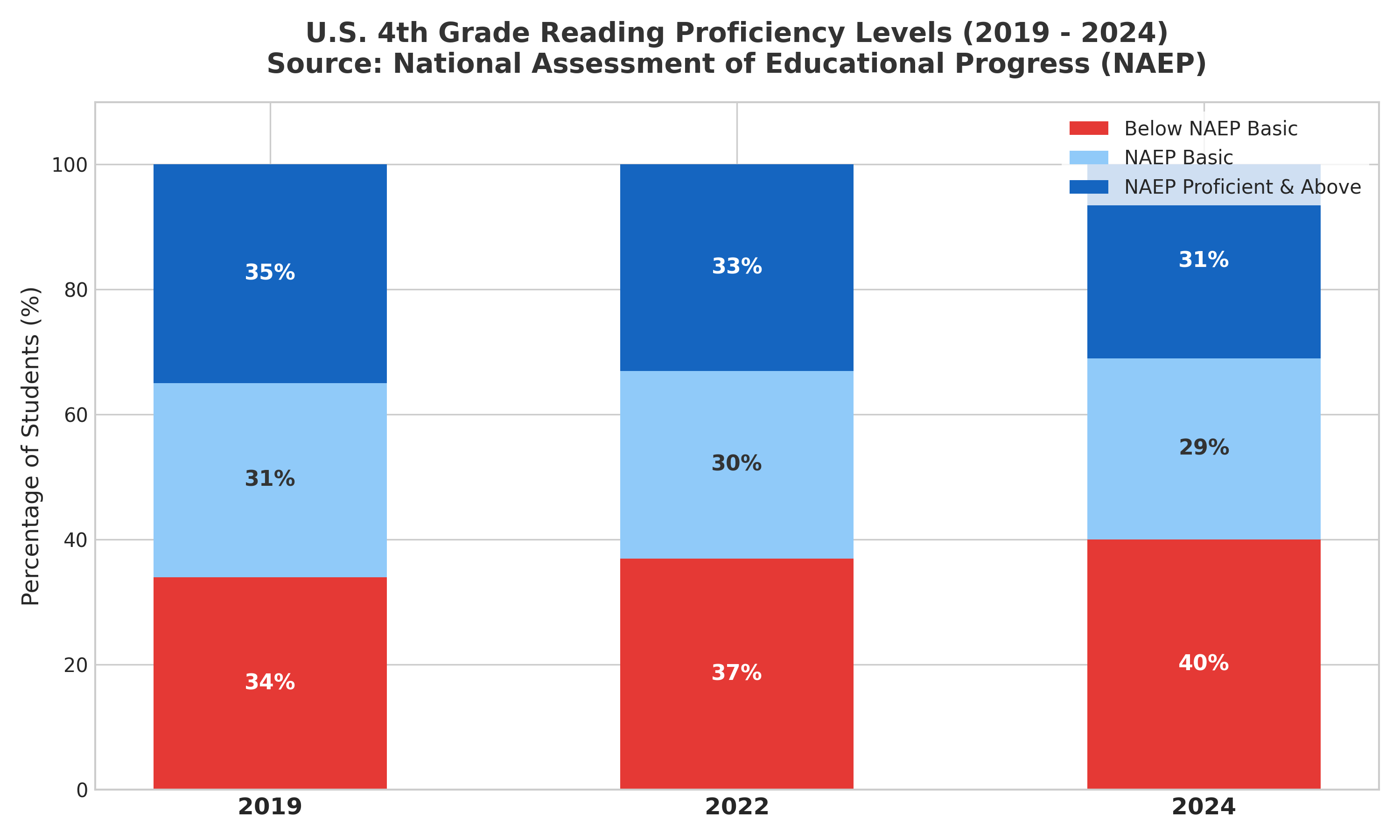
The 2024 National Assessment of Educational Progress (NAEP) report reveals a troubling trend: only 31% of fourth graders read at or above the proficient level, down from 35% in 2019. Meanwhile, 40% of students now fall below basic proficiency—a 6-percentage-point increase in just five years. This crisis demands action, and research shows that play-based learning is one of the most effective interventions parents can implement at home.
Reading games work because they combine three essential elements: repeated practice, immediate feedback, and intrinsic motivation. Unlike worksheets or flashcards, games make children want to practice. A child who plays "Sound Swap" for 10 minutes engages in phonemic awareness practice that feels like play, not work.
How Do I Choose the Right Reading Games for My Child's Skill Level?
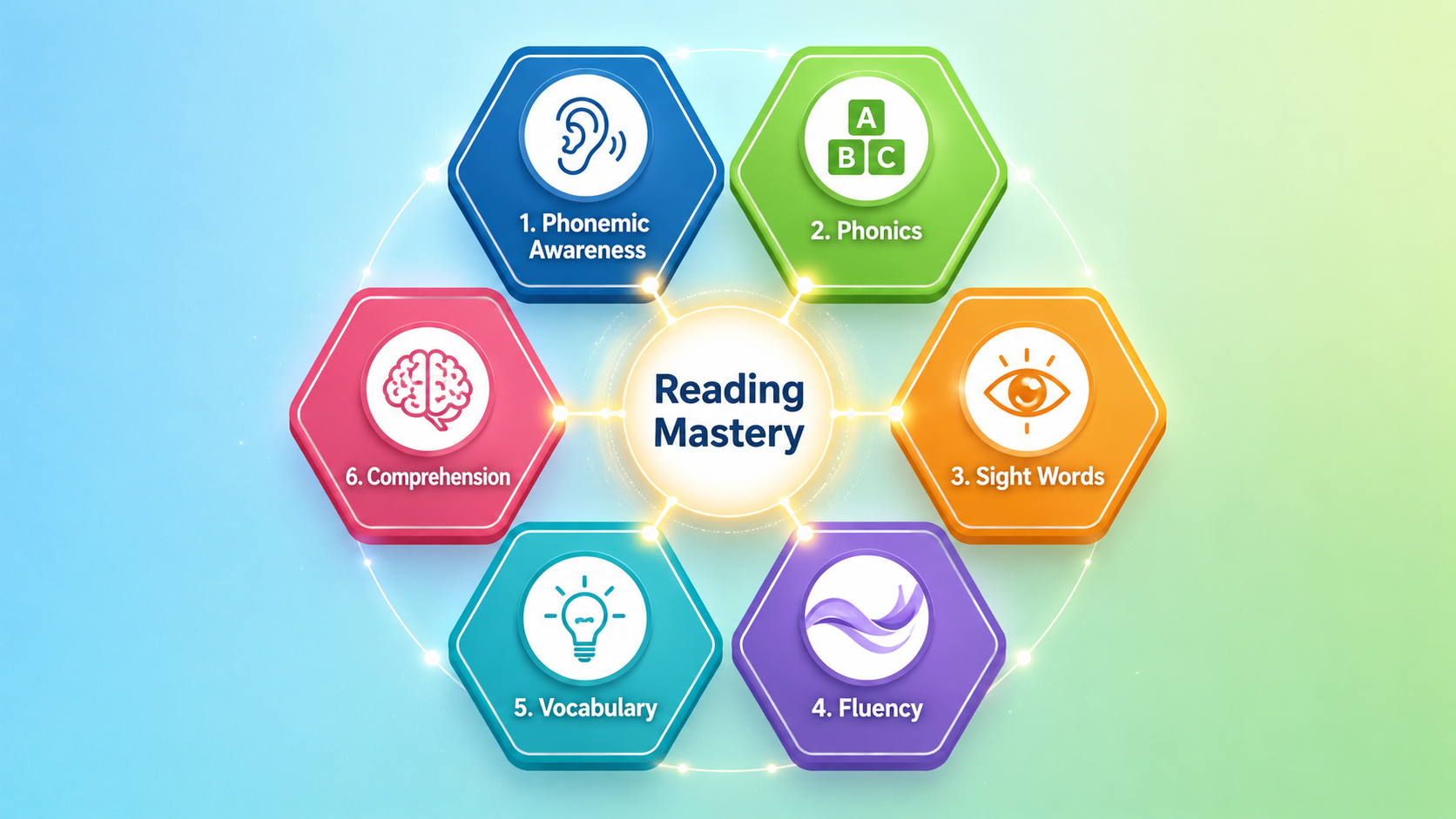
The six core reading skills form the foundation of literacy development. Each skill builds on the others, and games should target specific skills to maximize learning. Here's what each skill means and why it matters:
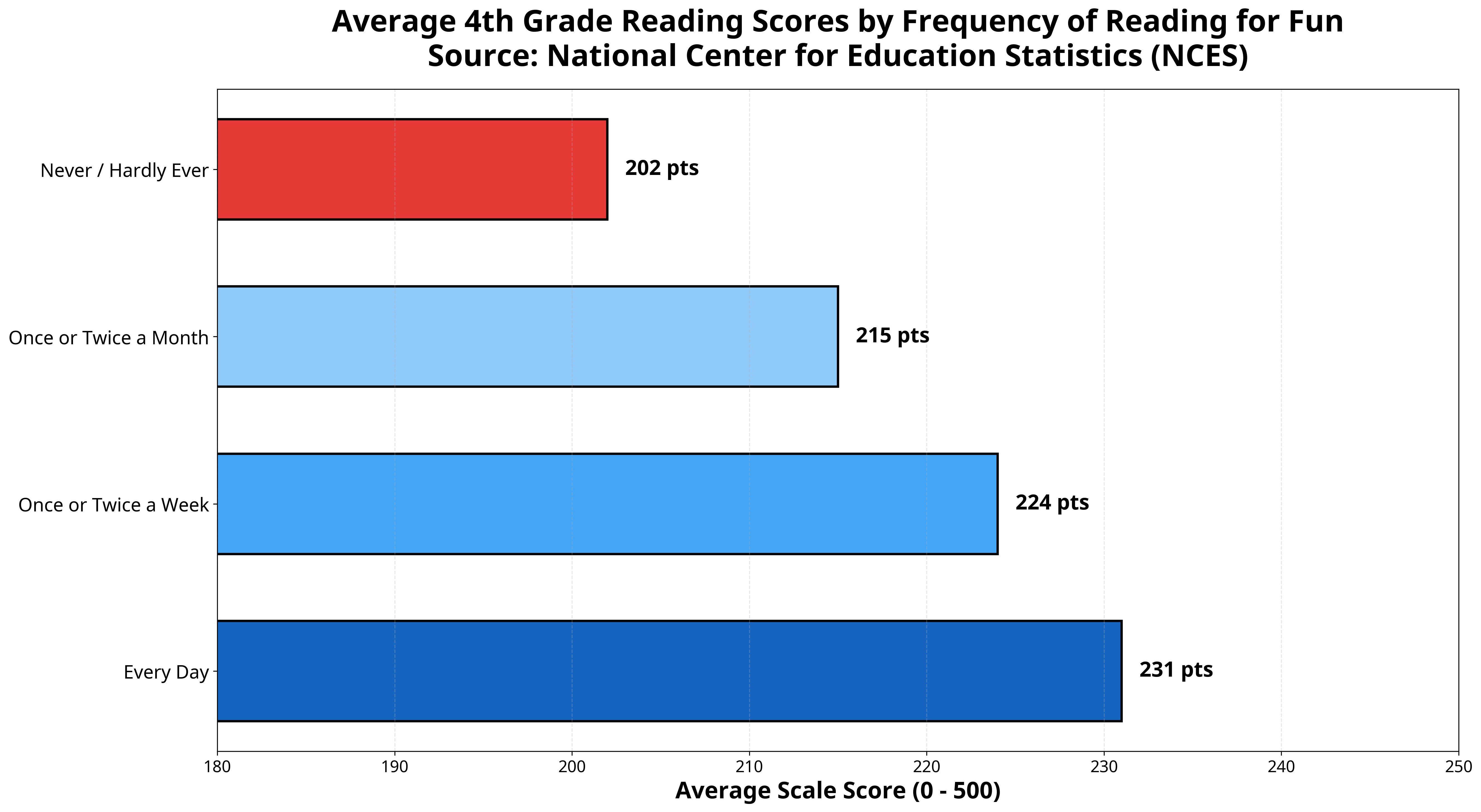
Research shows that children who read for fun at home score significantly higher on standardized reading assessments. Students who read every day average 231 points on the NAEP scale, compared to just 202 points for students who rarely or never read at home—a 29-point gap that compounds over time.
What Makes an Effective Reading Game?
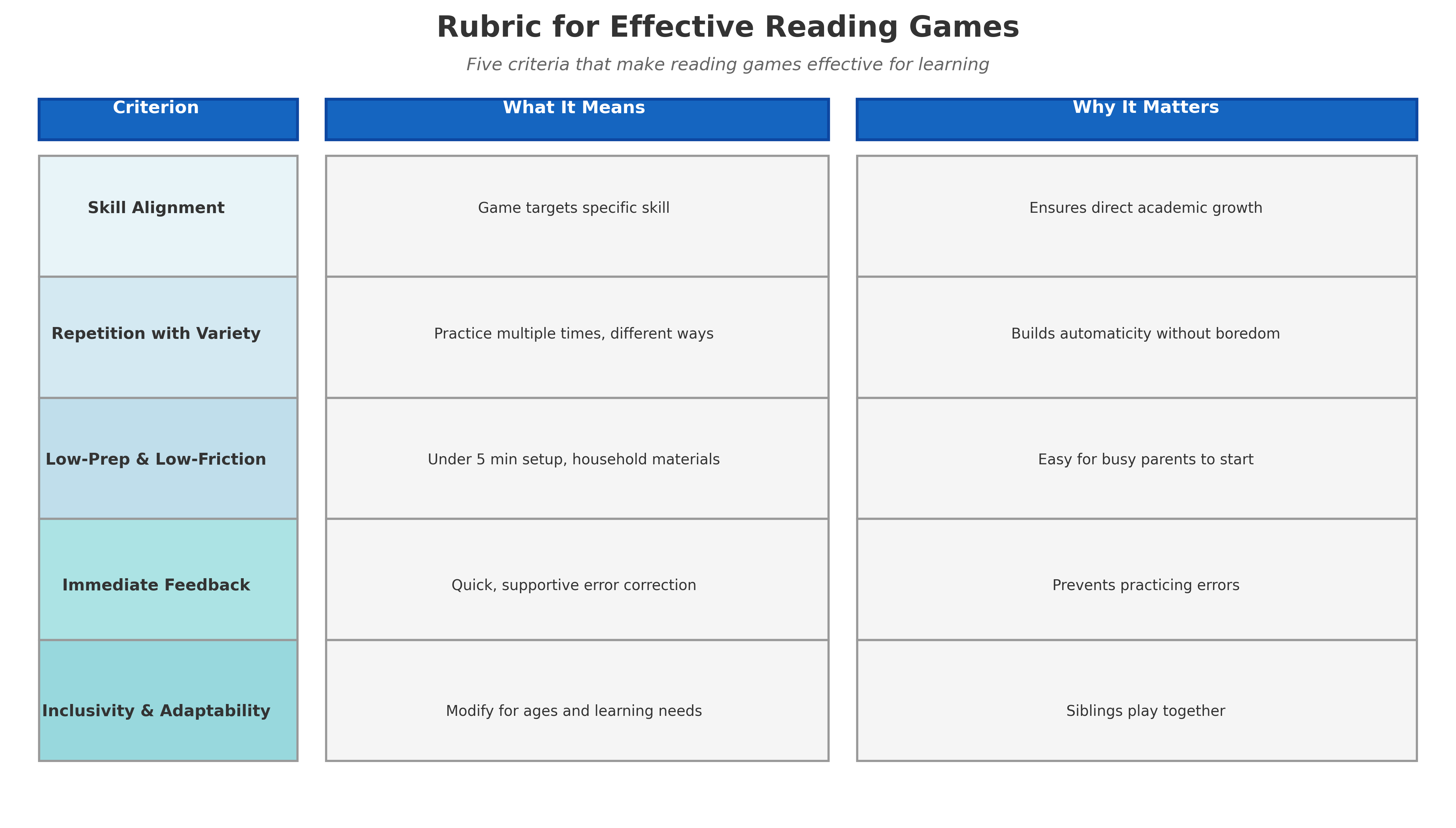
Not all games are created equal. An effective reading game should meet five criteria:
12 Research-Backed Reading Games Organized by Skill
Here are 12 games you can start playing today, organized by the six core reading skills. Each requires minimal prep and uses household materials.
Phonemic Awareness Games (Ages 4-6)
1. Sound Swap - Say a word aloud (e.g., "cat"). Ask your child to replace the first sound with a different one (e.g., "bat," "hat," "sat"). This builds awareness that words are made of individual sounds. Learn more about phonics and decoding.
2. Rhyme Time Toss - Toss a ball back and forth while saying rhyming words. You say "cat," they say "bat." Continue for one minute. This develops phonemic awareness and makes practice physical and fun.
Phonics & Decoding Games (Ages 5-7)
3. Roll-a-Word - Use dice or a spinner to create letter combinations. Roll three times and blend the sounds together. "B-a-t = bat!" This builds blending automaticity. Understand decoding in reading.
4. Build It, Read It - Use magnetic letters or letter cards to build words. Start with simple CVC words (cat, dog, run) and progress to blends (stop, flip, grin). Your child builds, then reads aloud.
Sight Word Games (Ages 5-8)
5. Sight Word Swat - Write 5-10 sight words on cards and lay them on a table. Call out a word and have your child swat it with a fly swatter. Fast-paced and engaging. Explore vocabulary-building apps and activities.
6. Sight Word Snap - Play a card game where players match sight words. When two matching words are played, the first to say "Snap!" wins the pair.
Fluency Games (Ages 6-9)
7. Re-read Relay - Have your child read the same short passage three times in a row, timing each read. Watch their speed and expression improve with each repetition. This builds automaticity and confidence.
8. Echo and Perform - You read a sentence with expression, then your child echoes it, mimicking your tone and pace. Then switch roles. This teaches prosody (reading with expression).
Vocabulary Games (Ages 6-10)
9. Word Detective - Pick a word from a book you're reading. Ask: "What does this word mean? Have you heard it before? Can you use it in a sentence?" This builds word consciousness.
10. Synonym Scramble - Write a word on a card (e.g., "happy"). Challenge your child to think of as many synonyms as possible (glad, joyful, cheerful, delighted). This builds semantic knowledge.
Comprehension Games (Ages 7-11)
11. Question Cubes - Create a cube with question words on each side (Who? What? Where? When? Why? How?). Roll the cube after reading a passage and answer the question that appears. Learn what reading with comprehension means.
12. Two Truths and a Twist - After reading a story, you make three statements about the plot. Your child guesses which one is false. This requires active comprehension and critical thinking.
10 Quick-Start Screen-Free Reading Games You Can Play Today
If you want to start immediately with zero prep, here are 10 games using only materials you already have at home:
- Rhyming Walk - Walk around the house saying rhyming words. "Apple, chapel, dapple..."
- Sound Hunt - Say a sound and have your child find objects that start with that sound.
- Letter Hop - Write letters on paper squares and have your child hop to the letter you call out.
- Story Retell - Read a short story, then have your child retell it in their own words.
- Word Charades - Act out sight words or vocabulary words without speaking.
- Sentence Building - Give your child three words and ask them to build a sentence using all three.
- Reading Scavenger Hunt - Hide words around the house and have your child find and read them.
- Dialogue Practice - Read a picture book and assign character voices. Switch roles and read again.
- Question Game - After reading, you ask questions and your child answers. Then switch roles.
- Word Prediction - Read a sentence and pause before the last word. Have your child predict what comes next.
Make It a Family Ritual: Building a Sustainable 15-Minute Reading Game Routine
The key to success is consistency, not intensity. A 15-minute game session three times per week is more effective than a 60-minute marathon once a month. Here's a simple framework:
Minutes 0-2: Warm-Up - Start with a familiar game your child loves. This builds confidence and sets a positive tone.
Minutes 2-10: Skill Practice - Play a game targeting a specific skill. Focus on the skill your child is currently learning (e.g., if they're learning sight words, play "Sight Word Swat").
Minutes 10-15: Cool-Down - End with a game your child finds easiest or most fun. This ensures they finish feeling successful and eager to play again tomorrow.
Pro Tip: Use a kitchen timer so your child can see time passing. This builds awareness of duration and makes the activity feel like a game within a game.
How Do I Track Progress Without Pressure?
Progress tracking should feel celebratory, not evaluative. Here are three low-pressure ways to monitor growth:
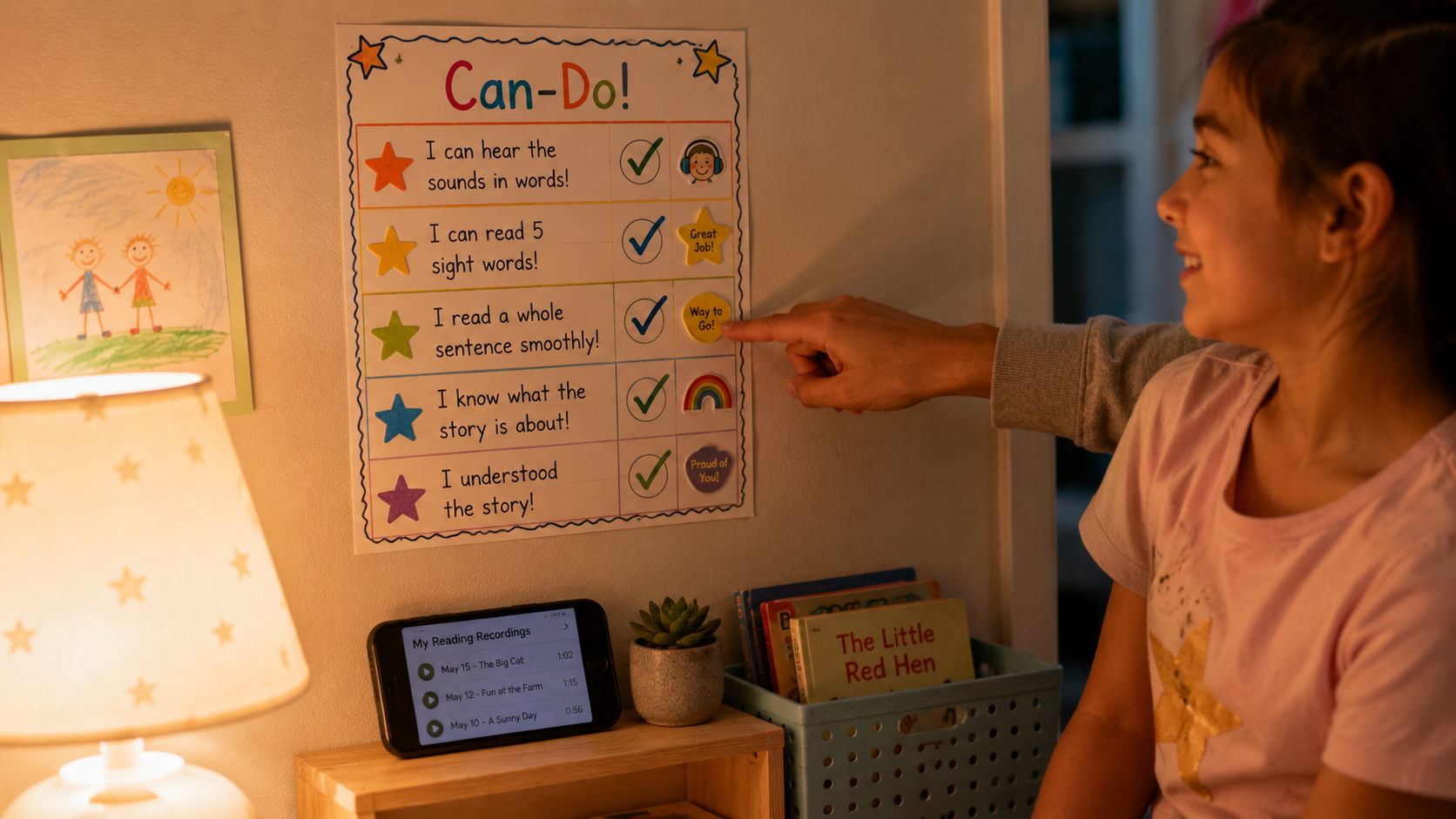
1. Audio Recordings - Record your child reading the same passage once per week. Play back recordings from a month ago to show how much they've improved. This is powerful, tangible evidence of progress.
2. Can-Do Checklists - Create a simple checklist with statements like "I can hear the sounds in words," "I can read 5 sight words," and "I can read a whole sentence smoothly." Let your child check off items as they master them. Explore reading activities for struggling readers.
3. Game Scorecards - Keep a simple tally of how many rounds your child wins in a game over time. Improvement in speed or accuracy is visible progress.
Shift Your Praise: Growth Mindset Language Matters
How you respond to your child's performance shapes their relationship with reading forever. Research on growth mindset shows that praising effort and strategy—not innate ability—leads to greater resilience and achievement.
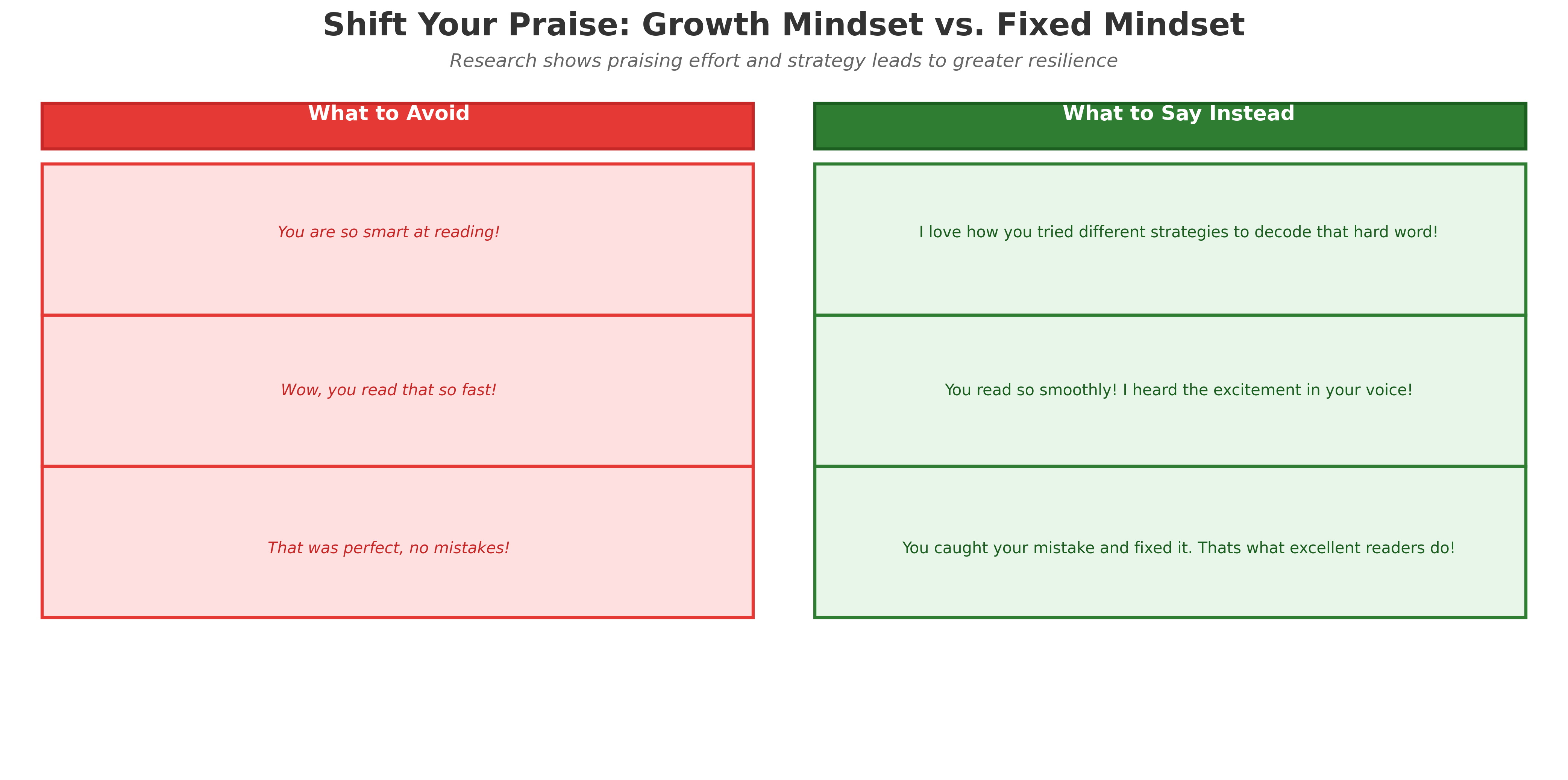
The difference is subtle but powerful. Fixed mindset praise ("You're so smart!") tells children that reading ability is innate and unchangeable. Growth mindset praise ("I love how you tried three different strategies!") tells children that effort and strategy lead to improvement.
A Simple 4-Week Family Plan for Reading Games
Ready to get started? Here's a ready-made plan that takes the guesswork out of which games to play each week:
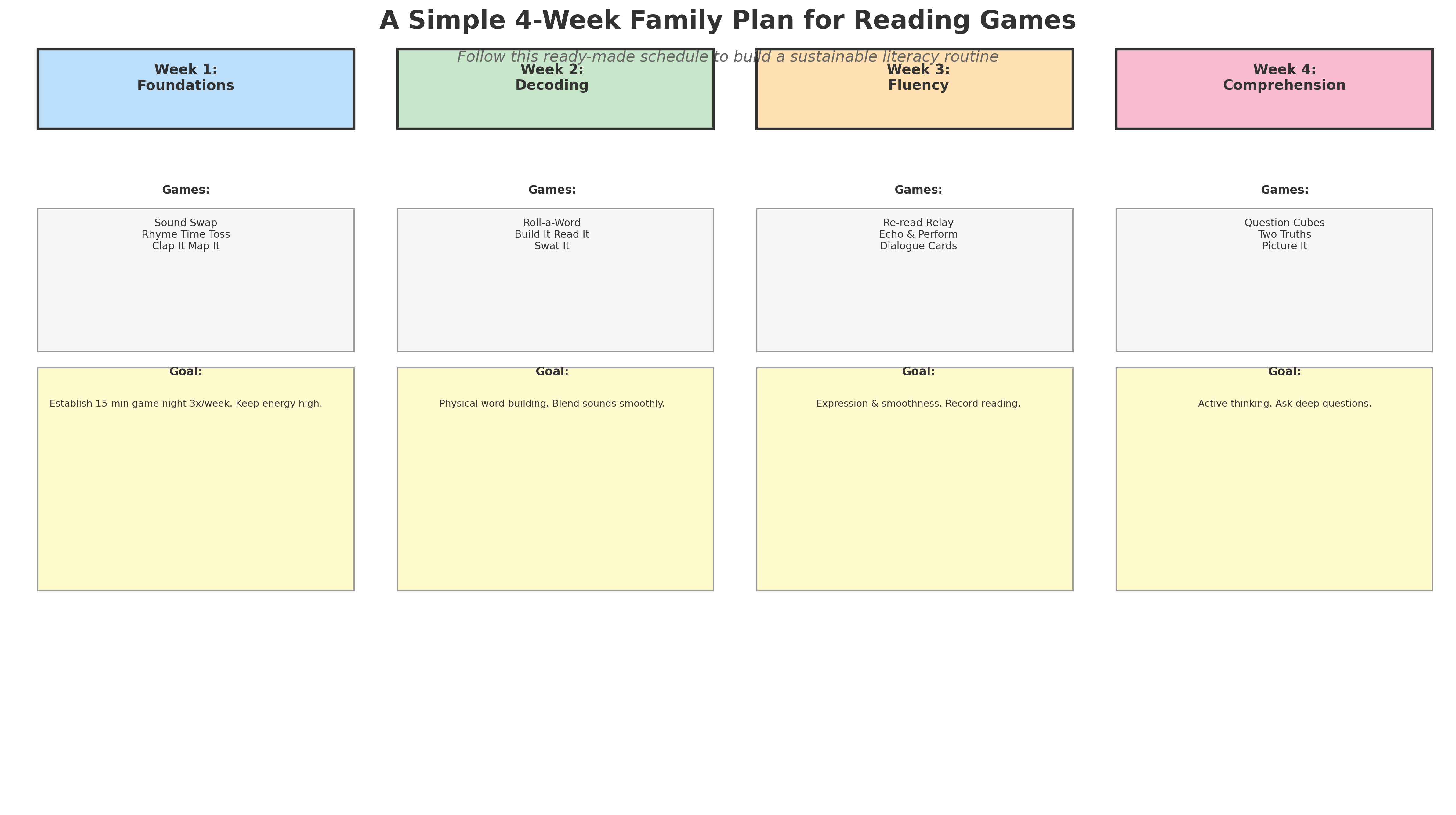
This plan is flexible. If your child loves a particular game, keep playing it. If a game isn't working, swap it for another. The goal is to build a sustainable habit, not to follow a rigid schedule.
How Do I Integrate Reading Games with Readability's Tools?
Readability Tutor complements at-home reading games by providing personalized, adaptive reading practice. While games build specific skills through play, Readability offers:
- Personalized Reading Levels - Understand reading levels by grade to ensure your child is reading at the right difficulty level.
- Multisensory Learning - Readability combines text, audio, and visual supports—similar to how games engage multiple senses.
- Immediate Feedback - Just like games, Readability provides instant feedback on comprehension and decoding.
- Progress Tracking - Readability's dashboard shows exactly which skills your child has mastered and which need more practice.
The combination of at-home games and structured reading practice creates a powerful, comprehensive approach to literacy development.
Troubleshooting Common Challenges
Challenge: "My child refuses to play reading games."
Solution: Start with games that feel more like play than learning. Learn how to teach reading to 1st graders in ways that feel natural and fun. Try "Word Charades" or "Rhyming Walk" first—these feel like pure play.
Challenge: "We get bored quickly."
Solution: Rotate games frequently. Play each game for 1-2 weeks, then switch. This keeps novelty high and engagement strong.
Challenge: "My child is frustrated by games they lose."
Solution: Modify games so your child can win. Play cooperative games where you work together against a timer, rather than competitive games where someone loses. Understand how screen time affects reading development and balance digital and physical games.
Challenge: "I don't have time for this."
Solution: Start with just 10 minutes, three times per week. That's only 30 minutes total—less than one episode of a TV show. Consistency matters more than duration.
Frequently Asked Questions About Reading Games for Kids
What age should kids start playing reading games?
Children as young as 3-4 can play phonemic awareness games like "Rhyme Time Toss." By age 5, most children are ready for phonics games. Tailor games to your child's current skill level rather than their age.
How often should we play reading games?
Three to five times per week is ideal. This provides enough repetition to build skills without causing fatigue or boredom. Consistency matters more than duration.
Can reading games replace formal reading instruction?
No. Games are a supplement to—not a replacement for—systematic phonics instruction and guided reading practice. They work best when combined with structured literacy programs.
What if my child is significantly behind in reading?
Games are still valuable, but they should be paired with more intensive intervention. If your child struggles with reading comprehension, consider working with a reading specialist or using adaptive programs like Readability alongside games.
How do I know if reading games are working?
Look for these signs of progress: increased confidence, willingness to attempt harder words, faster reading speed, better comprehension of stories, and—most importantly—increased enjoyment of reading.
Are digital reading games as effective as physical games?
Both are valuable. Physical games build social connection and executive function skills. Digital games provide immediate feedback and personalization. Ideally, use a mix of both.
What if my child has dyslexia or a reading disability?
Reading games can still help, but they should be designed with the specific disability in mind. Games should emphasize multisensory learning and provide extra scaffolding. Work with a specialist to adapt games appropriately.
How long before we see results?
Some children show improvement in confidence and engagement within 1-2 weeks. Measurable skill gains typically appear within 4-8 weeks of consistent practice. Remember: the goal is sustainable growth, not quick fixes.
Final Thought: Reading games aren't just about building skills—they're about building a lifelong love of reading. When children associate reading with joy, connection, and play, they become readers for life.