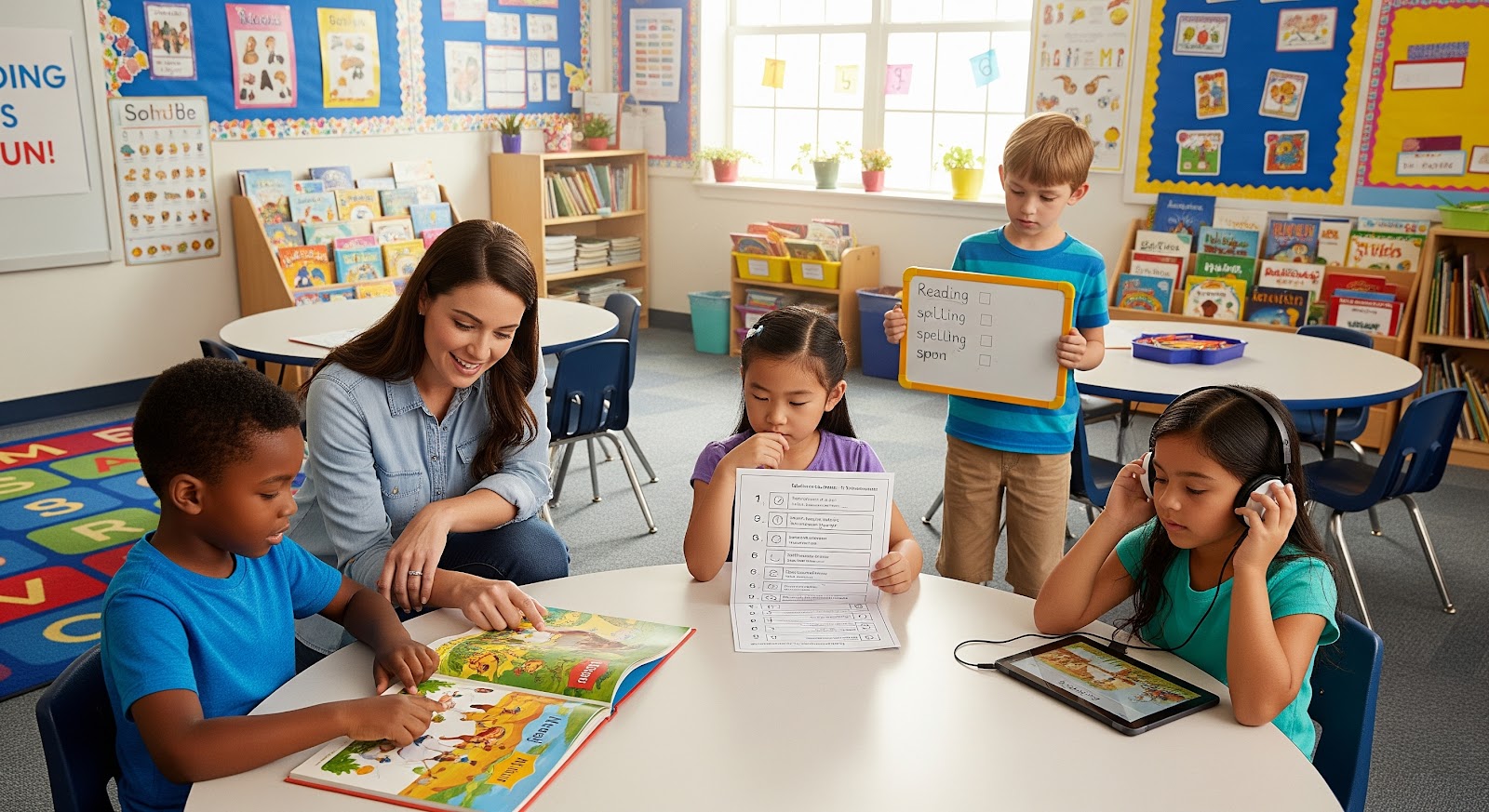
Reading assessments are more than just tests; they’re essential tools that guide how children learn to read and how adults help them succeed. Whether in the classroom or at the kitchen table, effective reading assessments allow educators and parents to understand where a child is thriving and where support is needed. By measuring specific reading skills such as phonemic awareness, decoding, fluency, vocabulary, and comprehension, assessments offer a window into a child’s literacy development.
The Role of Reading Assessments in Literacy Development
Strong literacy instruction begins with accurate, consistent assessment. From early learners just beginning to decode words to older students working on analyzing texts, reading assessments help pinpoint a child’s current reading level, track growth over time, and uncover learning gaps. Without these insights, instruction becomes guesswork.
Different types of reading assessments serve distinct purposes; some diagnose early reading struggles, while others monitor fluency or evaluate comprehension. When used appropriately, these tools support instruction that is responsive and personalized, building a foundation for confident, lifelong readers.
How Assessments Inform Instruction and Support at Home
Reading development doesn’t stop at school. For families, assessments can offer clarity on their child’s progress and needs. With the right tools, parents can see more than just test scores; they can view trends in accuracy, fluency, and comprehension that reflect their child’s real-world reading habits.
These insights can help guide how parents support their children at home, whether through targeted reading practice, using educational apps, or simply choosing books that are at an appropriate level. For teachers, ongoing assessment data makes it easier to tailor instruction, group students by need, and track whether interventions are working.
The Increasing Demand for Clarity Between Teachers and Parents
In today’s educational landscape, there’s growing recognition of the importance of collaboration between teachers and parents. Families want more than generic report cards; they want meaningful, actionable feedback. At the same time, teachers need reliable, easy-to-communicate data to show student progress and make instructional decisions.
As reading assessments become more sophisticated, there’s a rising expectation for transparency and partnership. When teachers and parents can speak the same “assessment language,” students benefit from consistent support in every environment they learn at school and at home.
Understanding the Basics of Reading Assessments
Reading assessments are structured methods used to evaluate a student’s reading skills across various domains such as phonemic awareness, phonics, fluency, vocabulary, and comprehension. These assessments help determine how well a student can decode words, understand text, and make meaning from what they read.
For educators, reading assessments guide instructional decisions. For parents, the program offers valuable insight into a child’s reading development at home. The ultimate goal is not just to test students, but to inform teaching and support learning.
Types of Reading Assessments
Reading assessments aren’t one-size-fits-all. Different types are used depending on the purpose, timing, and specific literacy skill being evaluated. Understanding these distinctions can help parents and teachers choose the right tools and interpret the results with greater accuracy.
Formative vs. Summative Reading Assessments
Formative assessments are ongoing, informal checks of a student’s reading skills. These may include running records, reading conferences, or fluency checks during small-group lessons. They help teachers adjust instruction in real-time and give students immediate feedback.
Summative assessments, on the other hand, are typically given at the end of a unit, term, or school year. Examples include end-of-grade standardized tests or benchmark exams. These offer a broad picture of student achievement but don’t usually guide daily instruction.
Diagnostic vs. Progress Monitoring
Diagnostic assessments are often used at the beginning of the school year or when a reading difficulty is suspected. These tools help uncover the root causes of a student’s reading challenges by evaluating specific skills like decoding, word recognition, or comprehension strategies.
Progress monitoring assessments are shorter, frequent tools designed to track growth over time. These are especially useful for students receiving intervention, as they show whether the current strategies are working or need to be adjusted.
Curriculum-Based Measurement
Curriculum-Based Measurement is a type of progress monitoring that involves brief, standardized tasks directly tied to classroom instruction. For example, a student may read a grade-level passage aloud for one minute while the teacher records the number of words correct per minute and errors. CBMs are widely used because they’re quick, reliable, and offer clear benchmarks to evaluate reading fluency and comprehension over time. They’re also helpful in communicating progress to parents in an easy-to-understand format.
Best Practices for Assessing Reading at Different Ages
As students grow, so do their reading skills and the way we assess those skills must evolve accordingly. Effective reading assessments are age-appropriate, developmentally aligned, and tailored to students' cognitive, linguistic, and academic stages. Whether assessing an emerging reader or an older multilingual learner, the approach must reflect what matters most at that age.
Early Readers (K–2): Focus on Phonemic Awareness, Decoding, and Fluency
In the earliest grades, reading instruction is grounded in the foundational skills that make up the building blocks of literacy. Assessments during this stage should focus on how well students are acquiring and applying these skills.Key areas to assess:
- Phonemic awareness: the ability to hear, identify, and manipulate individual sounds in spoken words
- Phonics and decoding: recognizing letter-sound relationships and blending them to read words
- Fluency: reading with accuracy, appropriate pacing, and expression
Best practices:
- Use one-minute oral fluency checks to measure words correct per minute and note decoding challenges.
- Conduct phoneme segmentation and letter-sound identification assessments to monitor early reading readiness.
- Employ running records with simple leveled texts to track word accuracy and self-correction behaviors.
- Keep assessments brief and consistent to avoid fatigue and anxiety, while still capturing growth over time.
These assessments give teachers and parents a clear sense of whether a child is on track with the foundational skills necessary to become a fluent reader.
Elementary Students (Grades 3–5): Integrate Comprehension and Vocabulary
By third grade, most students have moved from “learning to read” into “reading to learn.” At this stage, assessments must shift toward evaluating how well students understand increasingly complex texts and how they use language to express ideas.Key areas to assess:
- Vocabulary knowledge: both recognition of words and ability to use them in context
- Reading comprehension: understanding literal meaning, making inferences, identifying main ideas, and summarizing
- Fluency and phrasing: still important, especially for students who struggle with pacing or expression
Best practices:
- Use retell assessments and oral or written comprehension questions to assess depth of understanding.
- Track academic vocabulary development with simple checklists or close tasks.
- Mix question types (multiple-choice, short-answer, open-ended) to capture a range of comprehension strategies.
- Use leveled passages for regular fluency and comprehension checks, especially for students who may still need decoding support.
For students in this group, reading assessments should capture not only what they understand, but how they make meaning from increasingly varied and complex texts.
Middle Grades and ELLs: Layered Comprehension Strategies and Fluency Tracking
In the upper elementary and middle school years, reading demands intensify. Students must manage longer texts, unfamiliar content, and more abstract themes. For English Language Learners and students with learning differences, these challenges can be amplified. Assessments at this level should emphasize higher-order thinking, language integration, and support for individual needs.Key areas to assess:
- Inferential and critical thinking: drawing conclusions, analyzing author’s purpose, evaluating arguments
- Strategic reading behaviors: using context clues, rereading, asking questions, and summarizing
- Oral reading fluency: still essential for struggling readers or ELLs needing pronunciation support
- Language proficiency: for ELLs, separating reading difficulties from language acquisition barriers
Best practices:
- Include text-based writing prompts to assess both comprehension and expressive language skills.
- Use graphic organizers during reading assessments to capture how students process and synthesize information.
- For ELLs, incorporate oral reading and listening assessments to evaluate comprehension independently from writing challenges.
- Regularly monitor reading stamina, engagement, and vocabulary growth using both formal and informal tools.
Assessments for middle-grade students and ELLs should be layered and flexible providing insight into both cognitive processes and language development. Progress is often most visible when multiple data points are considered over time.
Making Reading Assessment Actionable
Reading assessments are only valuable when they lead to meaningful action. Whether at home or in the classroom, assessment results should inform how instruction is delivered, how support is given, and how students reflect on their own growth. When interpreted thoughtfully, this data becomes a powerful tool for ensuring every child moves forward with confidence and purpose.
Using Data to Adapt Instruction or Home Routines
Assessment results offer a roadmap for adjusting teaching strategies and daily routines. In the classroom, a teacher might notice that a student’s fluency score is below benchmark expectations. Rather than continuing with the same materials, the teacher can introduce repeated reading exercises, provide more decodable texts, or shift focus to specific phonics patterns that need reinforcement.
At home, parents can use similar data to guide book selection or reading habits. For example, if a child struggles with comprehension, families might pause more frequently during reading to ask questions or discuss what’s happening in the story. If fluency is the challenge, they might work on reading aloud for short periods daily, using a timer to build speed and confidence gradually.
Whether in school or at home, the goal is the same: make sure instruction and practice align with the child’s current needs, not just the curriculum.
Identifying Struggling Readers and Intervention Opportunities
Early detection of reading challenges can make all the difference. When a student consistently scores below grade level on assessments, especially in foundational areas like decoding or comprehension, it’s a clear signal to pause and investigate further. One low score isn’t cause for alarm, but repeated indicators of difficulty over time suggest the need for targeted intervention.
For teachers, this may lead to placing a child in a small intervention group, adjusting instructional time, or even referring them for additional support through special education services. For parents, this could mean requesting a meeting with the teacher, asking about reading interventions, or providing more structured reading time at home.
What matters most is that no struggling reader slips through unnoticed. Assessments help surface these challenges early before they become long-term roadblocks.
Encouraging Student Reflection and Ownership
When students understand their own progress, they become more engaged in their learning. Sharing reading goals and celebrating milestones can help transform assessment from something students fear into something they value.
Teachers can involve students in tracking their own fluency or comprehension scores using simple charts or journals. After a timed reading, for instance, a student might note how many words they read correctly and reflect on what felt easy or hard. This reflection builds metacognition the ability to think about one’s own thinking which is key to becoming a lifelong learner.
Even small moments of ownership matter. A student who chooses to reread a passage for clarity or asks for help with a tricky word is engaging in self-directed growth. Over time, these habits contribute to resilience, independence, and confidence in reading.
Turning Insight into Impact
Effective reading instruction doesn’t happen in isolation; it's guided by consistent, meaningful assessment. When teachers and parents use regular, balanced strategies to evaluate progress, they gain a deeper understanding of each child’s strengths and needs. Assessments are not about labeling students or assigning scores they’re about revealing the path forward.
When used thoughtfully, reading assessments do more than measure ability; they shape learning. They help teachers make responsive instructional choices and empower parents to intentionally support reading at home. Most importantly, they allow students to see their growth and take ownership of their literacy journey.
Whether it’s tracking fluency over time, monitoring comprehension strategies, or identifying early signs of reading difficulty, assessment becomes a bridge connecting instruction, home support, and student success.
For families and educators seeking a research-backed, AI-powered reading platform that supports daily assessment and instruction, not just testing Readability offers a comprehensive solution that tracks real-time progress in fluency and comprehension. Try it today to see measurable growth.