Discover cultural diversity activities for kids that make learning engaging at home or in the classroom. You’ll find step-by-step arts and crafts (African-inspired masks, Mexican papel picado, Aboriginal Australian–inspired dot painting), a curated list of multicultural picture books with discussion prompts, and a playful Say Hello language game to build empathy, reduce bias, and support SEL and culturally responsive teaching. Ideal for preschool and elementary educators and parents looking for ready-to-use ideas.
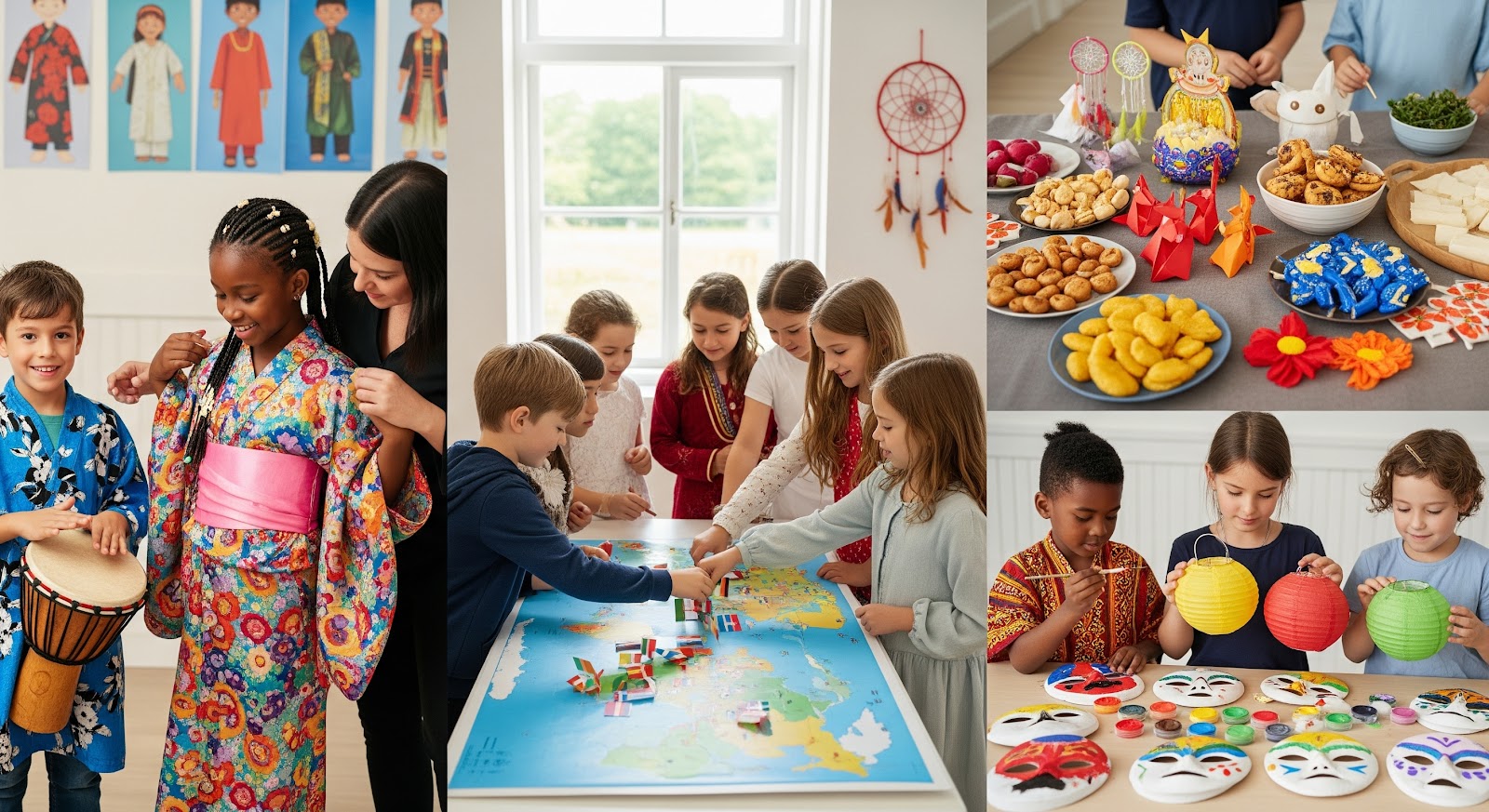
Cultural diversity refers to the presence and appreciation of multiple cultural identities, languages, customs, beliefs, and traditions within a group, community, or society. It recognizes that people come from different backgrounds and that these differences should be celebrated, not just acknowledged. For children, cultural diversity can be explored through food, music, clothing, language, stories, celebrations, and ways of thinking.In simple terms, when we talk about cultural diversity with kids, we’re helping them understand that the world is made up of many kinds of people who live, learn, and celebrate in unique ways.
Why It’s Important to Introduce Kids to Diverse Cultures Early
Early childhood is a critical time for shaping how children see themselves and others. Young minds are naturally curious and open, making it the perfect time to foster empathy, respect, and appreciation for differences. Here’s why introducing cultural diversity early matters:
- Builds Empathy and Respect: When kids are exposed to diverse cultures, they begin to see beyond stereotypes. They learn that although people may look, speak, or celebrate differently, we all share common feelings and values.
- Reduces Prejudice and Bias: Studies show that young children can develop biases by age 3. Early exposure to cultural diversity helps interrupt the formation of negative stereotypes and teaches inclusiveness as the norm.
- Prepares Children for a Global Society: Today’s children are growing up in an interconnected world. Culturally aware kids are better prepared to collaborate, communicate, and thrive in diverse classrooms and future workplaces.
- Promotes a Sense of Identity and Belonging: Celebrating multiple cultures, including their own, helps children feel seen and valued. For multicultural or immigrant families, it also reinforces pride in their heritage.
- Enhances Learning and Creativity: Diverse cultural experiences expose children to new ways of thinking, solving problems, and expressing themselves. This enriches both academic and social development.
By weaving cultural diversity into everyday learning and play, we help children grow into compassionate, confident, and curious global citizens.
Why Cultural Diversity Matters in Childhood Education
Introducing cultural diversity in early education is not just a “nice-to-have”, it’s a foundational part of helping children grow into empathetic, thoughtful, and capable members of society. The earlier children are exposed to diverse perspectives and experiences, the more naturally they embrace them throughout their lives.Here’s why it matters:
1. Builds Empathy and Reduces Bias
Children begin forming ideas about themselves and others at a very young age. Without guidance, these ideas can be shaped by stereotypes or limited exposure. Cultural diversity activities help children step into someone else’s shoes, whether it’s through a story about a child from another country or a shared cultural celebration in the classroom.Empathy grows when children:
- Hear stories from different voices
- Learn that people may face different challenges or celebrate in unique ways
- Realize that everyone deserves kindness and understanding
When kids engage with diversity, they start to notice unfairness and become more likely to stand up against exclusion or bullying. Over time, this helps dismantle bias before it can take root.
2. Encourages Open-Mindedness and Respect for Differences
Culturally diverse experiences show children that there is no single “right” way to live, think, speak, or celebrate. Instead of reacting with fear or discomfort to the unfamiliar, children learn to approach differences with curiosity and respect.This fosters:
- Positive attitudes toward peers from all backgrounds
- Confidence to ask respectful questions about unfamiliar traditions
- Appreciation for their own culture while learning about others
Open-minded children become inclusive friends, classmates, and eventually, inclusive adults.
3. Prepares Children for a Global World
Today’s children are tomorrow’s global citizens. Whether they grow up to work in diverse teams, travel the world, or collaborate online across continents, they’ll need strong cultural literacy skills to succeed.Introducing global awareness early helps children:
- Adapt more easily in multicultural environments
- Communicate more effectively with people from different backgrounds
- Understand global issues like immigration, climate change, or equity from broader perspectives
Being culturally aware is not just about knowing where countries are on a map, it’s about understanding and valuing the people who live in them.
4. Aligns with Multicultural Learning Frameworks in Early Education
Modern education standards emphasize the importance of diversity, equity, and inclusion (DEI). Programs like Social-Emotional Learning (SEL), anti-bias education, and the Culturally Responsive Teaching model all prioritize helping children understand and value cultural diversity.Incorporating cultural diversity:
- Aligns with state and national learning standards
- Supports inclusive classroom environments
- Provides a framework for celebrating all students’ identities
Educators who embed cultural activities into daily lessons help children see themselves and their classmates reflected in the curriculum, boosting confidence, participation, and a sense of belonging.
Arts & Crafts Activities
Hands-on, creative activities are a powerful way to introduce children to cultural diversity. Through crafting, children not only explore colors, shapes, and materials, they also connect with the traditions, stories, and artistic expressions of people around the world. These projects can be adapted for classroom, homeschool, or afterschool settings, and they naturally invite discussion about geography, history, and cultural values.
1. World Culture Craft Corner
Each of the following crafts highlights a specific cultural tradition and provides an opportunity for children to engage in meaningful, respectful exploration of world heritage.
Make Masks from African Cultures
What it teaches: Symbolism, storytelling, community rolesOrigin: Many African cultures use masks for ceremonial purposes, such as honoring ancestors, celebrating harvests, or marking life events. Each mask carries meaning, often related to animals, nature, or spirits.Activity:
- Provide children with cardboard, construction paper, feathers, yarn, and beads.
- Show examples of traditional African masks (e.g., from the Yoruba or Baule cultures), and discuss their meanings.
- Let kids design their own masks using geometric patterns, bold colors, and symbolism.
Adaptation Tip: For younger kids, focus on shapes and textures. For older kids, connect the mask design to a story or character they create.
Create Papel Picado from Mexico
What it teaches: Celebration, craftsmanship, cultural symbolsOrigin: Papel picado (“perforated paper”) is a traditional Mexican decorative craft made by cutting intricate patterns into tissue paper. It’s commonly used for Día de los Muertos, weddings, and festivals.Activity:
- Provide colorful tissue paper, scissors, and string.
- Fold paper and cut designs (e.g., suns, skulls, flowers).
- String the papel picado across a wall or hallway as a group decoration.
Discussion Prompt: “What do we celebrate in our families? How do decorations make a celebration special?”Adaptation Tip: Use templates for younger kids or try digital versions with printable stencils for students with fine motor challenges.
Paint Boomerangs Inspired by Aboriginal Australian Art
What it teaches: Connection to land, storytelling through symbolsOrigin: Aboriginal Australian communities have used boomerangs as hunting tools and ceremonial objects for thousands of years. They often feature dot painting, a unique style with spiritual and cultural meaning.Activity:
- Use cardboard or wooden cutouts shaped like boomerangs.
- Introduce dot painting techniques using Q-tips or paintbrush ends.
- Encourage students to create a symbolic design that tells a story about themselves, their family, or nature.
Cultural Note: Emphasize respect for Aboriginal culture and its deep connection to land and heritage. Avoid copying sacred symbols; instead, use the style to inspire personal storytelling.Adaptation Tip: Pair the art project with a picture book from Aboriginal authors to deepen the learning experience.
Bonus Tips for Educators and Parents
- Create a “Culture Wall” where kids can display their art and write short captions about what they learned.
- Use real photos or videos of cultural art forms to provide authentic context.
- Invite guest artists or parents to talk about traditions they celebrate.
Storytelling & Books
Stories are one of the most powerful ways to explore cultural diversity with children. Through books, kids can visit new places, meet characters from different backgrounds, and experience the richness of languages, customs, and worldviews, all from the comfort of a cozy reading nook or classroom carpet.
Read Around the World
What it teaches: Cultural awareness, empathy, vocabulary, critical thinkingWhy it matters: When children see themselves reflected in books ("mirrors") and learn about lives different from their own ("windows"), they develop both self-worth and compassion. A globally inclusive bookshelf supports both academic growth and social-emotional learning.
Curated Multicultural Children’s Books
Here’s a sample list of age-appropriate, diverse picture books that reflect a variety of cultures, family structures, and traditions:
Early Childhood (PreK–Grade 2)
- “Last Stop on Market Street” by Matt de la Peña – A young boy learns to appreciate beauty in everyday life on a city bus ride with his grandmother.
- “Festival of Colors” by Surishtha & Kabir Sehgal – Celebrates the Indian festival of Holi with vibrant visuals and simple cultural explanations.
- “A Big Mooncake for Little Star” by Grace Lin – A story rooted in Chinese Mid-Autumn Festival themes, blending folklore with a sweet parent-child bond.
- “Fry Bread: A Native American Family Story” by Kevin Noble Maillard – Explores culture, tradition, and resilience in Native American communities.
Elementary (Grades 3–5)
- “My Name Is Yoon” by Helen Recorvits – A Korean girl adjusts to life in an American classroom while learning to embrace her name and identity.
- “The Name Jar” by Yangsook Choi – Addresses the importance of names and cultural identity with warmth and relatability.
- “Malala’s Magic Pencil” by Malala Yousafzai – An inspiring introduction to advocacy, education, and resilience from a global changemaker.
Tips for Asking Comprehension Questions About Culture and Identity
To go beyond surface-level understanding, ask open-ended, discussion-based questions that invite kids to reflect, compare, and connect. Here are some examples:
Questions to Deepen Cultural Understanding
- “What do you notice about the character’s family or community?”
- “What traditions or holidays are different from yours? What’s similar?”
- “Why do you think this tradition is important to the character?”
Questions That Promote Identity Reflection
- “How is this character like you? How are they different?”
- “What would you do in their shoes?”
- “Have you ever felt like the character in this story?”
Questions to Spark Curiosity and Respect
- “What new thing did you learn about this culture?”
- “Would you like to try something from this story, like a food, game, or celebration?”
- “How can we respect someone’s culture, even if we don’t understand all of it?”
Games & Language Activities
Games and playful interactions are essential in childhood learning, especially when it comes to language. Language-based diversity games help children hear the richness of global communication, develop phonemic awareness, and build appreciation for multilingual peers. They also offer natural opportunities for laughter, curiosity, and connection.
Say Hello! Language Game
What it teaches: Global awareness, listening skills, phonological recognition, social-emotional connectionWhy it matters: Language is one of the most personal and powerful expressions of culture. When children learn to greet others in different languages, they gain more than just vocabulary, they gain respect and understanding for people from around the world.
How to Play the “Say Hello!” Game
Step 1: Choose 5–10 Languages to Explore
Select a diverse mix of languages spoken in your classroom, community, or around the world. Some kid-friendly choices include:
- Spanish: Hola
- French: Bonjour
- Swahili: Jambo
- Mandarin Chinese: Nǐ hǎo
- Japanese: Konnichiwa
- Arabic: Marhaba
- Hindi: Namaste
- Tagalog: Kamusta
- Russian: Privet
- American Sign Language: (Hand wave or fingerspelling)
Tip: Include the native script (e.g., 你好 for Mandarin or مرحبا for Arabic) if age-appropriate, to introduce visual language diversity.
Step 2: Create Flashcards
Make a flashcard for each greeting with:
- The word (e.g., “Bonjour”)
- The language name (e.g., “French”)
- A visual cue (e.g., flag or child from that region saying hello)
- Optional: Add phonetic spelling to help with pronunciation
You can laminate these and turn them into a memory game, a matching game, or use them in circle time for group repetition.
Step 3: Build a “Hello Wall” or Bulletin Board
Turn your classroom, library, or hallway into a multicultural celebration of greetings!
- Display each greeting with its corresponding flag and language
- Encourage children to decorate the wall with drawings or photos from that culture
- Invite multilingual students or parents to record themselves saying hello or teach the class
This wall becomes a living celebration of language, sparking daily conversation and curiosity.
Learning Extensions
Practice Dialogues
Role-play mini conversations: “Hello!” “My name is ___. What’s your name?” in multiple languages. This builds confidence in communication and reinforces respectful interaction.
Sing a Hello Song
Use simple tunes to reinforce language learning, e.g., sing greetings to the tune of “Frère Jacques” or “Twinkle, Twinkle.”
Pair with Books or Videos
Read books like “Say Hello!” by Rachel Isadora or watch multilingual greetings on educational YouTube channels like “Little Pim” or “Sesame Street Global Grover.”Exposing children to cultural diversity from an early age is one of the most powerful gifts we can offer them. It’s more than just a fun activity or a themed lesson, it’s a way of shaping how they see the world and their place in it. When children are introduced to different cultures, languages, traditions, and ways of life, they learn that differences don’t divide us, they enrich us.Through activities like storytelling, art, games, and language play, kids begin to build:
- Empathy for others who live differently than they do
- Confidence in who they are and where they come from
- Openness to new experiences, people, and ideas
- A foundation for respectful, inclusive relationships, at school, at home, and later in life
The lessons children learn about diversity don’t fade when the activity ends, they echo through their choices, friendships, and understanding of justice and fairness. These early experiences influence the kind of classmates, citizens, and leaders they grow up to be.
FAQS: Cultural Activities for Kids
What are some cultural diversity activities for kids?
Try hands-on crafts and language play that connect to real traditions. Examples from the article include making African-inspired masks to discuss symbolism and community roles, cutting Mexican papel picado to explore celebration art, and painting boomerang shapes using Aboriginal Australian–inspired dot techniques for storytelling. Pair these with “Read Around the World” picture books and a “Say Hello!” language game where kids learn greetings in multiple languages and help build a classroom “Hello Wall.”
What are activities to promote diversity in the classroom?
Set up multicultural craft stations (African masks, papel picado, boomerang dot art), run a “Read Around the World” circle with open-ended questions about identity and traditions, and create a “Culture Wall” where students share art and captions about what they learned. Add a “Say Hello!” greeting game with flashcards and songs, invite multilingual parents or community guests, and use reflection prompts to connect lessons to empathy, respect, and culturally responsive learning.
What are examples of cultural activities?
Examples include: making African-inspired masks that teach symbolism; creating Mexican papel picado for festival decor; painting boomerang shapes with dot art to tell personal or nature stories; hosting a “Read Around the World” book time featuring Native American, Chinese, Indian, and Korean stories; and playing a “Say Hello!” language game with greetings, scripts, and an interactive bulletin board. These cultural activities for kids and students highlight art, language, stories, and celebrations.
What are cultural activities for preschoolers?
Keep it simple and sensory. Use tissue-paper stencils for easy papel picado, focus on colors and shapes for mask-making, and try Q-tip dot painting on cardboard boomerangs for fine-motor practice. Read short, diverse picture books like Fry Bread or Festival of Colors, sing a “hello” song with 3–5 greetings (including an ASL wave), and build a kid-made “Hello Wall” with drawings and flags. Each activity introduces cultural diversity for kids in age-appropriate, playful ways.
What is cultural diversity for kids?
Cultural diversity means many cultures, languages, traditions, and beliefs are present and appreciated in a community. For kids, it’s learning that people may look, speak, celebrate, and think in different ways—and that these differences are worth understanding and respecting. Early exposure builds empathy, reduces bias, supports identity and belonging, and prepares children to learn and work with others in a global world.