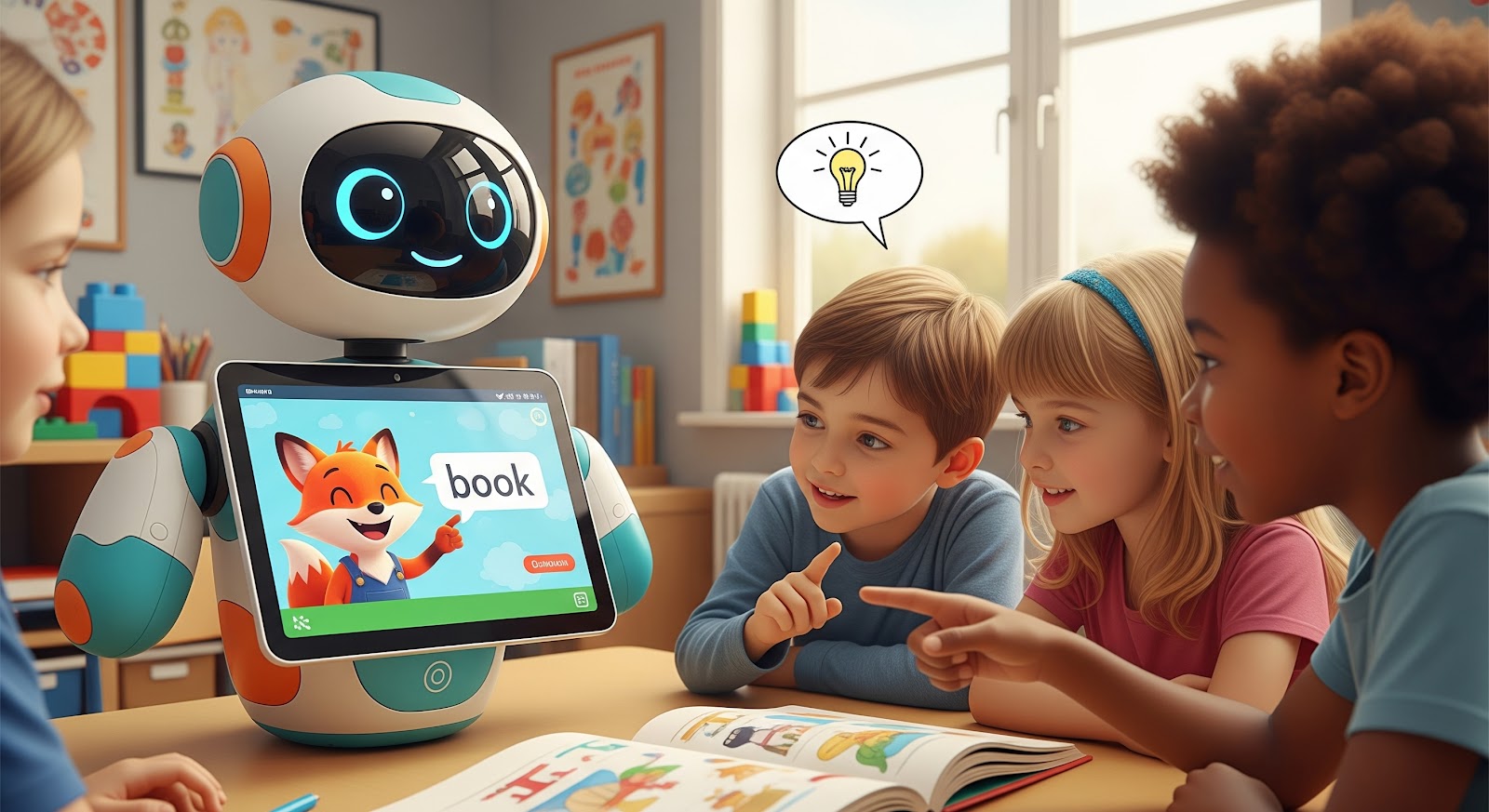
Artificial intelligence has rapidly transformed multiple sectors, from healthcare to finance, and education is no exception. As classrooms increasingly integrate technology to support diverse learners, one of the most promising advancements is the development of AI tutors for literacy. These intelligent systems are not just digitized reading programs; they’re dynamic, responsive tools that listen to students read aloud, provide real-time feedback, personalize instruction, and track progress with a level of precision that traditional methods often cannot match.
Literacy is the foundation of all learning, yet millions of students struggle to master reading fluency and comprehension, especially in the early grades. National data continues to highlight concerning trends, with many students failing to read at grade level by third grade, a milestone widely considered critical for long-term academic success. The stakes are even higher for students with learning differences, such as dyslexia, ADHD, or autism, and for English Language Learners who often face language barriers in traditional classrooms.
This is where AI-powered literacy platforms like Readability have begun to redefine the landscape of reading instruction. Unlike assessment-first platforms that test without teaching, Readability functions as a true AI tutor, guiding students through daily reading practice while offering scaffolded support aligned with the Science of Reading. It listens as students read out loud, corrects pronunciation, prompts for comprehension, and adjusts reading material based on skill level, all while generating real-time data for educators and parents.
By making high-quality, individualized reading support accessible and scalable, AI literacy tutors offer a promising path forward, especially for families and schools without access to one-on-one tutoring. As we explore how these tools work and who they benefit, it becomes clear that AI tutors are not just the future of literacy, they’re urgently needed in the present.
What Is an AI Tutor for Literacy?
An AI tutor for literacy is a technology-powered learning tool designed to replicate and enhance aspects of one-on-one reading instruction using artificial intelligence. Unlike static reading apps or eBooks, AI literacy tutors engage interactively with the student, listening as the child reads aloud, analyzing performance in real time, and delivering personalized feedback that adapts to their evolving needs. At its core, an AI literacy tutor performs several key functions:
- Speech Recognition: Using advanced natural language processing, the AI listens to how a child pronounces words, identifying mispronunciations, hesitations, or skipped content. It can even accommodate diverse speech patterns, including those of ELLs and children with speech differences.
- Personalized Reading Support: Based on the student’s current reading level, pace, and comprehension, the AI dynamically selects appropriate books and scaffolds instruction. It highlights words as the child reads, offers definitions for unfamiliar terms, and adjusts the difficulty level as the child improves.
- Real-Time Feedback: The AI provides immediate correction and encouragement. If a student misreads a word, the AI gently prompts them to try again or provides the correct pronunciation. After each passage or story, it asks comprehension questions and evaluates responses to determine understanding.
How Is an AI Tutor Different from a Human Tutor?
While nothing can fully replace the empathy and nuance of a dedicated human tutor, an AI literacy tutor offers several distinct advantages, particularly in terms of accessibility, consistency, and scalability.
FeatureAI Tutor for LiteracyLive Reading TutorAvailability
24/7 access from any deviceScheduled sessions onlyConsistencyDelivers uniform instruction without fatigueMay vary depending on tutor style or energyCostTypically more affordable, especially for daily useHigher hourly rate; not always scalable
Data & Progress Tracking
Automatically tracks reading accuracy, speed, fluency, comprehensionOften based on subjective observation or notes
Feedback Speed
Instant corrections and encouragementDelayed or dependent on availability
Adaptability
Adjusts to student level in real timeMay require multiple sessions to tailor instructionImportantly, AI tutors are not a replacement for teachers or caregivers, they are partners in literacy development. Platforms like Readability are designed to augment traditional instruction, ensuring that students get the daily, individualized practice they need between classroom lessons or tutoring sessions.
By combining the precision of data analytics with evidence-based literacy strategies, AI tutors for literacy empower students to practice independently, build confidence, and make measurable progress, even without constant adult supervision.
Science-Backed Strategies Behind AI Tutors
AI literacy tutors are not just high-tech gadgets, they are grounded in decades of cognitive and educational research, particularly the Science of Reading and findings from the National Reading Panel Report. These foundational research bodies have outlined the essential components of effective reading instruction, emphasizing that systematic, explicit instruction across five key areas, phonemic awareness, phonics, fluency, vocabulary, and comprehension, is critical to developing proficient readers.
Platforms like Readability integrate these research-based principles into their design, combining the pedagogical rigor of structured literacy with the responsiveness of artificial intelligence. The result is a tool that delivers instruction in ways that are personalized, data-driven, and proven to accelerate reading growth, especially for struggling readers, English Language Learners, and students with learning differences.
Below is a closer look at how AI tutors like Readability support each of the five pillars of literacy:
1. Phonemic Awareness: Detecting and Correcting Sound Patterns
Phonemic awareness, the ability to hear, identify, and manipulate individual sounds in spoken words, is a foundational skill for learning to read. Many struggling readers, including ELLs and those with dyslexia, lack strong phonemic awareness.
How AI helps: AI tutors listen as students read aloud and can detect sound patterns in real time. If a child mispronounces a word or omits a sound, the AI prompts a correction or models the correct pronunciation. This immediate feedback helps reinforce phoneme-grapheme associations and strengthens auditory discrimination, which is essential for early decoding.
2. Phonics: Decoding Support Through Spoken Word Feedback
Phonics instruction teaches children how letters and combinations of letters represent the sounds in spoken language. It's about decoding, turning written words into spoken ones.
How AI helps: When a student encounters a new word, the AI can highlight individual phonemes or syllables, guide pronunciation, and model the correct sounds. If the student stumbles, the AI doesn't just correct, it supports the child through scaffolded guidance (e.g., breaking the word down or using context clues). This mirrors a one-on-one phonics lesson, delivered through a child-friendly interface.
3. Fluency: Tracking Words Correct Per Minute, Pace, and Expression
Fluency refers to the ability to read with speed, accuracy, and proper expression. It bridges the gap between decoding and comprehension.
How AI helps: AI tutors like Readability measure words correct per minute, accuracy, and pacing on every reading session. These metrics are used to track progress over time and adjust the reading level or content accordingly. Students can also receive positive reinforcement when fluency improves, increasing motivation and reading stamina.Additionally, trendline visualizations give both educators and parents a clear view of how a student’s fluency is developing, something traditional methods may take weeks to assess.
4. Vocabulary: Highlighting Unknown Words and Defining in Real Time
A robust vocabulary is critical for understanding texts and expanding language use.
How AI helps: AI tutors automatically identify and highlight unfamiliar words during reading sessions. Students can click or tap to hear a pronunciation, see a definition, or explore synonyms. In many cases, this happens within the context of the story, making the learning more meaningful and memorable.
Readability’s adaptive engine also introduces tiered vocabulary, gradually increasing word complexity as students progress, ensuring constant growth without overwhelming the learner.
5. Comprehension: Asking and Evaluating Verbal Responses to Questions
Comprehension is the ultimate goal of reading, it’s not just about recognizing words, but understanding their meaning and implications.
How AI helps: After each story or passage, AI tutors ask open-ended or multiple-choice comprehension questions aloud. The student responds verbally, and the AI evaluates the accuracy, depth, and relevance of the response. It also tracks comprehension scores over time and provides targeted follow-up questions or rereading suggestions if the student struggles.
This interactive dialogue simulates a guided reading session and helps students build higher-order thinking skills such as inference, prediction, summarization, and main idea identification. By embedding these five pillars into every interaction, AI literacy tutors don’t just "teach" reading, they create a responsive learning environment that aligns with how children naturally acquire and build literacy skills. Platforms like Readability prove that when artificial intelligence meets structured literacy, the result is powerful, inclusive, and effective instruction for all learners.
Real-Time Feedback and Progress Monitoring
One of the most transformative features of an AI tutor for literacy is its ability to deliver real-time feedback and provide ongoing progress monitoring, something that even skilled educators struggle to do consistently in a classroom of 20–30 students. Platforms like Readability use advanced speech AI to listen as students read aloud, respond to them instantly, and generate meaningful insights that can be shared with both parents and teachers. This dynamic feedback loop helps ensure that students are not just completing tasks, but actively learning, correcting mistakes, and making measurable progress every time they engage with the tool.
How AI Tutors Like Readability Provide Real-Time Instructional Support
Prompt and Correct Misread Words
When a student mispronounces or skips a word, Readability’s AI:
- Immediately detects the error using speech recognition
- Prompts the student to try again or repeats the word correctly
- Offers scaffolded support to help the student sound it out
- Reinforces correct pronunciation for long-term retention
This kind of feedback is especially critical for struggling readers and ELL students, who may otherwise develop compensatory strategies or skip unfamiliar words without correction. Real-time AI intervention allows the student to learn in the moment and build better decoding habits over time.
Provide Comprehension Assessments
After each story or reading session, the AI delivers oral comprehension questions to assess how well the student understood the material. The student responds verbally, and the AI evaluates:
- Whether the answer is on-topic and accurate
- If the student is able to identify main ideas, make inferences, or summarize
- How vocabulary and sentence structure affect understanding
If the student struggles, the AI can prompt rereading, reframe the question, or offer hints, mimicking the back-and-forth of a guided reading lesson. This goes beyond multiple-choice quizzes by promoting active, spoken engagement with the text.
Show Fluency Trendlines and Progress Dashboards
Every reading session generates detailed data across multiple metrics:
- Words correct per minute
- Reading accuracy and pacing
- Comprehension scores
- Minutes read, books completed, vocabulary growth
This data feeds into easy-to-read dashboards for both teachers and parents, allowing them to:
- Track progress over time
- See fluency trendlines and reading level gains
- Identify plateaus or areas needing support
The power of this visibility cannot be overstated. Educators gain a data-rich lens into each student’s reading journey, while parents get the reassurance of knowing real learning is happening, not just screen time.
Benefits for All Stakeholders
Parents: Knowing Their Child Is Improving
- No more guesswork or waiting for quarterly report cards
- Parents can log in to view daily or weekly reading summaries
- They can celebrate milestones and step in when progress stalls
- Real-time progress reports build trust and transparency between families and schools
“With Readability, you don’t have to wonder if it’s working. You’ll see how it’s working.” – Readability Script for AI Dashboard
Teachers: Being Able to Target Support
- Teachers receive detailed insight into students’ strengths and gaps
- Can use fluency data and comprehension scores to group students for small-group work or interventions
- Saves time on assessments while still ensuring instructional alignment
- Helps teachers support equity by personalizing literacy instruction, even in large or diverse classrooms
Students: Growing Confidence and Independence
- Immediate corrections help students feel successful, not frustrated
- Progress is visible and measurable, motivating continued practice
- They can read at their own pace in a nonjudgmental environment
- Confidence builds with every book completed, every question answered correctly, and every word pronounced with ease
“My daughter is reading 45 books a week and moved from a level 1 to a level 3. No tears, just confidence.” – Parent testimonial
With these powerful real-time insights, AI tutors close the loop between reading practice, instructional feedback, and academic growth. Platforms like Readability don’t just support literacy, they document, measure, and accelerate it.
How AI Tutors Support Educators and Parents
While AI literacy tools are often marketed for students, their true power lies in how effectively they support the entire learning ecosystem, especially parents and educators. A well-designed AI tutor like Readability is not just a reading companion for children; it’s a data-informed, accountability-enhancing, and collaboration-driving platform that empowers adults to become more active, informed, and strategic in supporting a child’s literacy journey.
Not Just a Tool for Students: Dashboard Access for Adults to Track Real Progress
One of the biggest challenges in early literacy instruction is visibility: teachers can’t observe every minute of a student’s reading practice, and parents often don’t know if silent reading at home is effective. Readability solves this problem by providing robust dashboards for both educators and caregivers that include:
- Fluency data (e.g., words correct per minute, accuracy trends)
- Time-on-task tracking (e.g., minutes read, books completed)
- Comprehension performance (e.g., verbal responses to post-reading questions)
- Reading level growth over time
These dashboards are updated in real time, giving adults immediate access to actionable insights. Whether it’s a parent checking a weekly summary or a teacher preparing for a parent-teacher conference, the data offers a clear picture of where a student is thriving, and where they might need extra support.
Supports the Home-School Connection and Accountability
Strong literacy development depends on consistency and practice beyond the classroom. Yet teachers often have limited ways to monitor what happens at home. Likewise, parents may feel unsure about how much support to give, or whether their efforts are making a difference.
With Readability’s AI tutor, both parties are brought into the loop:
- Parents can see real results, not just whether their child is reading, but how fluently, how often, and how well they comprehend.
- Teachers can monitor out-of-school reading and use it to inform instruction and intervention.
- The system creates mutual accountability: parents are more likely to encourage daily reading when they can see the impact, and students are more motivated knowing their efforts are being recognized by both school and home.
This creates a feedback loop of engagement and trust, reinforcing that reading is not just a school task but a shared priority and value.“Readability makes it possible to monitor the amount of time students are reading at home. This is HUGE for teachers.” , Lori McGinley, 3rd Grade Teacher
Enables Differentiated Instruction with Data-Driven Insights
One of the most time-consuming aspects of teaching is planning differentiated reading instruction that meets each student’s individual needs. AI tutors significantly reduce this burden by generating student-specific data that teachers can use to:
- Group students by fluency level or comprehension needs
- Identify which students need targeted phonics, vocabulary, or comprehension support
- Track the effectiveness of interventions or reading strategies over time
- Adjust instruction based on ongoing performance, not just periodic assessments
For educators using Multi-Tiered Systems of Support or Response to Intervention models, AI-powered insights help streamline decision-making and ensure equity in access to personalized instruction. AI tutors also help identify hidden needs. A student who appears engaged in class may be struggling with silent reading fluency or comprehension at home, issues that surface clearly through Readability’s metrics but may otherwise go unnoticed.
In short, AI literacy platforms like Readability are more than digital reading assistants. They are data-informed educational allies, offering parents peace of mind, teachers actionable insights, and students the consistent, personalized support they need to succeed.
Empowering Every Child, Regardless of Background with Tools to Succeed
The real promise of AI literacy tools lies in their ability to level the playing field. They don’t rely on zip codes, language backgrounds, or parental literacy levels. Instead, they provide every child with:
- A safe, judgment-free space to practice reading aloud
- Immediate encouragement and correction to build confidence
- Adaptive content that grows with them, encouraging a lifelong love of reading
- Motivation through gamified features, progress tracking, and voice interaction
Whether a child is an English Language Learner trying to master pronunciation, a student with dyslexia gaining fluency through repetition and feedback, or a reluctant reader who finally feels successful with books, AI literacy tools like Readability make success possible and measurable for all.
“Readability has leveled the playing field for my students.” , 3rd Grade Teacher, Salisbury Elementary
In the fight for educational equity, AI literacy tutors are more than digital innovations, they are instruments of access, inclusion, and empowerment. By combining the rigor of the Science of Reading with the reach of artificial intelligence, these tools are helping us reimagine what is possible in early literacy, and ensuring that every child, everywhere, has the chance to read with confidence and joy.