Reading is a foundational skill, but for children with dyslexia, it can feel like an uphill battle from the very beginning. Dyslexia meaning goes beyond simple reading difficulty—it's a neurobiological learning difference that affects how the brain processes written language. It's not a sign of low intelligence or lack of effort; in fact, many children with dyslexia are bright and creative thinkers, but they often struggle with decoding words, fluency, and comprehension. This makes dyslexia reading especially challenging. To learn more about the fundamentals, explore our comprehensive guide on understanding dyslexia.
These struggles can go beyond academics. A child who battles to read even a simple sentence may begin to feel frustrated, anxious, or ashamed. For families, watching their child fall behind despite their best efforts and support can be heartbreaking. Many parents spend countless hours trying different books, tutors, and programs, only to see limited progress and growing resistance to reading.
But there's good news: reading for dyslexics doesn't have to be a constant source of stress. With the right tools and approaches, reading can become not just manageable but enjoyable. Today, more families are discovering affordable, user-friendly home solutions for dyslexia reading that are proven to make a difference. These tools go beyond traditional methods to provide the kind of personalized, encouraging support that children with dyslexia truly need. This comprehensive guide will explore proven strategies for how to read better with dyslexia and how to help a child with dyslexia at home.
Understanding Dyslexia and Its Impact on Reading
To support a child with dyslexia effectively, it helps to understand what's happening beneath the surface. Dyslexia meaning encompasses a specific learning difference that affects phonological processing—the ability to recognize and manipulate the sounds within words. Dyslexia isn't a vision problem or a lack of effort; it's a difference in how the brain processes language, particularly the sounds within words. This impacts a child's ability to decode (break down written words into sounds) and to connect those sounds to meaning. As a result, dyslexic reading can be slow, labored, and exhausting even when a child understands the content once it's read to them.
For many children with dyslexia, the primary challenge lies in decoding words, not in understanding ideas. This creates a frustrating gap between what they know and what they can show. A student might comprehend complex stories when heard aloud but struggle to read simple text independently. Understanding the early signs of dyslexia can help parents and educators intervene early. This disconnect highlights the importance of focusing not just on word recognition, but also on dyslexia reading comprehension, supporting both decoding and meaning-making in tandem.
Understanding dyslexia meaning also helps parents recognize that their child's struggles are real and neurological, not behavioral. This reframing is crucial for building empathy and implementing effective support strategies.
What Makes Text Dyslexia-Friendly: Formatting and Design
When it comes to reading support for dyslexia, not all text is created equal. Certain formatting and design elements can make a dramatic difference in how accessible a piece of writing is for a dyslexic reader. These adjustments, sometimes referred to collectively as dyslexic text or dyslexia text, are more than just visual tweaks. They are practical solutions rooted in how the dyslexic brain interprets written language.
A dyslexia-friendly reading format prioritizes clarity, spacing, and simplicity. Key formatting elements include:
- Line spacing: Longer line spacing helps reduce visual crowding, making it easier to track from one line to the next
- Margins: Generous margins prevent the text from feeling compressed and allow for better visual processing
- Text alignment: Avoiding justified alignment, where text is stretched to fill the entire line, can help, as uneven spacing between words can confuse the eye. Left-aligned text with a ragged right edge is easier to follow
- Font choice: Sans-serif fonts such as OpenDyslexic, Lexend, or Arial are often preferred for their clean lines and readability
- Font size: Larger fonts (12-16pt minimum) reduce the cognitive load of decoding
Font choice plays a crucial role as well. Dyslexic font options include specialized designs like OpenDyslexic, which was designed specifically for individuals with dyslexia. Its letters have unique shapes and weighted bottoms that help reduce letter flipping and encourage easier line tracking. A best font for dyslexia typically has these characteristics: clear letter distinction, adequate spacing, simple design, and consistent sizing. For a detailed exploration of font options, check out our guide on the easiest font to read for dyslexia.
In addition to text layout and font, color contrast should be carefully considered. Harsh black-on-white text can create visual stress. Many families find it helpful to adjust background colors to softer tones such as cream, pale yellow, or light blue, which can reduce glare and eye fatigue. Some digital tools even allow for customizable overlays that tint the screen, providing a more comfortable visual experience when reading digital books or websites.
Best Fonts for Dyslexia: Choosing the Right Typeface
When selecting best fonts for dyslexia, research and expert recommendations provide clear guidance. What font is best for dyslexia depends on several factors, but certain options consistently emerge as top choices.
Popular fonts for dyslexia include:
- OpenDyslexic: Specifically designed for dyslexic readers with weighted letter bottoms and unique shapes
- Arial: A clean, widely-available sans serif font with good letter distinction
- Verdana: Designed for screen readability with generous spacing
- Comic Sans: Despite its casual reputation, many dyslexic readers find it easier to read
- Lexend: Another specialized font designed for reading accessibility
- Trebuchet MS: A modern sans serif with clear letter forms
A dyslexia friendly font should prioritize clarity over aesthetics. The goal is to make each letter distinctly recognizable, reducing the cognitive effort required for decoding. When implementing font for dyslexia changes, test multiple options with your child to see which dyslexia fonts work best for their individual needs.
Dyslexia Friendly Books: Selecting the Right Reading Material
For children with dyslexia, the choice of reading material matters just as much as the way the text is presented. Dyslexia friendly books can turn frustration into motivation by making reading feel achievable and enjoyable. When selecting books for kids with dyslexia, look for stories that are both age-appropriate and interest-based. A child who connects emotionally with a book's characters or topic is far more likely to stay engaged and persist through challenges.
What to look for in dyslexia books for kids:
- Structured language: Predictable sentence patterns and clear spacing between paragraphs
- Simple vocabulary: Age-appropriate content at the right reading level
- High-interest themes: Stories that engage children emotionally
- Visual support: Illustrations that help convey meaning
- Appropriate length: Shorter books or chapters to avoid overwhelming readers
- Dyslexia-friendly formatting: Proper spacing, font choice, and layout
Many books for dyslexic children are specifically designed with these principles in mind. High-low readers—books written at a lower reading level but featuring themes for older children—work especially well for reluctant or struggling readers. These books for struggling readers allow students to enjoy age-relevant content without being overwhelmed by text complexity.
For younger readers, dyslexia-friendly books for 8 year olds and dyslexia-friendly books for 10 year olds are available from publishers specializing in accessible literature. For adults, dyslexia friendly books for adults provide engaging content in accessible formats.
Additionally, reading books for dyslexic children that incorporate multisensory elements—such as textured pages or interactive components—can enhance engagement and learning. Reading books for kids with dyslexia should be chosen collaboratively with your child, allowing them to have agency in selecting materials they find interesting.
Audio-Visual Support: Boosting Dyslexia Reading Comprehension
In addition to print materials, audio-visual support can significantly boost dyslexia reading comprehension. Listening to an audiobook while following along with the printed or digital version enables children to match sounds with words, thereby improving their decoding and fluency. Many modern apps, including Readability, offer read-aloud features, sentence highlighting, and instant feedback, allowing students to practice at their own pace without feeling pressured.
This multisensory approach—seeing, hearing, and sometimes even speaking the words—helps reinforce language patterns and improves retention over time. How to make reading easier for dyslexics often involves combining multiple modalities to support different learning pathways. Learn more about multisensory approaches to reading for dyslexia to enhance your child's learning experience.
By combining high-interest content, accessible formatting, and audiovisual support, parents can transform reading for individuals with dyslexia from a stressful chore into an empowering habit. These small shifts help build confidence, spark curiosity, and set the stage for lifelong literacy.
Tech & Tools: At-Home Digital Supports for Better Reading
Technology has opened new doors for children who struggle with reading. Today's digital tools go far beyond static eBooks; they use artificial intelligence, voice recognition, and personalized learning paths to provide real-time reading help for dyslexia. One of the most effective examples of this is Readability, an AI-powered reading app for kids with dyslexia that listens to children as they read aloud, offers immediate feedback, and adapts to each learner's needs.
AI-Based Tools Like Readability
Readability's strength lies in how it mirrors the support of a reading tutor while fitting seamlessly into home routines. As children read stories aloud within the app, it listens using speech recognition technology. The AI can detect mispronunciations, hesitations, skipped words, and incorrect pacing, then provides instant corrections in a friendly, nonjudgmental tone. This creates a safe, guided environment where kids can practice consistently without fear of making mistakes.
What sets Readability apart is that it not only assesses but also teaches. Each session supports dyslexia reading comprehension through follow-up questions, vocabulary previews, and prompts that encourage deeper engagement with the text. This ensures that learners aren't just saying the words but actually understanding them. The platform features dyslexia friendly font options and is specifically designed to support reading support for dyslexia.
The Benefits of Speech Recognition and Real-Time Feedback
Traditional one-on-one tutoring may not always be available or affordable, but tools like Readability provide the same level of support in the home. Speech recognition gives children a sense of interactivity—like reading to someone who's really listening. Real-time feedback helps catch errors early and gently guide kids toward correction before mistakes become habits.
This feedback loop boosts confidence by reinforcing correct pronunciation and fluency while also offering encouragement along the way. For many families seeking how to make reading easier for dyslexics, this kind of support has been a game-changer, especially when a child has become resistant to traditional reading practices. Explore the best reading programs for dyslexia to find additional resources.
Supporting Proven Strategies for Reading with Dyslexia
One reason tools like Readability are so effective is that they align with research-backed strategies for reading support for dyslexia. The app follows a scaffolded approach, starting with easier content and gradually increasing complexity as the child gains confidence. It reinforces core skills such as phonics, repetition, and fluency building, while also incorporating comprehension checks, all of which are essential components of structured literacy and the Science of Reading.
The ability to practice daily in short bursts, receive personalized support, and track progress visually also keeps learners motivated. For parents and teachers, the built-in dashboard offers valuable insights into time spent reading, words read per minute, and comprehension accuracy—helping adults stay informed and involved in a child's literacy journey. For educators, our guide on effective dyslexia reading programs provides comprehensive information.
Proven Strategies for Reading with Dyslexia at Home
While digital tools offer powerful support, the foundation of reading success often starts with simple, structured habits at home. Children with dyslexia thrive in environments that are calm, consistent, and responsive to their learning needs. By incorporating a few key strategies, families can build a daily reading routine that supports progress and confidence. Understanding how to help a child with dyslexia at home is essential for parents.
Multisensory Reading: Engage Touch, Sight and Sound
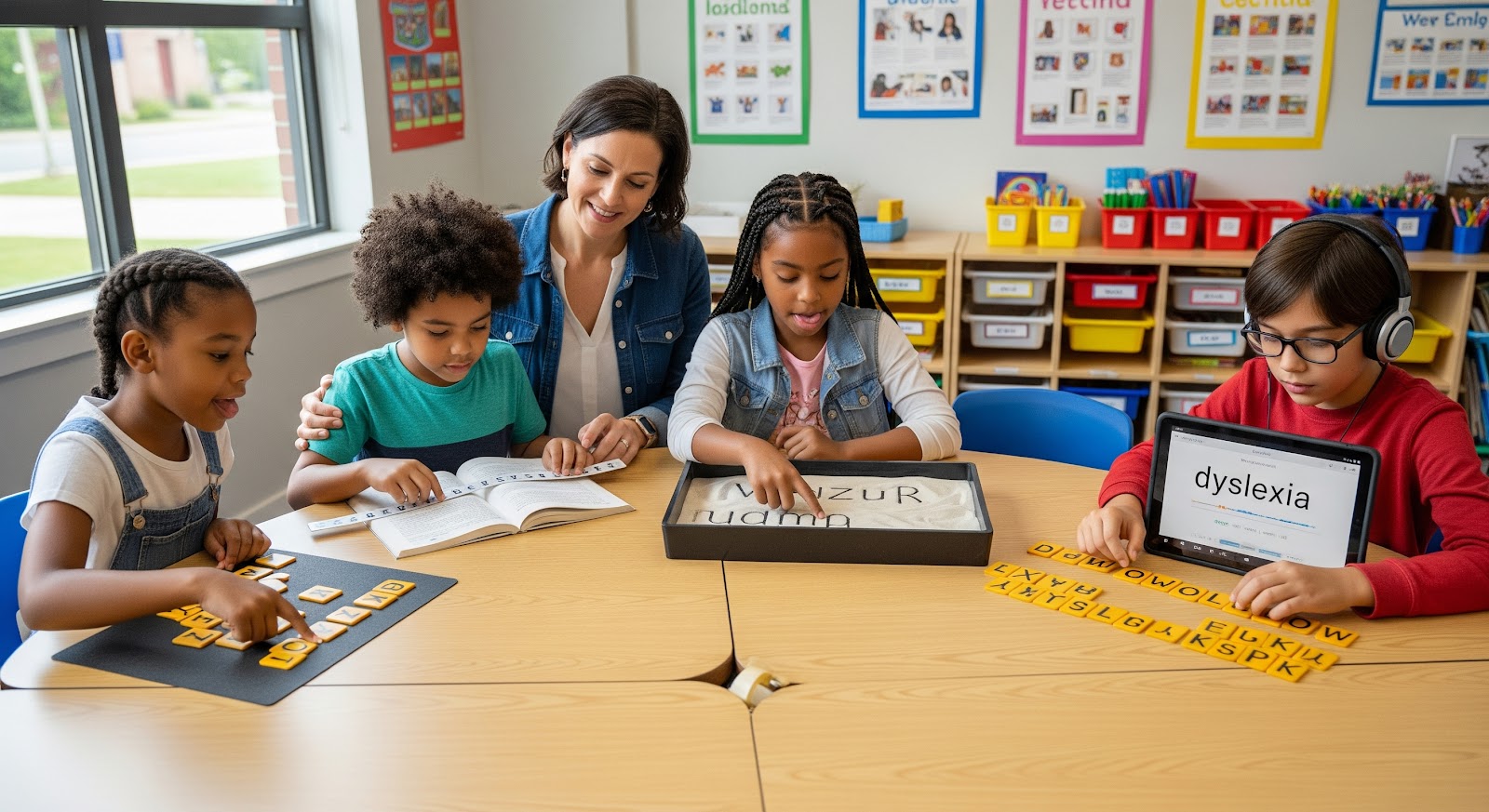
One of the most effective approaches for reading for dyslexics is multisensory learning. This means engaging multiple senses, such as touch, sight, and sound at the same time during reading activities. For example, a child might trace letters with their finger while sounding out words, listen to an audiobook while following along with printed text, or use magnetic tiles to build words as they say them aloud.
Multisensory reading strengthens neural connections and reinforces decoding skills through repetition and sensory integration. It also makes reading more interactive, reducing the sense of isolation or monotony that can come with traditional drills. This is a key strategy for answering how to read better with dyslexia. For detailed activities, check out our resource on multisensory reading approaches.
Build Routines and Consistency
Children with dyslexia benefit greatly from structure and predictability. Establishing a consistent reading routine—whether it's 15 minutes before dinner or after school—can help create a sense of safety and mastery. The goal is not to push long sessions but to make reading a daily, low-pressure habit. Repetition in a familiar context helps reinforce what's learned, making it easier to retain skills over time.
Incorporate a short warm-up, like reviewing familiar words or using flashcards, followed by reading and a brief discussion about the story. Over time, these habits foster automaticity and reduce anxiety around reading tasks. This structured approach is central to how to be a better reader with dyslexia.
Encourage Independent Reading Through Gamification and Progress Tracking
Motivation plays a critical role in literacy development, especially for struggling readers. One way to keep children engaged is through gamification, turning reading into a rewarding and game-like experience. Apps like Readability use progress tracking, badges, and reading streaks to celebrate milestones, making children feel proud of their efforts.
At home, families can create their own reward systems, such as earning points for every book completed, unlocking a "reading adventure" after a certain number of chapters, or using a sticker chart to track weekly progress. The key is to help children recognize their own growth, which fosters internal motivation and encourages independent reading.
Create a Calm, Inviting Reading Corner
Environment matters. Set up a reading space that feels special and distraction-free. This could be a quiet corner with a cozy chair, soft lighting, noise-canceling headphones, and a basket of dyslexia friendly books, such as high-interest books, graphic novels, or dyslexia-friendly text formats. Avoid clutter and background noise, which can be especially overwhelming for children with attention difficulties or sensory sensitivities.
The goal is to make reading feel like a relaxing, positive experience—not a chore. When children have ownership over their space and materials, they're more likely to take initiative and return to reading voluntarily. This environment supports how to help reading with dyslexia by reducing barriers to engagement.
How to Improve Reading with Dyslexia: Practical Techniques
Parents often ask: How to improve reading with dyslexia? or How to improve dyslexia reading? The answer involves a multi-faceted approach combining various evidence-based techniques. For comprehensive guidance, explore our article on effective dyslexia reading programs.
Phonological Awareness Activities
Building phonological awareness—the ability to recognize and manipulate sounds in words—is foundational for how to get better at reading with dyslexia. Activities like rhyming games, syllable clapping, and sound sequencing help strengthen this critical skill.
Structured Literacy Instruction
Structured literacy approaches teach reading systematically and explicitly, moving from simple to complex concepts. This method is particularly effective for how to make reading easier for dyslexics because it provides clear, step-by-step guidance.
Decoding Practice with Decodable Texts
Decodable texts—books where most words follow regular phonetic patterns—allow children to practice applying decoding skills they've learned. This builds confidence and fluency.
Comprehension Strategies
Teaching children to use comprehension strategies like predicting, questioning, and summarizing helps them engage more deeply with text, supporting dyslexia reading comprehension.
What Helps Dyslexic People Read: Key Support Elements
What helps dyslexic people read and what helps people with dyslexia read includes several critical elements:
- Dyslexia-friendly formatting: Proper fonts, spacing, and layout
- Assistive technology: Text-to-speech, speech-to-text, and specialized apps
- Multisensory instruction: Engaging multiple senses in learning
- Emotional support: Building confidence and reducing anxiety
- Consistent practice: Regular, structured reading sessions
- Personalized instruction: Tailored to individual learning needs
- Positive reinforcement: Celebrating progress and effort
How Do Dyslexic People Learn to Read: The Learning Process
How do dyslexic people learn to read? Understanding this process helps parents and educators provide more effective support. Dyslexic learners typically benefit from:
- Explicit instruction: Clear, direct teaching of reading skills
- Systematic progression: Moving from simple to complex concepts in a logical sequence
- Abundant practice: Repeated opportunities to apply skills
- Immediate feedback: Knowing whether responses are correct and why
- Multisensory engagement: Using multiple pathways to reinforce learning
- Scaffolded support: Gradually reducing support as skills develop
This approach differs from typical reading instruction, which often assumes children will learn through exposure and practice. Dyslexic learners need more explicit, structured guidance to develop reading skills. To empower students with dyslexia, educators should explore strategies for empowering students with dyslexia.
Dyslexia Aids and Assistive Technology
Dyslexia aids and assistive technology can significantly support reading development. Common tools include:
- Text-to-speech software: Converts written text to spoken audio
- Speech-to-text tools: Converts spoken words to written text
- Reading apps: Specialized applications designed for dyslexic readers
- Screen readers: Read web content aloud
- Audiobooks: Professional narrations of books
- Colored overlays: Reduce visual stress and glare
- Specialized fonts: Designed specifically for dyslexic readers
These dyslexia aids are not "cheating"—they're tools that level the playing field, allowing dyslexic readers to access content and demonstrate their knowledge. For more information on how AI can support students with dyslexia, check out our article on how AI can support students with dyslexia.
Frequently Asked Questions About Better Reading with Dyslexia
What does dyslexia meaning really entail?
Dyslexia meaning refers to a specific learning disability that primarily affects reading and spelling. It's a neurobiological difference in how the brain processes written language, particularly phonological processing. It's not related to intelligence or effort. For a deeper understanding, read our comprehensive guide on understanding dyslexia.
How can I help my child with dyslexia at home?
How to help a child with dyslexia at home involves creating a supportive environment, using dyslexia friendly books, implementing multisensory strategies, establishing consistent routines, and utilizing assistive technology when appropriate. Our article on early signs of dyslexia can help you identify if your child needs support.
What is the best font for dyslexia?
The best font for dyslexia varies by individual, but sans-serif fonts like OpenDyslexic, Arial, and Verdana are generally recommended. Test different options to see which works best for your child. For detailed recommendations, see our guide on the easiest font to read for dyslexia.
How can I make reading easier for dyslexics?
How to make reading easier for dyslexics involves multiple strategies: using dyslexia-friendly formatting, selecting appropriate books for kids with dyslexia, implementing multisensory instruction, and utilizing assistive technology. Explore the best reading programs for dyslexia for additional support options.
What helps people with dyslexia read better?
What helps people with dyslexia read includes structured literacy instruction, multisensory learning, assistive technology, emotional support, and consistent practice with appropriate materials. Consider exploring dyslexia reading apps for kids to support your child's learning journey.
How do I improve reading with dyslexia?
How to improve reading with dyslexia requires a comprehensive approach: explicit phonics instruction, multisensory practice, appropriate book selection, technology support, and emotional encouragement. For educators and parents, our resource on empowering students with dyslexia provides actionable strategies.
Empowering Better Dyslexia Reading at Home
Helping a child with dyslexia become a confident reader may feel overwhelming, but it's absolutely possible with the right support. As we've explored, dyslexia reading challenges can be addressed through a combination of thoughtful strategies: understanding dyslexia meaning, selecting dyslexia friendly books, using best fonts for dyslexia, implementing multisensory approaches, and leveraging technology.
The journey of how to read better with dyslexia is unique for each child, but the destination—confident, capable readers—is absolutely achievable. By combining evidence-based strategies, supportive tools, and consistent encouragement, you can help your child transform their relationship with reading.
Remember: reading for dyslexics doesn't have to be a source of frustration. With patience, the right tools, and a commitment to understanding your child's unique learning style, you can create an environment where reading becomes not just manageable, but genuinely enjoyable. Start today by exploring one new strategy or tool, and watch as your child's confidence and skills begin to flourish.
Related Resources for Dyslexia Support
For more information on supporting children with dyslexia, explore these comprehensive resources:
- Dyslexia Resource Center - Comprehensive dyslexia information and support
- Understanding Dyslexia - Foundational knowledge about dyslexia
- Early Signs of Dyslexia - Identifying dyslexia in children
- Best Reading Programs for Dyslexia - Top-rated reading programs
- Effective Dyslexia Reading Programs - Evidence-based program selection
- Dyslexia Reading Apps for Kids - Technology solutions for reading support
- Easiest Font to Read for Dyslexia - Font recommendations and guidance
- Multisensory Approach to Reading for Dyslexia - Multisensory learning techniques
- Empower Students with Dyslexia - Strategies for educators and parents
- How AI Can Support Students with Dyslexia - AI-powered learning solutions
- Dyslexia Support Hub - Complete dyslexia resource collection