
Ver a un niño aprender a leer es un viaje profundo, marcado por avances repentinos y obstáculos ocasionales. A medida que pasan de pronunciar letras individuales a reconocer palabras completas, muchos padres y cuidadores se preguntan inevitablemente: ¿a qué edad debería un niño leer con fluidez? Queremos que nuestros hijos lean con confianza, no solo para terminar sus tareas, sino para abrir el vasto mundo del conocimiento y la imaginación que ofrecen los libros.
La fluidez lectora es el puente crítico entre decodificar palabras y comprender su significado. Cuando un niño lee con fluidez, ya no tiene que gastar toda su energía cognitiva en pronunciar cada sílaba. En cambio, puede concentrarse en la historia, los hechos y el mensaje más profundo del texto. Pero el cronograma para alcanzar este hito no es un punto único y fijo.
Muchos niños alcanzan una fluidez funcional en textos conectados entre los 7 y los 9 años, generalmente desde finales de segundo grado hasta mediados de tercero. Sin embargo, este es un punto de referencia general y existe una variación saludable. Factores como la calidad de la instrucción, el entorno lingüístico y los perfiles de aprendizaje individuales desempeñan un papel importante en la trayectoria lectora de un niño. En esta guía, desglosaremos los componentes de la lectura fluida, exploraremos las etapas de desarrollo y brindaremos formas prácticas de apoyar el viaje lector de su hijo.
¿Cuáles son los tres componentes principales de la fluidez lectora?
Una idea errónea común es que la fluidez lectora simplemente significa leer rápido. Sin embargo, como señala la experta en alfabetización Jan Hasbrouck: "La fluidez no es lectura rápida. La fluidez es lectura fluida". La velocidad por la velocidad misma no es un objetivo valioso. La verdadera fluidez lectora comprende tres componentes interconectados: precisión, velocidad y prosodia. Cuando estos tres elementos se alinean, la lectura refleja el lenguaje hablado, que es lo que nuestros cerebros entienden y procesan de forma natural.
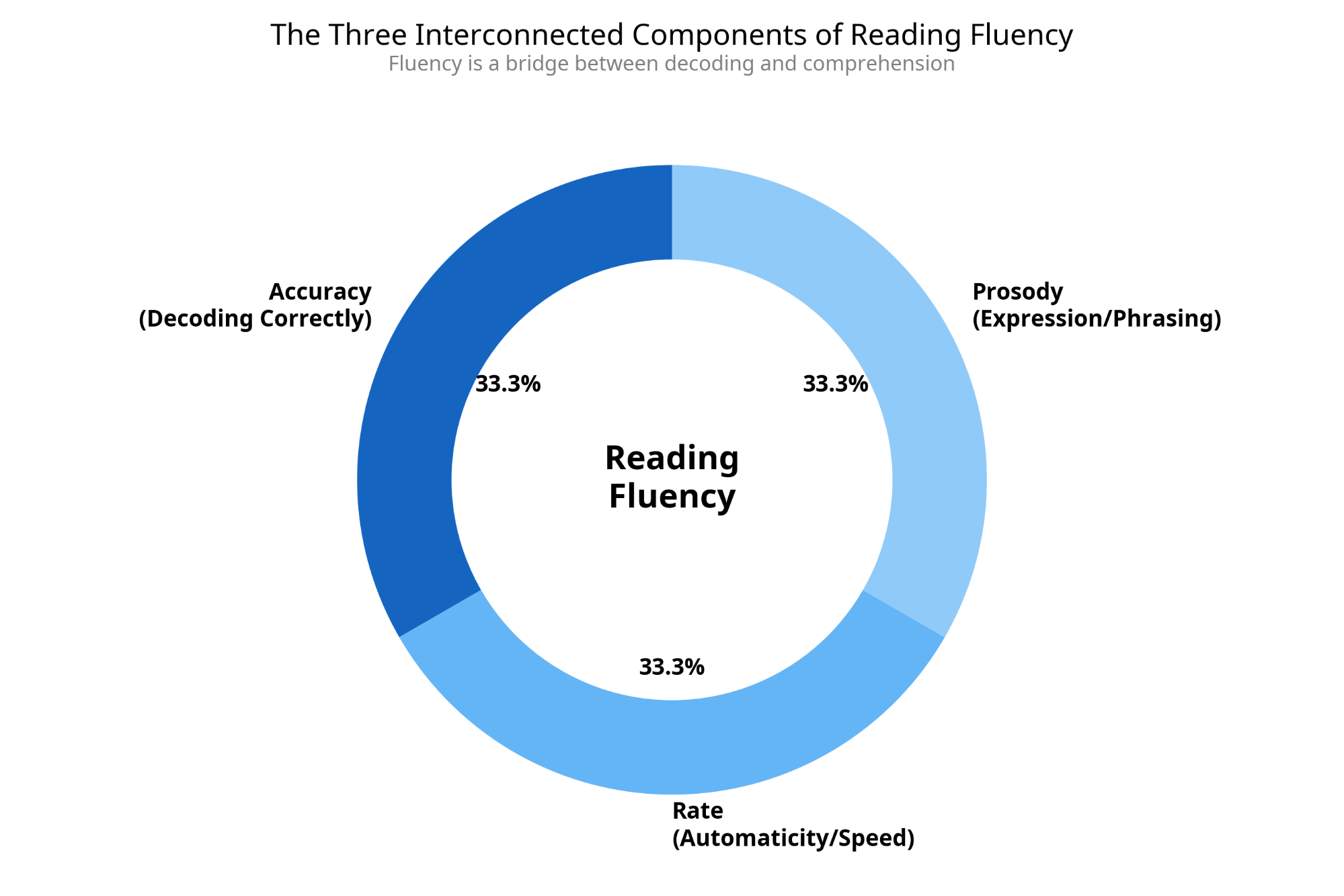
1. Precisión (decodificación correcta)
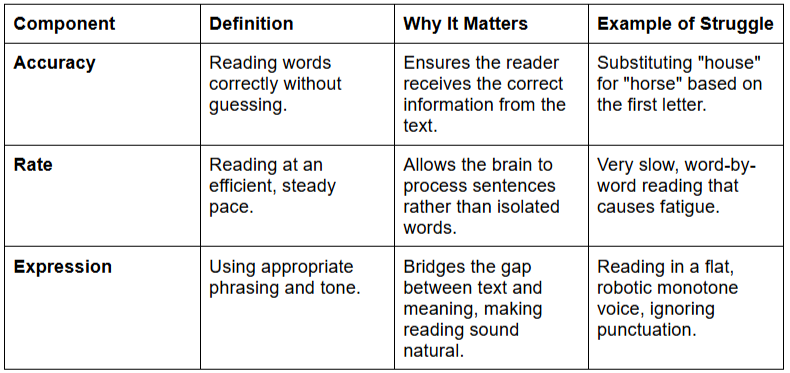
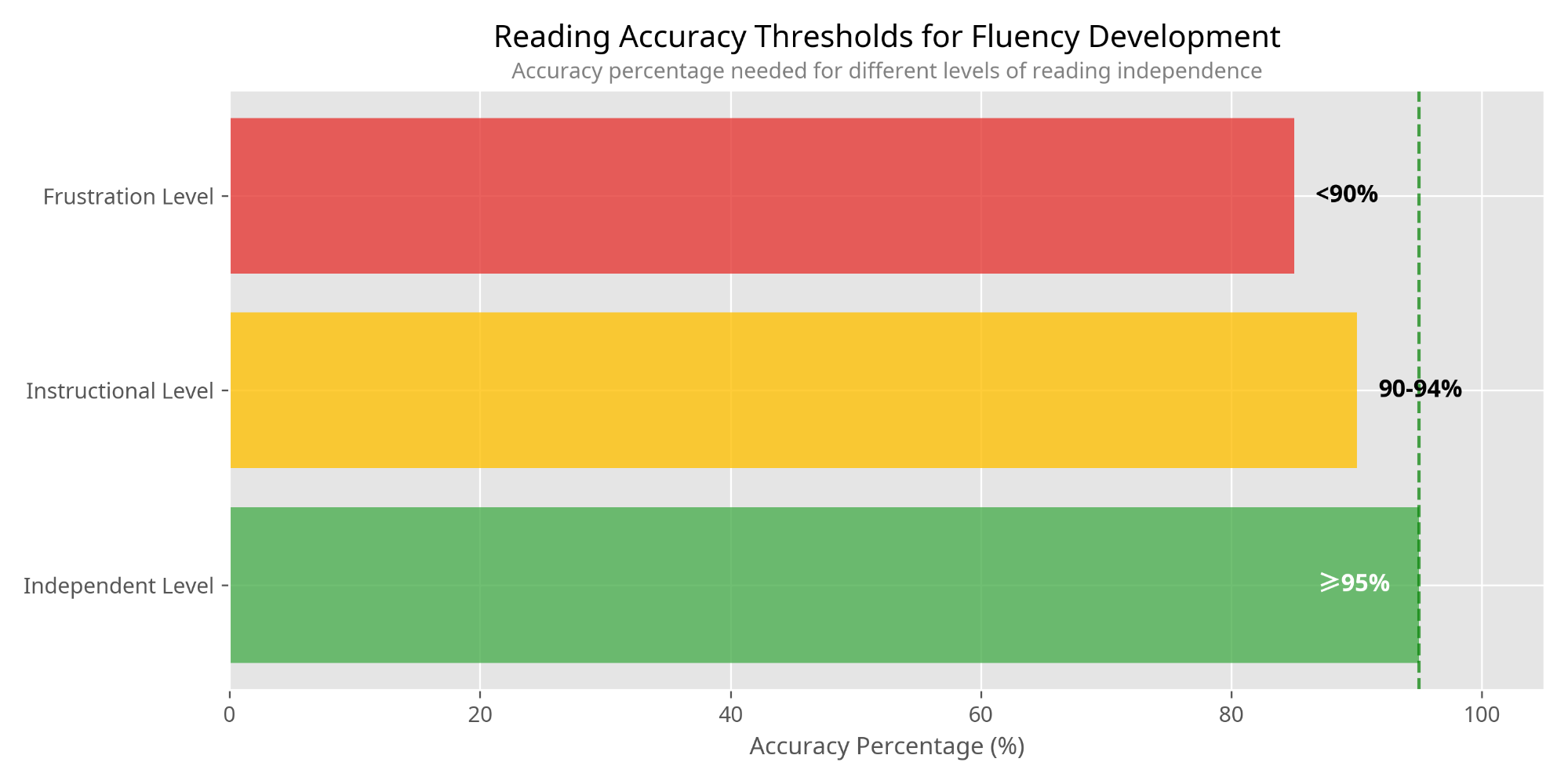
La precisión es la base de la fluidez. Se refiere a la capacidad de un niño para leer palabras correctamente sin adivinar, saltarse palabras o sustituirlas. Si un niño no puede decodificar palabras con precisión, aumentar su velocidad de lectura solo exacerbará los problemas de comprensión. Como regla general, una tasa de precisión del 95% o superior indica que un niño puede leer un texto de forma independiente. Si la precisión cae por debajo del 90%, es probable que el texto sea demasiado difícil y cause frustración. La precisión requiere un conocimiento sólido de la fonética y la capacidad de aplicar esas reglas a palabras desconocidas.
2. Velocidad (automaticidad)
La velocidad, a menudo denominada automaticidad, es el ritmo al que un niño lee un texto conectado. Por lo general, se mide en palabras correctas por minuto. Un ritmo eficiente y constante indica que el niño reconoce las palabras automáticamente, sin necesidad de pronunciarlas laboriosamente. Si bien la velocidad es importante, siempre debe equilibrarse con la precisión y la comprensión. Un lector que va demasiado rápido puede omitir detalles cruciales, mientras que uno que va demasiado lento puede olvidar el principio de una oración para cuando llegue al final.
3. Expresión (prosodia)
La prosodia es la musicalidad de la lectura. Abarca el fraseo, la entonación y el ritmo que hacen que la lectura suene como el habla natural. Un niño con una buena prosodia hace pausas en las comas y los puntos, agrupa las palabras en frases con sentido y ajusta su tono para las preguntas o el diálogo. Las investigaciones demuestran constantemente que la prosodia está significativamente asociada con la competencia lectora y la comprensión. Cuando un niño lee con expresión, demuestra que está comprendiendo activamente los matices emocionales y sintácticos del texto.
¿A qué edad debería un niño leer con fluidez?
Aunque cada niño se desarrolla a su propio ritmo, la investigación sobre alfabetización proporciona normas establecidas para la fluidez en la lectura oral. La mayoría de los niños pasan de ser lectores emergentes a lectores fluidos entre los 7 y los 9 años (desde finales de segundo grado hasta tercer grado). Durante este periodo, el esfuerzo intensivo necesario para decodificar palabras comienza a desaparecer, reemplazado por un proceso de lectura más fluido y automático.
Para realizar un seguimiento de este desarrollo, los educadores suelen utilizar las normas de fluidez de lectura oral de Hasbrouck y Tindal, que miden las palabras correctas por minuto. Estos puntos de referencia proporcionan una instantánea del progreso típico:
- De jardín de infantes a principios de primer grado (5 a 7 años): Los niños están desarrollando la conciencia fonémica y las habilidades básicas de decodificación. La fluidez aún no es el objetivo principal; la precisión es lo más importante.
- Final de 1.º grado (6–7 años): Los lectores promedio alcanzan aproximadamente 60 palabras por minuto (PPM). Comienzan a surgir las primeras frases.
- Final de 2.º grado (7–8 años): La precisión se consolida. Los lectores promedio alcanzan aproximadamente 100 PPM. La velocidad y la expresión mejoran significativamente en textos adecuados para su nivel escolar.
- Final de 3.º grado (8–9 años): Muchos estudiantes demuestran una fluidez estable en géneros familiares, alcanzando aproximadamente entre 110 y 115 PPM.
- Final de 4.º grado (9–10 años): Los lectores promedio alcanzan aproximadamente entre 130 y 135 PPM.
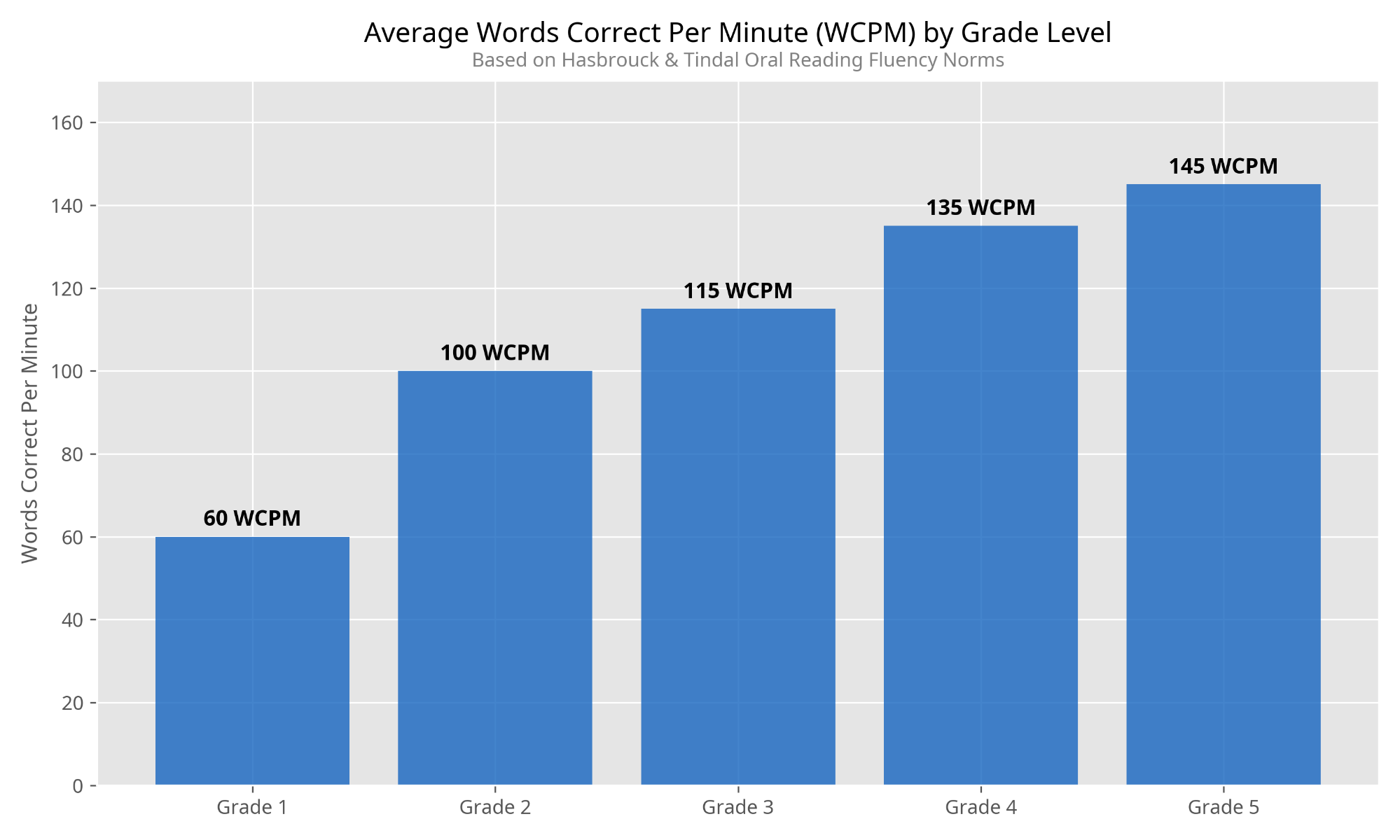
Es fundamental recordar que estas cifras son promedios, no criterios rígidos de aprobación o reprobación. Si un niño está ligeramente por debajo del punto de referencia pero muestra un progreso constante, es posible que simplemente siga un ritmo diferente. Sin embargo, si un niño está significativamente por debajo de estos niveles (por ejemplo, 10 o más palabras por minuto menos) o si su avance se ha estancado, es un indicador de que podría necesitar apoyo específico.
¿Cuáles son las etapas del desarrollo de la lectura fluida?
Comprender las etapas del desarrollo lector puede ayudar a los padres a establecer expectativas realistas e identificar en qué punto se encuentra su hijo. El progreso rara vez es perfectamente lineal, pero la mayoría de los niños atraviesan estas fases generales:
1. Etapa emergente (generalmente de preescolar a jardín de infancia)
En esta etapa fundamental, los niños desarrollan conceptos sobre la escritura. Aprenden que el texto se lee de izquierda a derecha, que las letras representan sonidos y que las palabras habladas pueden descomponerse en fonemas individuales (conciencia fonémica). La lectura en esta etapa no es fluida; requiere mucho esfuerzo a medida que los niños aprenden el principio alfabético. Actividades como rimar, aplaudir las sílabas y cantar canciones son cruciales en este momento.
2. Etapa inicial o de principiante (generalmente 1.º grado)
Los niños en esta etapa comienzan a decodificar palabras sencillas y a reconocer palabras de alta frecuencia (a menudo llamadas palabras visuales). La lectura suele caracterizarse por un fraseo entrecortado y una gran dependencia de la pronunciación letra por letra. La precisión es el objetivo principal aquí. A medida que practican, su banco de palabras reconocidas crece, lo que facilita una mayor velocidad. Los textos decodificables son muy eficaces durante esta etapa.
3. Etapa de desarrollo o transición (generalmente 2.º grado)
Este es un periodo de transición crítico. La decodificación se vuelve más fluida y automática. Los niños comienzan a leer en frases cortas en lugar de palabra por palabra. La prosodia empieza a surgir a medida que prestan más atención a la puntuación y al significado. Pueden leer textos más largos, aunque es posible que necesiten reducir la velocidad al encontrar vocabulario desconocido. El cambio de "aprender a leer" a "leer para aprender" comienza a tomar forma.
4. Etapa de fluidez (generalmente 3.º grado en adelante)
En la etapa de fluidez, la precisión, la automaticidad y la prosodia se alinean. La carga cognitiva de la decodificación se reduce significativamente, lo que permite que la atención del niño se centre por completo en el significado y la comprensión. Leen con una expresión natural y pueden ajustar su ritmo según la dificultad del texto. Pueden abordar de forma independiente libros por capítulos y textos informativos.
¿Por qué varían los plazos para alcanzar la fluidez lectora?
Si dos niños están en la misma clase y reciben la misma instrucción, ¿por qué uno puede leer con fluidez a los 7 años mientras que el otro tiene dificultades hasta los 9? La lectura es una tarea cognitiva compleja y varios factores clave influyen en el ritmo de desarrollo de la fluidez de un niño.
Calidad de la instrucción y práctica
La base de la fluidez lectora es una instrucción fonética sistemática y explícita. A los niños se les deben enseñar las reglas del idioma de forma clara y secuencial. Además, necesitan amplias oportunidades para practicar de manera acumulativa. El acceso a textos "adecuados", libros que no sean ni demasiado fáciles ni demasiado difíciles, permite a los niños practicar sus habilidades sin frustrarse. La falta de una instrucción dirigida puede retrasar significativamente la fluidez.
Lenguaje oral y vocabulario
El desarrollo del lenguaje oral de un niño influye enormemente en su fluidez lectora. Los niños con un vocabulario amplio y sólidos conocimientos previos tienen más facilidad para reconocer palabras impresas y comprender el contexto de lo que leen. Cuando un niño se encuentra con una palabra que ya conoce en el lenguaje hablado, descodificarla en la página es mucho más rápido. Leerles en voz alta a los niños ayuda a construir este vocabulario esencial.
Perfiles de aprendizaje individuales
La memoria de trabajo, la capacidad de atención y la velocidad de procesamiento influyen en el desarrollo de la lectura. Algunos niños procesan la información visual y auditiva de forma natural más rápido que otros. La memoria de trabajo permite al niño retener los sonidos de una palabra en su mente mientras los combina. Si esta capacidad es limitada, la descodificación sigue siendo una tarea laboriosa.
Desarrollo multilingüe
Para los estudiantes bilingües o multilingües, la transferencia entre idiomas desempeña un papel importante. La competencia oral y las experiencias de alfabetización del niño en su primer idioma afectarán su ritmo en inglés. Aunque el bilingüismo es una ventaja cognitiva enorme, estos estudiantes pueden necesitar apoyo específico para ampliar su vocabulario en inglés y reconocer los patrones fonéticos de este idioma. Los educadores deben distinguir entre el proceso de adquisición de una lengua y una dificultad de lectura.
¿Cómo pueden los padres fomentar la fluidez lectora en casa?
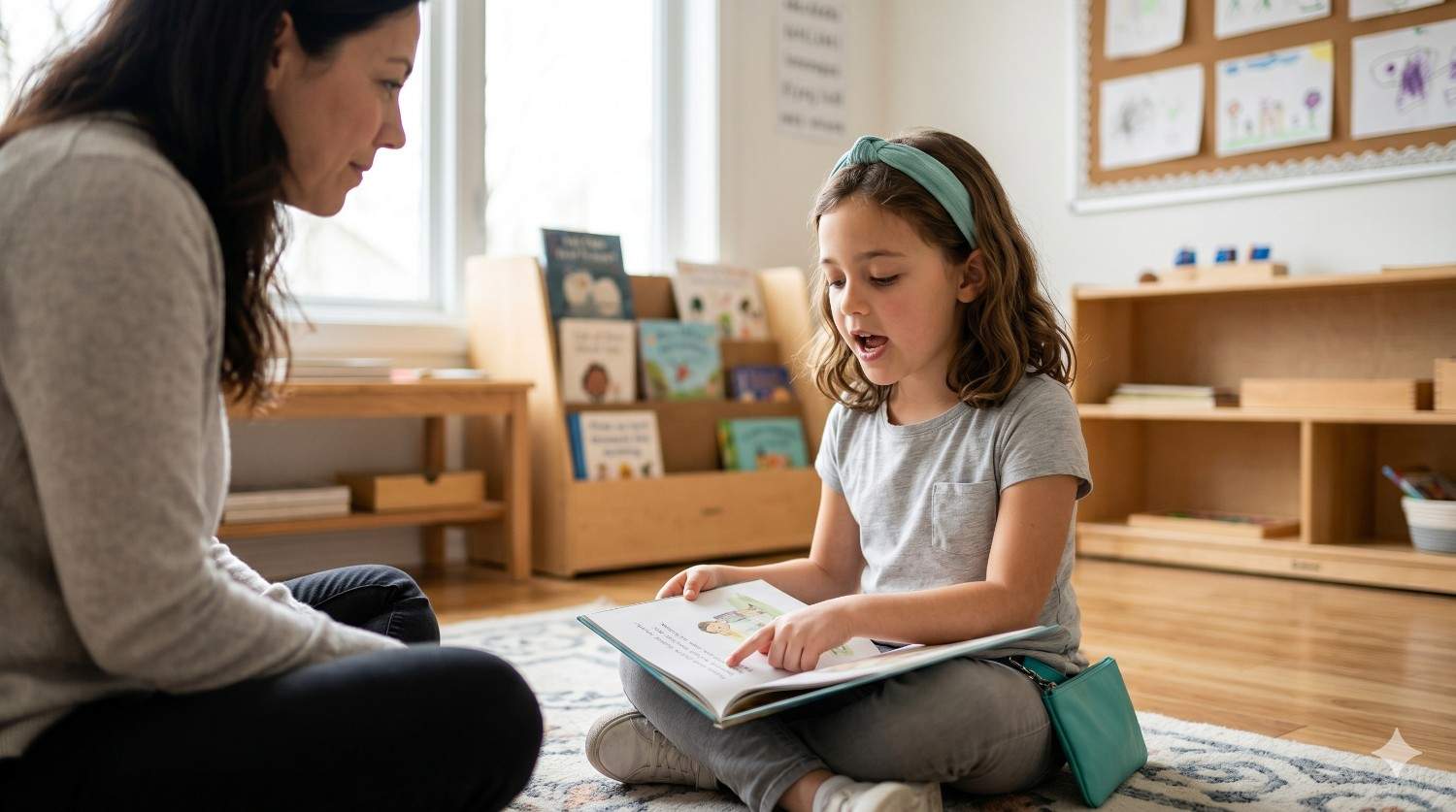
Fomentar la fluidez lectora no requiere un título en pedagogía. Unas prácticas sencillas y constantes en casa pueden marcar una diferencia profunda. El objetivo es crear un entorno sin presiones donde la lectura se asocie con el disfrute y no con la ansiedad.
1. Practiquen la lectura guiada en voz alta
Pida a su hijo que le lea en voz alta con regularidad. Cuando cometa un error, utilice una estrategia de ayuda gradual. En lugar de corregirlo inmediatamente, dele unos segundos para que se autocorrija. Si no lo hace, señale la palabra y pídale que lo intente de nuevo. Si sigue bloqueado, dígale la palabra y explique brevemente su significado si es necesario. Este enfoque fomenta la independencia en lugar de la dependencia del adulto.
2. Practiquen la lectura repetida
La lectura repetida es una estrategia basada en evidencias para desarrollar la automaticidad. Elija un pasaje corto y significativo (de unas 50 a 100 palabras) y pida a su hijo que lo lea en voz alta de 3 a 4 veces a lo largo de unos días. Es probable que note cómo su velocidad y expresión mejoran con cada lectura, lo que aumenta enormemente su confianza.
3. Modelar la lectura fluida
Los niños aprenden con el ejemplo. Lea en voz alta a su hijo con frecuencia, demostrando cómo suena una lectura expresiva y fluida. Cambie su voz para los diferentes personajes, haga pausas dramáticas al final de una frase de suspense y muestre cómo la puntuación guía el ritmo de la historia. Los audiolibros también son una herramienta excelente para modelar la entonación.
4. Asegurar los umbrales de precisión del texto
Al elegir libros para la práctica independiente, utilice la regla del 95%. Si un niño falla más de 5 palabras de cada 100, el libro está en su "nivel de frustración" y no le ayudará a desarrollar la fluidez.
5. Utilizar la lectura coral y la lectura en eco
En la lectura coral, usted y su hijo leen el mismo texto en voz alta al mismo tiempo. Esto proporciona una red de seguridad y ayuda a marcar el ritmo. En la lectura en eco, usted lee una oración o frase con mucha expresión y su hijo la repite inmediatamente, imitando su tono y ritmo.
¿Cómo evalúan las escuelas la fluidez lectora?
Entender cómo miden la fluidez las escuelas puede ayudar a los padres a interpretar los resultados de las evaluaciones y a defender los intereses de sus hijos. Las escuelas suelen utilizar evaluaciones breves y estandarizadas para medir el progreso.
Medidas comunes de fluidez
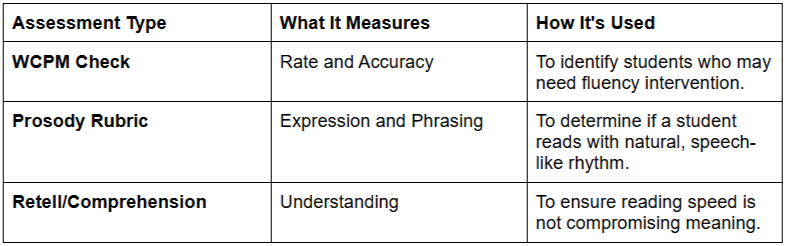
La métrica más común es el número de palabras correctas por minuto. Durante una prueba de fluidez, el niño lee en voz alta un pasaje desconocido adecuado a su nivel durante un minuto. El evaluador registra los errores (sustituciones, omisiones, dudas de más de tres segundos) para calcular la puntuación final.
Muchas escuelas también utilizan rúbricas cualitativas para evaluar la entonación. El profesor prestará atención al fraseo, la fluidez y el uso adecuado del tono y el volumen. Por último, a menudo se incluye un breve resumen o una pregunta de comprensión para asegurarse de que el niño realmente entiende el texto y no solo está decodificando palabras.
Interpretación de los datos
Es fundamental ver los datos de fluidez como una tendencia y no como una puntuación definitiva. Un niño puede obtener una puntuación más baja en un día determinado debido al cansancio, la ansiedad o la falta de interés en el tema del pasaje. Lo que más importa es el crecimiento constante a lo largo del tiempo. Si el número de palabras correctas por minuto de su hijo aumenta de forma constante a lo largo del curso escolar, por lo general va por buen camino.
¿Cuáles son las señales de alerta de las dificultades de lectura?
Aunque es normal que haya variaciones, ciertos indicadores sugieren que un niño puede necesitar apoyo adicional o una evaluación más allá de la instrucción estándar en el aula. La intervención temprana es fundamental para abordar los problemas de lectura de forma eficaz.
Busque apoyo adicional o solicite una evaluación en la escuela de su hijo si observa:
- Dificultades persistentes con la conciencia fonémica: Dificultad para rimar o identificar los sonidos individuales de las palabras al final del jardín de infancia o a principios del primer grado.
- Lectura muy lenta y trabajosa al final de segundo grado: Si la decodificación sigue siendo muy laboriosa y las palabras correctas por minuto (WCPM) están significativamente por debajo de los niveles de referencia.
- Falta de progreso: Si un niño muestra un crecimiento limitado en sus habilidades de lectura durante varios meses a pesar de practicar constantemente.
- Evitación y ansiedad: Si la lectura provoca constantemente llanto, fatiga o cambios de comportamiento significativos.
- Antecedentes familiares: Los antecedentes familiares de dislexia o dificultades de lectura aumentan el riesgo en un niño.
Si observa estas señales, colabore con el maestro de su hijo. Una evaluación integral puede identificar brechas específicas en la fonética, la memoria de trabajo o la velocidad de procesamiento, lo que permitirá crear un plan de intervención específico.
Consideraciones especiales: dislexia y neurodiversidad
Al hablar de fluidez lectora, es fundamental abordar la neurodiversidad. Para los niños con dislexia, el cronograma para alcanzar la fluidez será diferente. La dislexia es una dificultad de aprendizaje basada en el lenguaje que hace que la decodificación y el reconocimiento de palabras sean excepcionalmente difíciles.
Los niños con dislexia requieren una instrucción explícita, sistemática y acumulativa (a menudo denominada alfabetización estructurada o enfoques Orton-Gillingham). Aunque es posible que siempre lean a un ritmo ligeramente más lento que sus compañeros, con el apoyo adecuado pueden convertirse en lectores muy precisos y con una gran capacidad de comprensión.
Del mismo modo, los niños con TDAH pueden tener dificultades para mantener la atención necesaria en pasajes de lectura largos. Para estos estudiantes, dividir la práctica de lectura en sesiones cortas y muy atractivas, además de utilizar textos de gran interés, puede mejorar significativamente el desarrollo de su fluidez. Las adaptaciones, como los audiolibros o la tecnología de conversión de texto a voz, también pueden ayudarles a acceder a contenidos de su nivel escolar mientras siguen desarrollando sus habilidades de decodificación independiente.
El futuro de la enseñanza de la lectoescritura
El panorama de la enseñanza de la lectura se está desplazando hacia un enfoque más alineado con la ciencia, a menudo denominado "Ciencia de la lectura". Este movimiento enfatiza la importancia crítica de la instrucción fonética explícita, el desarrollo del vocabulario y la práctica de la fluidez. A medida que más escuelas adopten estas prácticas basadas en evidencia, podemos esperar que más niños alcancen los niveles de fluidez antes y con mayor confianza.
Además, los avances en tecnología educativa están proporcionando nuevas herramientas para practicar la fluidez. Las aplicaciones de lectura basadas en inteligencia artificial pueden escuchar a un niño leer en voz alta, proporcionar comentarios en tiempo real sobre la precisión y modelar la pronunciación correcta. Si bien estas herramientas no pueden reemplazar la guía matizada de un maestro o padre, ofrecen una práctica complementaria valiosa.
Conclusión
Entonces, ¿a qué edad debería un niño leer con fluidez? Aunque las investigaciones señalan que el periodo típico para alcanzar una fluidez funcional se sitúa entre los 7 y los 9 años, el proceso es complejo. La verdadera fluidez es un equilibrio delicado entre precisión, automatización y prosodia expresiva. Es el puente vital que permite a los niños pasar de "aprender a leer" a "leer para aprender".
Al comprender las etapas del desarrollo, supervisar los puntos de referencia de manera responsable y fomentar un entorno enriquecedor y lleno de libros, los padres y educadores pueden guiar a los niños para que se conviertan en lectores seguros y apasionados de por vida. Recuerde que el progreso constante y el amor por la lectura son mucho más importantes que la velocidad. Cuando se logra la precisión y la práctica es constante, la fluidez llegará de forma natural. El camino de cada niño hacia la lectura es único y, con paciencia y el apoyo adecuado, descubrirán la magia de leer con fluidez.
Preguntas frecuentes: ¿A qué edad debería un niño leer con fluidez?
¿A qué edad leen los niños con fluidez?
La mayoría de los niños alcanzan una fluidez lectora funcional entre los 7 y los 9 años, lo que corresponde desde finales de segundo grado hasta mediados de tercero. Sin embargo, los plazos varían según la instrucción, el entorno lingüístico y las diferencias individuales de aprendizaje.
¿Cuántas palabras por minuto debería leer un niño de 7 años?
Un niño promedio de 7 años al finalizar el primer grado debería leer aproximadamente 60 palabras correctas por minuto. Para cuando cumple 8 años, al finalizar el segundo grado, ese punto de referencia aumenta a unas 100 palabras por minuto.
¿Cuál es la diferencia entre precisión y fluidez?
La precisión es la capacidad de decodificar y leer palabras correctamente sin adivinar ni cometer errores. La fluidez es un término más amplio que incluye la precisión, pero que también abarca el ritmo (velocidad) de lectura y la prosodia (leer con expresión y fraseo naturales).
Mi hijo lee rápido pero no entiende lo que lee, ¿qué debo hacer?
Si un niño lee rápido pero carece de comprensión, es posible que esté ignorando la puntuación y leyendo sin prosodia. Anímelo a reducir la velocidad, a practicar la lectura en voz alta con expresión y a hacer una pausa después de cada pocos párrafos para resumir lo que acaba de leer.
¿Cuáles son los signos tempranos de dislexia relacionados con la fluidez?
Los signos tempranos de dislexia incluyen dificultades persistentes con la conciencia fonémica (como las rimas), problemas extremos para recordar los sonidos de las letras, una decodificación muy lenta y trabajosa que no mejora con la práctica estándar, y antecedentes familiares de dificultades de lectura.
¿Cómo mejorar la fluidez lectora en casa?
Puede mejorar la fluidez en casa leyendo en voz alta para modelar la expresión, practicando la "lectura repetida" (donde el niño lee un pasaje corto varias veces) y asegurándose de que practique con libros adecuados a su nivel de lectura independiente (donde pueda leer correctamente el 95% de las palabras).