
Have you ever watched your child effortlessly sound out a complex word like "brontosaurus," only to stumble over a short, seemingly simple word like "was" or "said" in the very next sentence? It is a common frustration for many parents and a significant hurdle for early readers. These short, common words are the glue that holds our sentences together, yet their irregular spellings often defy the basic phonics rules children are taught.
Mastering these words is not just about passing a spelling test; it is the critical key to unlocking reading fluency. When a child can instantly recognize the most common words on a page, their working memory is freed up to focus on the true goal of reading: comprehension. This article provides a practical, research-aligned roadmap to help families teach and practice high frequency words with confidence, moving beyond frustrating flashcard drills to effective, brain-friendly learning.
What Are High Frequency Words and Why Are They Important?
High frequency words are exactly what they sound like: the words that appear most often in printed text. In fact, a relatively small number of these words make up a massive percentage of the text we read every day. Words like the, of, and, a, to, in, is, you, that, and it are the foundational building blocks of the English language.
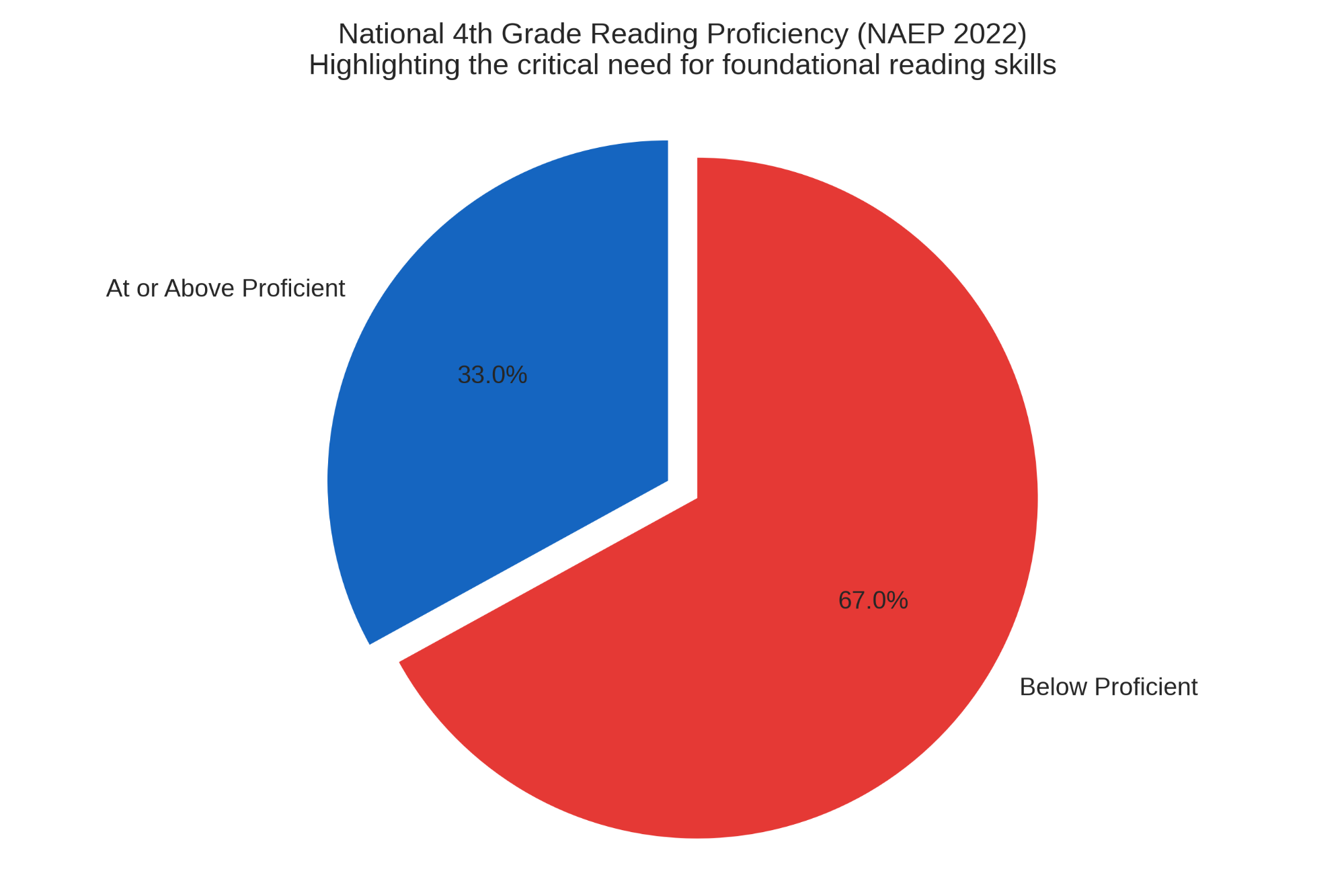
There is often confusion between "high frequency words" and "sight words." While the terms are frequently used interchangeably in classrooms, they mean different things in reading research. A sight word is any word that a reader recognizes instantly and automatically, without needing to sound it out. For an adult, almost every word in this sentence is a sight word. The goal of early reading instruction is to turn high frequency words into sight words as quickly as possible.
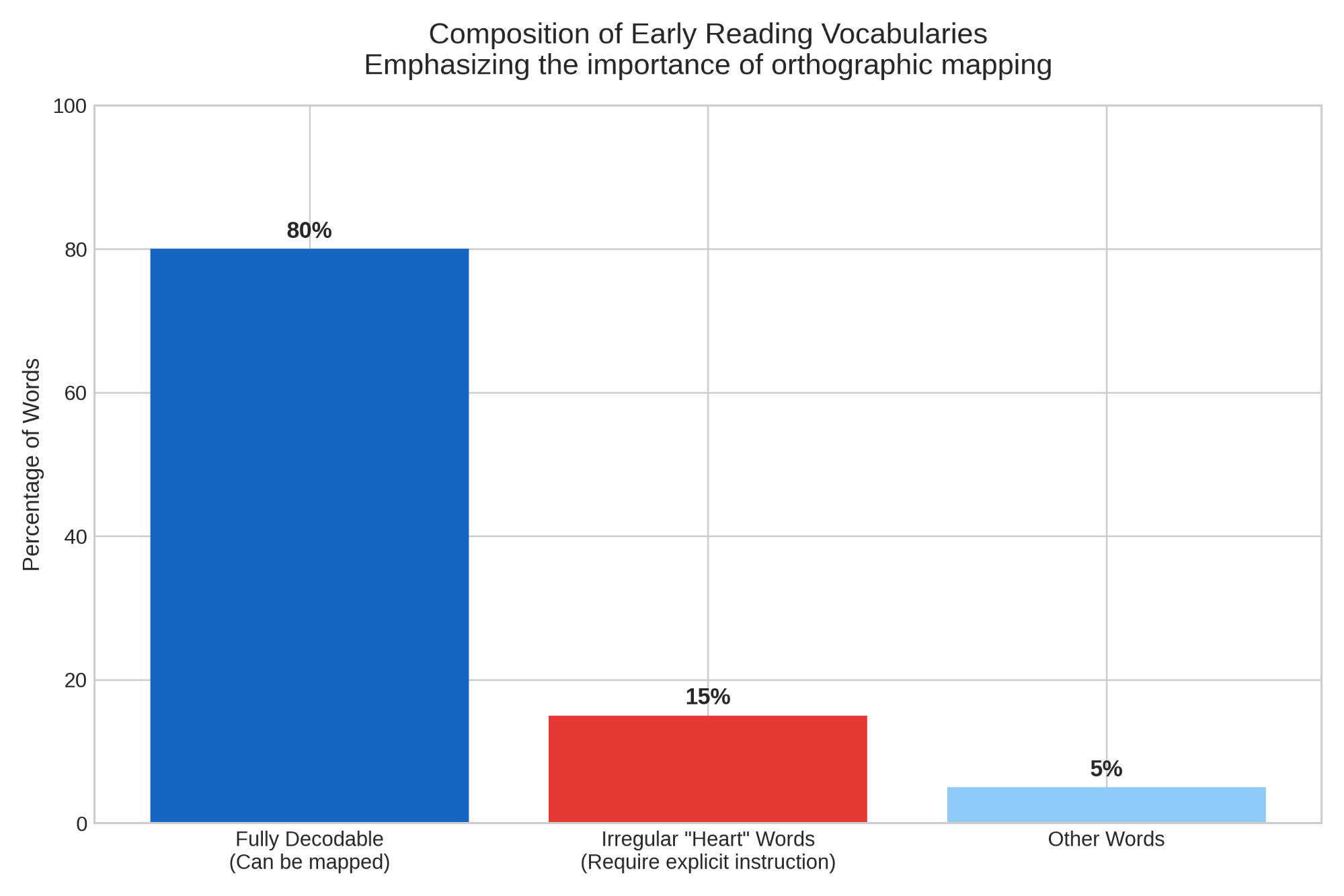
Why does this matter? According to the National Assessment of Educational Progress 2022 data, only 33% of fourth-graders perform at or above the Proficient level in reading. A significant factor in reading struggles is a lack of fluency, which stems from a limited bank of sight words. When children have to stop and decode every single word, reading becomes a laborious, exhausting chore, and they lose the meaning of the text.
High Frequency vs. Sight vs. Decodable Words
To teach effectively, it helps to understand the categories of words your child is encountering:
How Does Orthographic Mapping Help Children Learn Irregular Words?
For decades, the standard approach to teaching high frequency words, especially those with irregular spellings, was rote memorization. Children were given stacks of flashcards and expected to memorize the visual shape of the word. However, cognitive science has shown that this is not how the brain learns to read.
Enter orthographic mapping. Dr. Linnea Ehri, a leading reading researcher, defines orthographic mapping as the mental process we use to store words for immediate, effortless retrieval. It is how a word becomes a sight word. Orthographic mapping involves forming connections between the sounds in a word (phonemes) and the letters that represent those sounds (graphemes).
Instead of memorizing a word as a single picture, the brain maps the specific sequence of letters to the specific sequence of sounds. This process requires strong phonemic awareness and letter-sound knowledge.
The "Heart Word" Method
What happens when a high frequency word does not follow the rules? Consider the word "said." If a child tries to decode it using standard phonics, they might say "/s/ /a/ /i/ /d/."
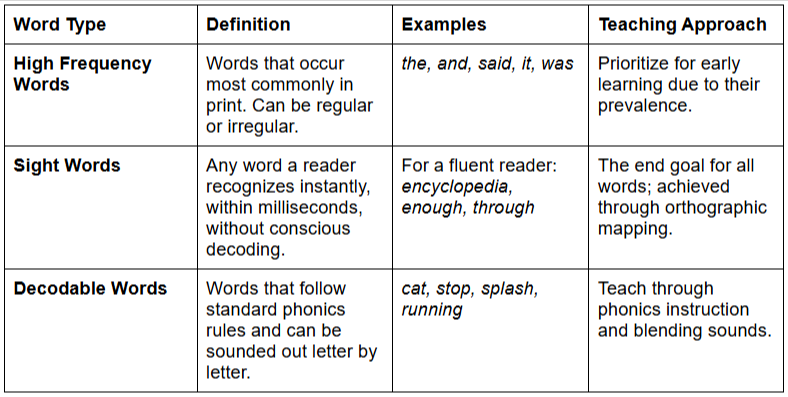
This is where the "Heart Word" method is highly effective. Instead of telling the child, "You just have to memorize this whole word," you break the word down and identify the parts that do follow the rules, and the parts that must be learned "by heart."
- Listen to the sounds: How many sounds are in "said"? Three: /s/ /e/ /d/.
- Map the regular sounds: The first sound is /s/, spelled with the letter 's'. The last sound is /d/, spelled with the letter 'd'. These parts are completely decodable.
- Identify the "heart" part: The middle sound is /e/ (like in "bed"), but it is spelled with the letters 'ai'. This is the tricky part. This is the part the child needs to learn by heart.
By explicitly teaching the irregular "heart" parts while reinforcing the decodable parts, you provide the child with a logical anchor for the word, making it much easier to store in their long-term memory.
What Are the Best High Frequency Word Lists to Use?
When deciding which words to teach, educators and parents typically turn to established word lists. The two most famous are the Dolch list and the Fry list.
The Dolch Sight Word List
Compiled by Dr. Edward William Dolch in the 1930s and 40s, this list contains 220 "service words" and a separate list of 95 nouns. Dolch analyzed the children's books of his era to find the most frequently occurring words. The list is divided into levels: Pre-Primer, Primer, First Grade, Second Grade, and Third Grade. Because it focuses heavily on the words most common in early reader texts, it remains incredibly popular in primary classrooms.
The Fry Instant Words List
Developed by Dr. Edward Fry in the 1950s and updated in 1980, this list expands upon Dolch's work. Fry analyzed a wider range of reading materials and compiled a list of 1,000 words, broken down into groups of 100 based on frequency. The first 100 Fry words make up about half of all written material.
Comparing the Lists: Which Should You Choose?
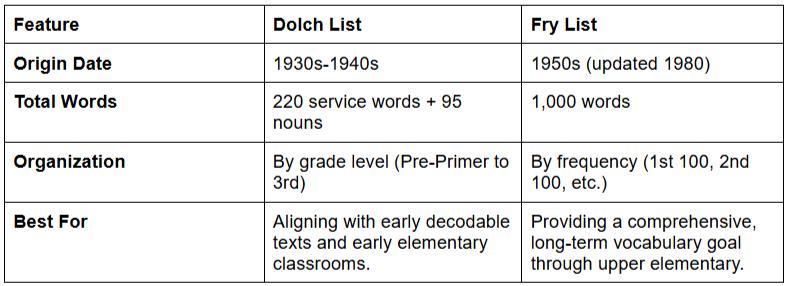
Recommendation: If your child is in Kindergarten or First Grade, starting with the Dolch Pre-Primer and Primer lists is highly effective because these words will appear constantly in their beginner books. If your child's school has adopted a specific list, always align your home practice with the school's list to avoid confusion.
How Can I Assess My Child's High Frequency Word Knowledge?
Before diving into instruction, it is crucial to know where your child currently stands. A brief, low-stress assessment will help you set realistic goals and avoid wasting time on words they already know.
The 5-Minute Placement Routine
- Select a small batch: Take the first 20 words from your chosen list (e.g., Dolch Pre-Primer).
- Flash the words: Show the words one at a time on index cards.
- Observe the response:
- Instant: The child reads the word correctly within 1-2 seconds without hesitation. (Mark as known).
- Hesitant/Decoding: The child takes several seconds, tries to sound it out, or self-corrects. (Mark for practice).
- Incorrect: The child guesses a different word or cannot read it. (Mark for practice).
- Analyze the errors: Did they confuse visually similar words (e.g., was and saw)? Did they get the first sound right but guess the rest? This information will guide your teaching.
Keep this assessment brief and encouraging. Stop if the child becomes frustrated. The goal is to identify a starting point, not to test them to exhaustion.
How Do I Teach High Frequency Words for Automaticity?
Consistency is far more important than duration. A focused, 10-minute daily routine will yield much better results than an hour-long session once a week. Here is a practical, weeklong routine designed to move words from short-term memory to permanent sight word storage.
A Simple Weeklong Routine
Goal: Master 3-5 new target words per week, depending on the child's age and readiness.
- Monday: Introduce and Map. Introduce the new words one at a time. Use the "Heart Word" method described earlier. Have the child tap the sounds, map the letters to the sounds, and identify any tricky parts.
- Tuesday: Multi-Sensory Build. Practice building the words using different senses. Use magnetic letters on the fridge, write the words in a tray of salt or sand, or use playdough to form the letters. This tactile input strengthens memory.
- Wednesday: Apply in Phrases. Words mean little in isolation. Put the target words into short, decodable phrases or sentences. For example, if the word is "said," write: "The cat said meow." Have the child read the phrases.
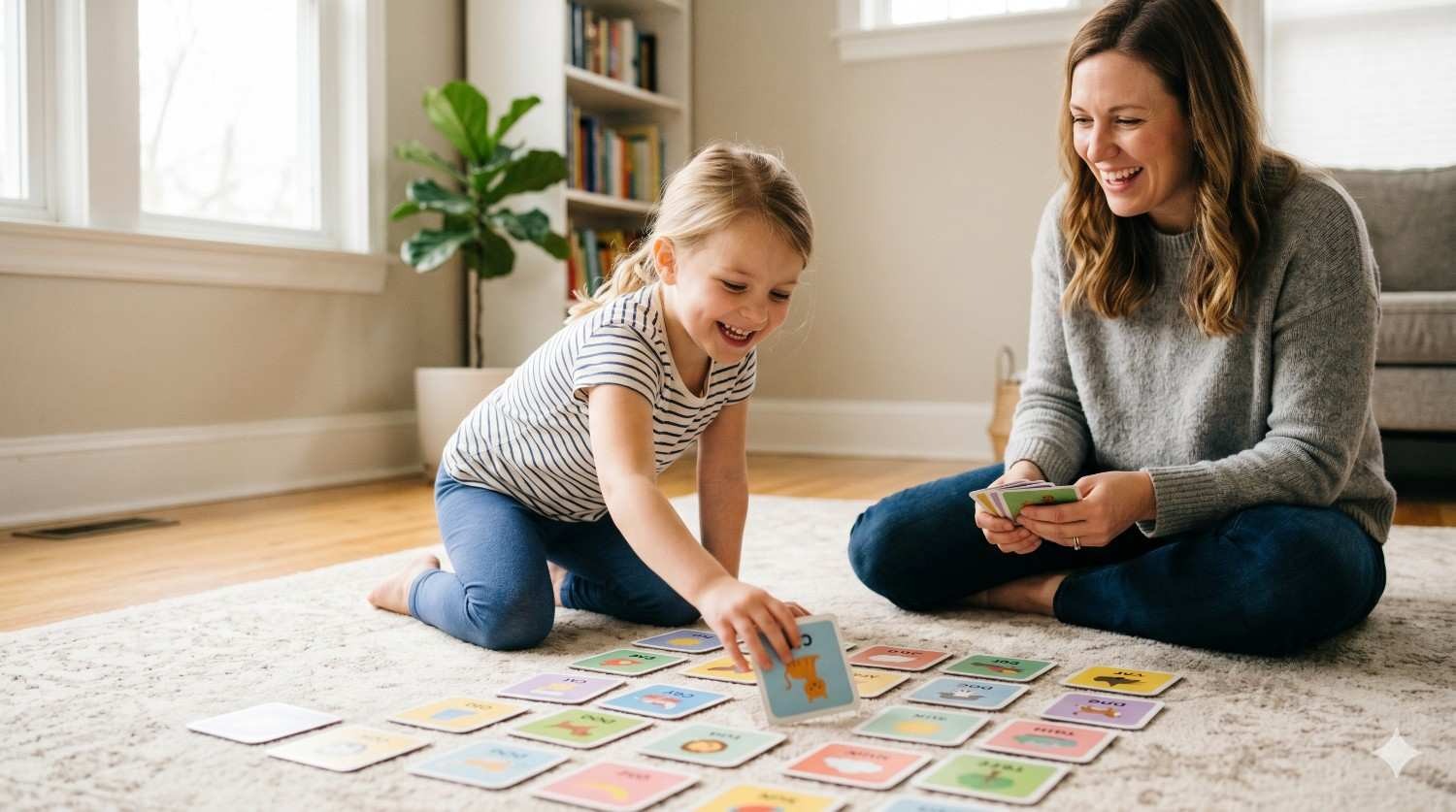
- Thursday: Mixed Retrieval Practice. Mix the new words with words the child has already mastered. Play a quick game of "Snap" or memory. The act of retrieving the word from memory strengthens the neural pathway.
- Friday: Celebrate in Text. Find a book or write a short story that heavily features the week's target words. Have the child read the text, celebrating every time they instantly recognize their focus words.
The Importance of Spaced Review
Learning a word on Tuesday does not guarantee it will be remembered on Friday, let alone next month. Spaced review is essential. When a child masters a word, move it to a "review stack." Review these words a few days later, then a week later, then a month later. If they stumble, bring the word back into active daily practice.
What Are Some High-Impact Home Activities for Word Practice?
Worksheets and flashcards can quickly become tedious. Incorporating movement, play, and multi-sensory activities keeps practice engaging and effective.
- Word-Path Hopscotch (Movement): Write target words on pieces of paper and lay them out like a hopscotch board on the floor. The child must read the word before hopping onto the square.
- Snap Reading (Visual/Speed): Hold up a word card for exactly one second, then hide it. Ask the child what the word was. This forces the brain to take a quick visual "snapshot" rather than slowly decoding.
- Environmental Print Labels (Context): Write target words on sticky notes and place them around the house in relevant sentences. For example, on the bathroom mirror: "You are looking good!" On the door: "The door is open."
- Shaving Cream Writing (Tactile): Spread a thin layer of shaving cream on a baking sheet. Have the child write their target words in the cream while saying the sounds aloud.
How Does Reading Fluency Impact Overall Academic Success?
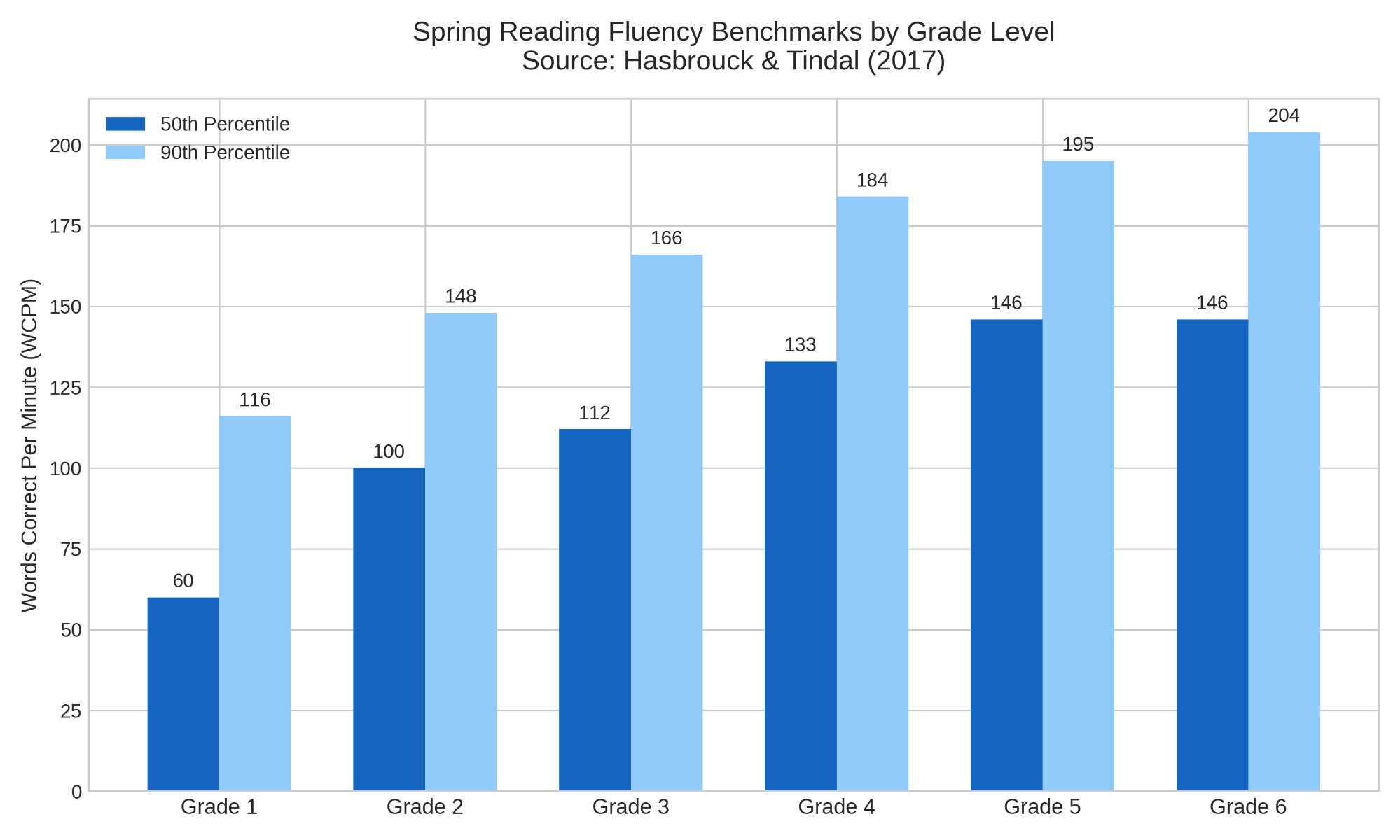
The ultimate goal of teaching high frequency words is to build reading fluency. Fluency is the bridge between decoding words and understanding the text. When a child reads fluently, they read accurately, at a good pace, and with proper expression.
The Hasbrouck & Tindal (2017) Oral Reading Fluency data provides clear benchmarks for what is expected at each grade level. For example, by the spring of first grade, a student at the 50th percentile should be reading around 60 words correct per minute. By the spring of third grade, that number jumped to 112 WCPM.
If a child is expending all their cognitive energy trying to remember how to pronounce "because" or "through," they have no mental bandwidth left to understand the plot of the story or the facts in a science passage. By systematically teaching high frequency words through orthographic mapping, parents can provide the essential scaffolding children need to become confident, fluent, and joyful readers.
Frequently Asked Questions (FAQ)
What is the difference between sight words and high frequency words?
High frequency words are the words that appear most commonly in printed text, such as "the," "and," or "said." Sight words are any words that a reader recognizes instantly and automatically without needing to sound them out. The goal is to turn high frequency words into sight words.
How do I use the heart word method to teach reading?
The heart word method involves breaking a word down by its sounds, identifying the parts of the word that follow standard phonics rules (which can be sounded out), and explicitly pointing out the irregular parts that must be learned "by heart." This helps children map the word in their memory rather than just memorizing its visual shape.
Which is better for my child, the Dolch list or the Fry list?
Both are excellent resources. The Dolch list is often preferred for early readers (Kindergarten and 1st grade) because it heavily targets words found in beginner books. The Fry list is more comprehensive, covering 1,000 words, and is excellent for setting long-term vocabulary goals through upper elementary school. It is best to use the list your child's school uses.
Why shouldn't I just use flashcards to teach sight words?
Rote memorization using flashcards relies on visual memory, which is inefficient for learning to read. Cognitive science shows that the brain learns words through orthographic mapping, connecting sounds to letters. While flashcards can be used for quick retrieval practice of words that have already been explicitly taught, they should not be the primary method of initial instruction.
How many sight words should a 1st grader know?
Expectations vary by curriculum, but generally, a 1st grader is expected to master between 100 and 150 high frequency words by the end of the year. This usually encompasses the Dolch Pre-Primer, Primer, and First Grade lists, or the first 100-200 words on the Fry list.