
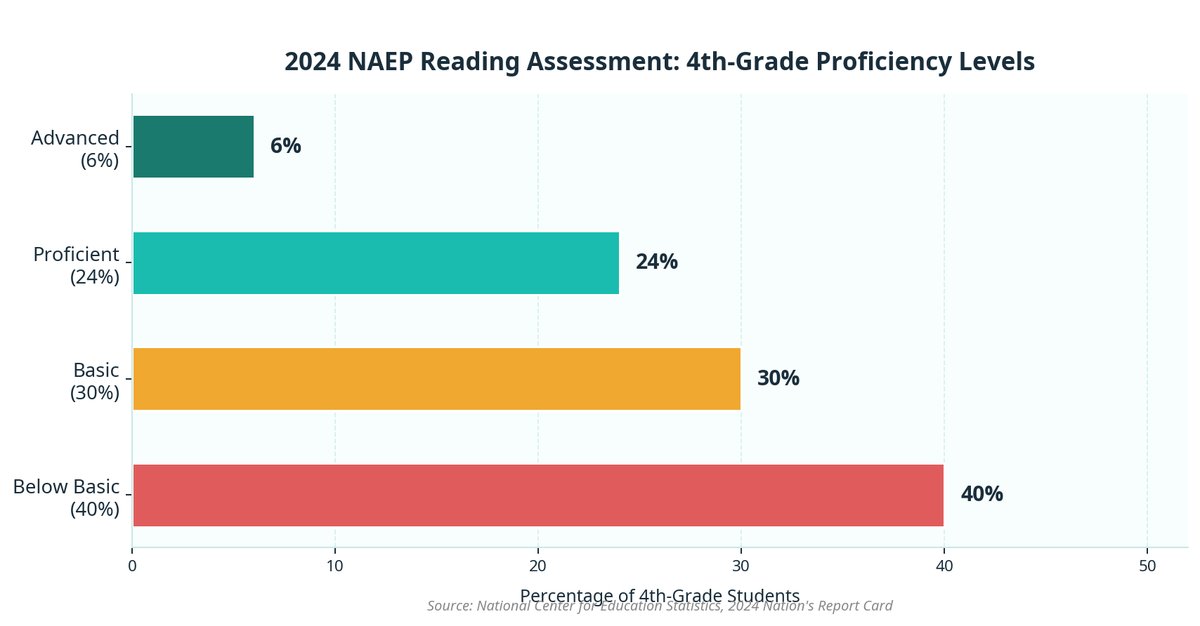
The ability to read is the foundation of all subsequent academic learning and a critical determinant of lifelong success. Yet, the data reveals a persistent challenge: many students are not reaching proficiency by the crucial fourth-grade milestone. According to the 2024 National Assessment of Educational Progress (NAEP), only 30% of fourth graders performed at or above the Proficient level in reading, while approximately 40% scored below the Basic level. This reality underscores the urgent need for schools and districts to adopt and implement highly effective beginning reading programs.
Historically, early literacy instruction has sometimes been fragmented or based on methods that lack empirical support. Today, there is a strong, research-backed consensus on how children learn to read. Effective beginning reading programs are comprehensive, systematic, and explicitly designed to build both word recognition and language comprehension. This guide explores the core components of these programs, the instructional strategies that make them work, and how educators can evaluate and implement them to ensure every child becomes a confident, independent reader.
Why Are Educators Shifting Toward Evidence-Based Beginning Reading Programs?
The shift toward evidence-based reading instruction is driven by a growing understanding of cognitive science and reading research. For decades, some instructional approaches relied heavily on cueing systems, encouraging students to guess words based on pictures or context rather than decoding the letters. While this might appear successful in the earliest stages with highly predictable texts, it often fails as texts become more complex and pictures disappear.
Evidence-based beginning reading programs align with the "Simple View of Reading," a framework positing that reading comprehension is the product of decoding (word recognition) and language comprehension. If either component is missing, reading comprehension cannot occur. Consequently, modern programs prioritize explicit, systematic phonics instruction to ensure students can accurately and automatically decode words, coupled with robust knowledge-building and vocabulary instruction to ensure they understand what they are reading.
This shift is not merely philosophical; it is practical. By focusing on how the brain actually learns to connect sounds to letters and meaning to words, these programs provide a reliable pathway to literacy for all students, reducing the need for later intervention and preventing the "fourth-grade slump."

What Are the Core Components of Effective Beginning Reading Programs?
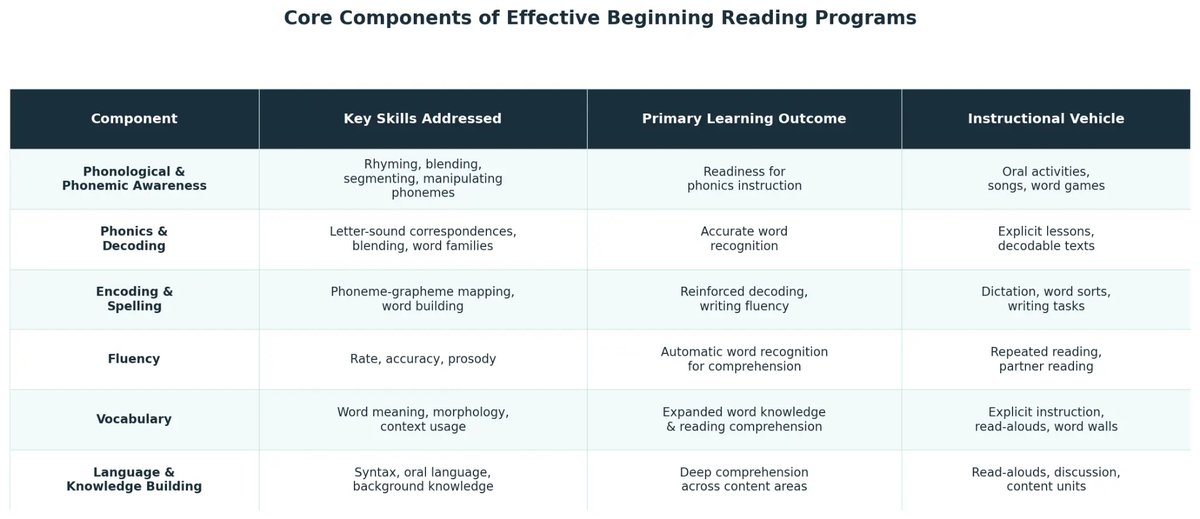
A comprehensive beginning reading program must address multiple facets of literacy simultaneously. The National Reading Panel identified five essential components, which modern programs have expanded upon to include spelling and broader knowledge building.
First, Phonological and Phonemic Awareness forms the bedrock. Before children can read letters, they must be able to hear, identify, and manipulate the individual sounds (phonemes) in spoken words. Activities like rhyming, blending sounds, and segmenting words are crucial readiness skills.
Second, Phonics and Decoding involve teaching the relationships between sounds and their corresponding letters or letter combinations (graphemes). Effective programs teach these relationships systematically, moving from simple consonant-vowel-consonant words to more complex patterns, ensuring students can sound out unfamiliar words rather than guessing.
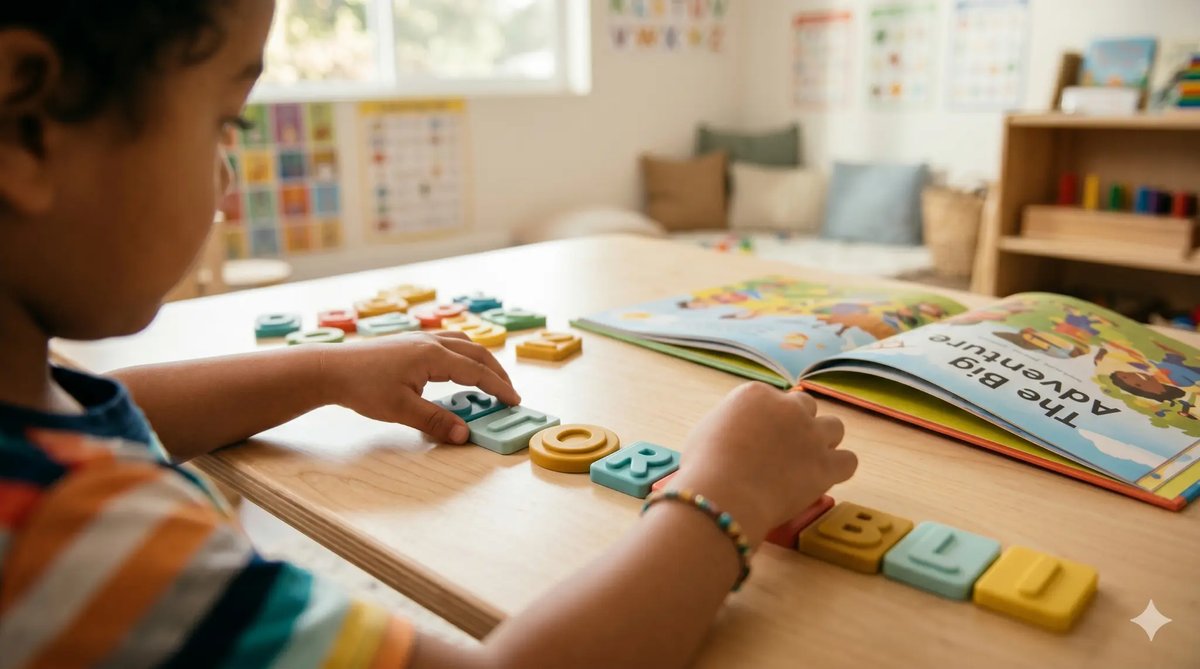
Third, Encoding and Spelling are the inverse of decoding. As students learn to read words, they should also practice writing them. Dictation and word-building exercises reinforce the phoneme-grapheme connections, solidifying both reading and spelling skills.
Fourth, Fluency is the bridge between decoding and comprehension. It is the ability to read text accurately, at an appropriate rate, and with proper expression (prosody). Fluency practice, often through repeated reading of familiar texts, ensures that cognitive energy is freed up from decoding to focus on meaning.
Fifth, Vocabulary instruction must be both direct and indirect. Students need to learn specific, high-utility words and the strategies to determine word meanings from context or morphology (roots, prefixes, suffixes).
Finally, Language and Knowledge Building are essential for comprehension. Students cannot understand a text if they lack the background knowledge or familiarity with the syntactic structures used in it. Programs address this through rich read-alouds and thematic units that explore science, history, and literature.
What Makes Explicit Instruction Different From Traditional Reading Approaches?
The methodology used to deliver a reading program is just as important as the content itself. Explicit instruction is a hallmark of highly effective beginning reading programs. Unlike traditional approaches that may rely on incidental learning or "discovery," explicit instruction leaves nothing to chance.
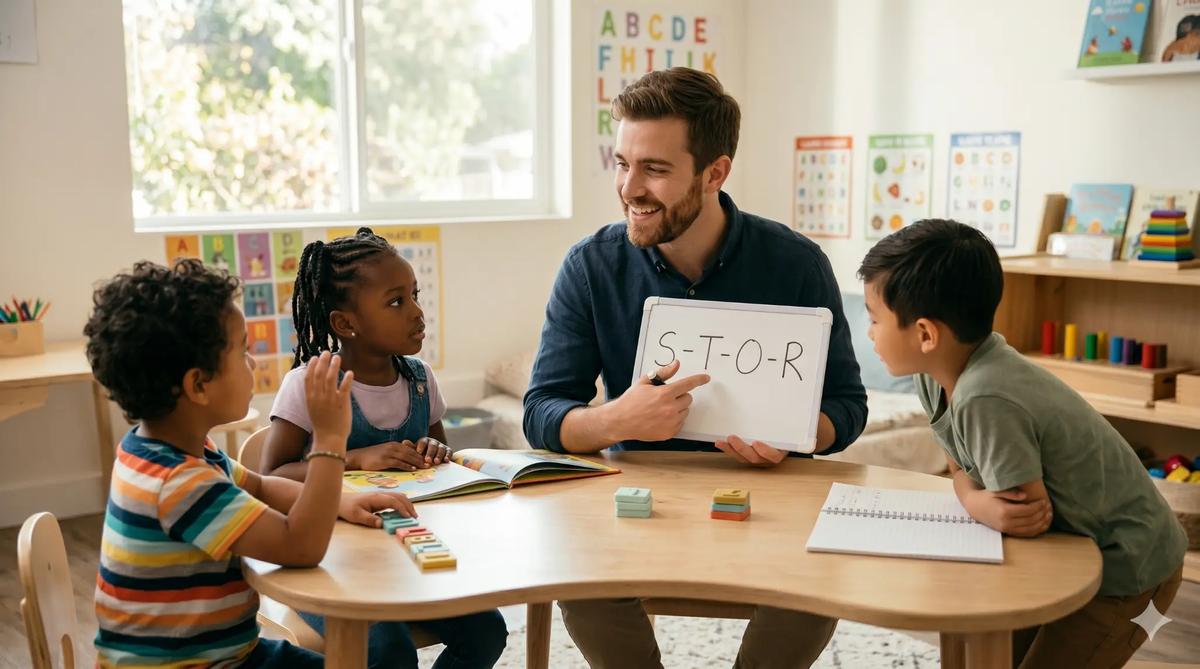
In an explicit lesson, the teacher clearly states the learning objective and models the skill. This is often described as the "I do" phase. For example, when introducing a new vowel team, the teacher explicitly demonstrates the sound it makes and how to blend it within a word. This is followed by the "We do" phase, where the teacher and students practice the skill together with guided support and immediate, corrective feedback.
Finally, the "You do" phase allows students to apply the skill independently. In beginning reading, this application must involve decodable texts, books or passages composed primarily of words that follow the phonics rules students have already learned. This ensures that students are practicing decoding rather than relying on context clues to guess words they haven't been taught how to read.
How Can Teachers Design a Daily Literacy Block That Covers All the Bases?
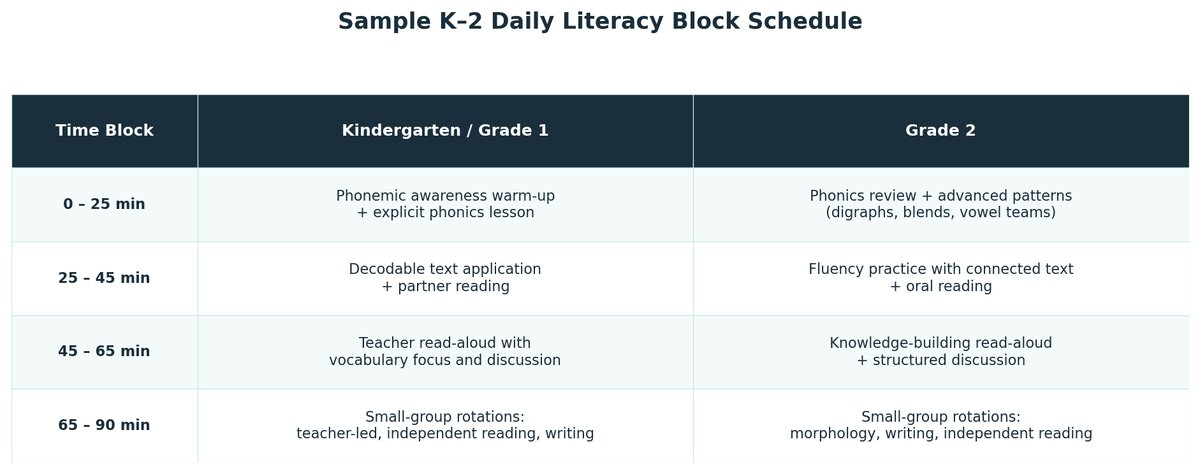
Implementing a comprehensive reading program requires careful scheduling. A typical daily literacy block in the early grades should span 90 to 120 minutes, divided to ensure all components receive adequate attention.
In Kindergarten and first grade, a significant portion of the block is dedicated to foundational skills. This includes daily phonemic awareness warm-ups and systematic phonics instruction. Following the explicit lesson, students need time to practice applying these skills using decodable texts, often in small groups or partner reading formats.
Equally important is the time dedicated to language comprehension. Even before students can read complex texts independently, they must be exposed to rich vocabulary and complex ideas. This is typically achieved through teacher read-alouds of complex texts, followed by structured discussions that build background knowledge and oral language skills.
As students progress into second grade and beyond, the balance shifts. While advanced phonics (like multisyllabic word decoding and morphology) remains important, more time is allocated to fluency practice, independent reading, and deep comprehension work with increasingly complex texts.
How Does Assessment Guide Instruction Within Beginning Reading Programs?
Effective reading instruction is not a static process; it is dynamic and responsive to student needs. Therefore, robust beginning reading programs integrate assessment seamlessly into the instructional cycle. These assessments are not merely for grading but serve as crucial diagnostic tools.
Universal screening at the beginning, middle, and end of the year helps identify students who may be at risk for reading difficulties. These brief assessments typically measure foundational skills like letter naming, phoneme segmentation, and oral reading fluency. For students identified as at-risk, more targeted diagnostic assessments pinpoint the specific gaps in their learning.
Perhaps most importantly, programs include frequent progress monitoring. These quick, regular checks allow teachers to determine if the current instruction is working or if a student requires intervention. If a student is struggling with a specific phonics pattern, the teacher can adjust small-group instruction to provide additional modeling and practice before moving on.
How Do Beginning Reading Programs Serve Multilingual Learners and Students With Dyslexia?
A true test of a beginning reading program is its ability to support diverse learners, including multilingual students and those with learning differences such as dyslexia. The good news is that the explicit, systematic instruction required by these students is beneficial for all students.
For students with dyslexia, a structured literacy approach is essential. They require highly explicit instruction in phonemic awareness and phonics, with ample opportunities for repetition and review. Programs must avoid methods that encourage guessing, as this masks decoding difficulties. Furthermore, multisensory techniques, engaging visual, auditory, and kinesthetic pathways, can help solidify learning.
Multilingual learners also benefit immensely from systematic phonics, but they require additional, targeted support in oral language development and vocabulary. Effective programs provide teachers with strategies to explicitly teach the meanings of words that native speakers might acquire incidentally. Furthermore, acknowledging and leveraging a student's home language can facilitate the transfer of literacy skills to English.
Why Do Language and Background Knowledge Matter as Much as Decoding?
While decoding is the key that unlocks the words on the page, background knowledge is the engine that drives comprehension. A student might be able to decode every word in an article about baseball, but if they have no understanding of the rules of the game, their comprehension will be severely limited.
Effective beginning reading programs recognize that reading comprehension is not a generic, transferable skill; it is highly dependent on domain-specific knowledge. Therefore, these programs intentionally build students' knowledge of the world through carefully curated sequences of texts.
Instead of jumping randomly from a story about a dog to an informational text about space, strong programs organize reading materials into thematic units. Over several weeks, students might read multiple texts about animal habitats, allowing them to encounter the same vocabulary words repeatedly in different contexts and build a deep, interconnected web of knowledge. This knowledge-building approach is especially critical for closing the achievement gap for students who may have less exposure to academic language outside of school.

What Criteria Should Guide Teams Selecting or Refining Beginning Reading Programs?
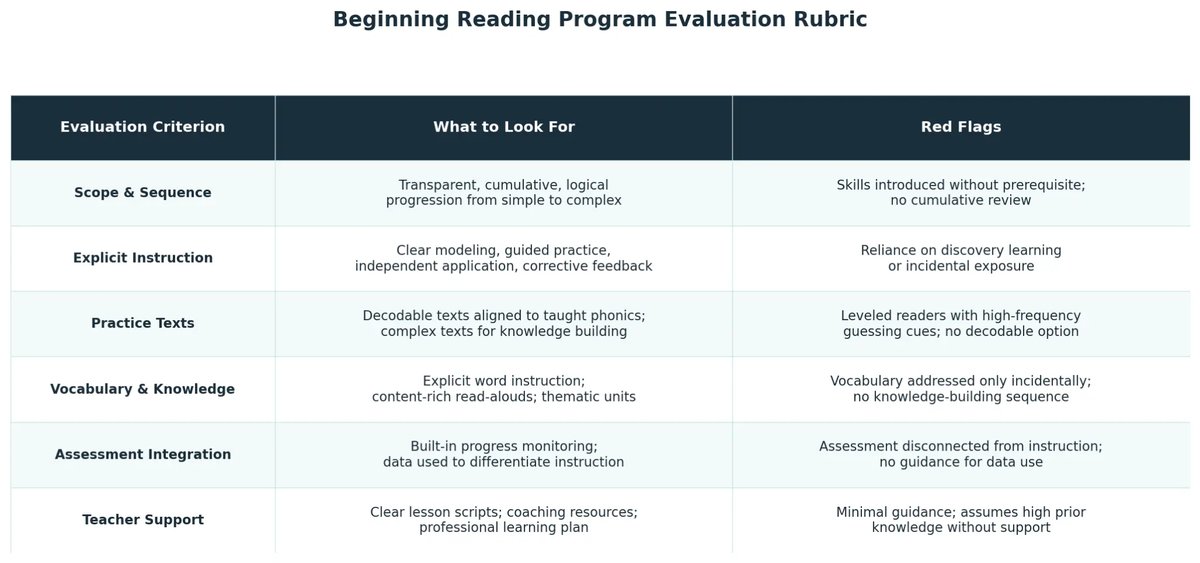
Selecting a new reading program or evaluating an existing one is a significant undertaking for any school or district. The process must be guided by a clear understanding of what constitutes evidence-based practice.
First, teams must examine the scope and sequence. Does the program offer a logical, cumulative progression of phonics skills, starting with the simplest and moving to the most complex? Are prerequisite skills taught before more advanced ones are introduced?
Second, the materials provided for student practice must align with the instruction. If the program teaches a specific set of phonics rules, the texts students are asked to read independently must be decodable based on those rules. Programs that rely heavily on leveled readers filled with untaught words and guessing cues should be viewed with caution.
Finally, a program is only as effective as the teacher implementing it. High-quality programs provide robust teacher support, including clear lesson structures, guidance on how to differentiate instruction based on assessment data, and resources for professional learning.
How Does Technology Support Beginning Reading Programs Without Replacing Instruction?
In the modern classroom, technology plays an increasingly supportive role in early literacy. However, it is crucial to view technology as a complement to, rather than a replacement for, high-quality teacher-led instruction.
Educational apps and software can provide valuable opportunities for personalized practice. For example, speech-recognition technology can listen to a student read aloud, providing immediate, corrective feedback on decoding errors and tracking fluency progress. This allows students to practice reading aloud even when the teacher is working with another group.
Furthermore, technology can offer adaptive learning pathways, adjusting the difficulty of phonics exercises or vocabulary games based on a student's real-time performance. This ensures that students are consistently working at their optimal challenge level, reinforcing the skills taught during the core literacy block.

Conclusion: Treating Early Literacy as an Iterative, Evidence-Informed Process
The journey to reading proficiency is complex, but the path forward is clearer than ever. By embracing evidence-based beginning reading programs, educators can move away from practices that leave reading to chance and toward systematic, explicit instruction that ensures all students have the opportunity to succeed.
Implementing these programs requires a commitment to ongoing professional learning, careful assessment, and a willingness to adjust instruction based on student data. It is an iterative process, demanding that schools continuously refine their approach to meet the diverse needs of their learners. When foundational skills and knowledge building are prioritized, we equip students not just with the ability to read words, but with the power to comprehend the world around them.
Frequently Asked Questions
What are the best reading programs for struggling readers?
The best programs for struggling readers are those based on structured literacy. They emphasize explicit, systematic instruction in phonemic awareness and phonics, providing ample repetition and decodable texts for practice. They avoid methods that encourage guessing words from context.
How do I know if a reading program is evidence-based?
An evidence-based program aligns with the science of reading. Look for a clear, cumulative scope and sequence for phonics, explicit instructional routines (I do, We do, You do), the use of decodable texts for early practice, and a strong emphasis on building vocabulary and background knowledge.
Can a reading app replace a traditional reading program?
No, a reading app should not replace a comprehensive, teacher-led reading program. However, high-quality apps can serve as excellent supplementary tools, providing personalized practice, fluency tracking, and engaging reinforcement of the skills taught in the classroom.
Why are decodable books important in beginning reading?
Decodable books are crucial because they contain words that follow the specific phonics rules students have already been taught. This forces students to practice sounding out words (decoding) rather than relying on pictures or context to guess, which builds accurate and automatic word recognition.
How much time should be spent on phonics each day?
In Kindergarten and first grade, a dedicated 20 to 30 minutes of explicit phonics instruction is typically recommended, followed by additional time spent applying those skills by reading decodable texts and writing.
What is the difference between phonemic awareness and phonics?
Phonemic awareness is an auditory skill; it is the ability to hear and manipulate the individual sounds (phonemes) in spoken words. Phonics involves connecting those spoken sounds to written letters (graphemes) to read and spell words.
How can parents support beginning reading programs at home?
Parents can support reading by reading aloud to their children daily to build vocabulary and background knowledge. They can also listen to their child read decodable texts, gently encouraging them to sound out unknown words rather than guessing.
Why is background knowledge important for reading comprehension?
Background knowledge provides the context necessary to understand a text. If a student is reading about a specific topic but lacks basic knowledge about it, they will struggle to comprehend the meaning, even if they can decode all the words accurately.