
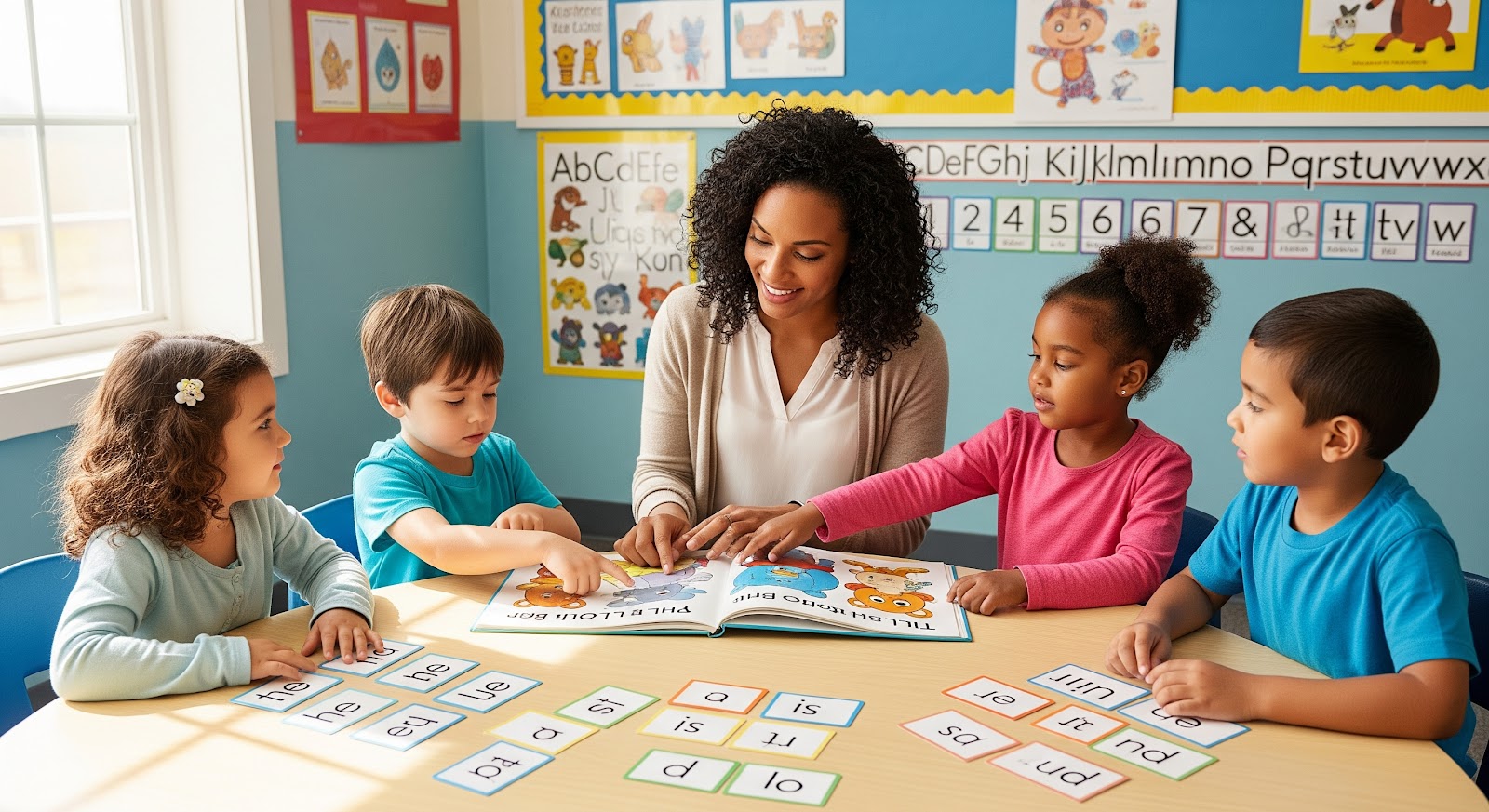
It’s 8:30 a.m. in a second-grade classroom, and already one in three students is silently dreading reading time. For them, each page is a mountain to climb, full of unfamiliar words, skipped lines, and guessing games. Unfortunately, this isn’t a rare scene. According to the National Assessment of Educational Progress (NAEP), only 35% of fourth-grade students in the U.S. are reading at or above proficiency levels. This number is even lower for students from underserved communities, English Language Learners, and those with learning differences like dyslexia or ADHD.
This data paints a troubling picture: far too many children are slipping through the cracks before they’ve mastered the early reading skills they need to succeed. The early years, especially from kindergarten through third grade, are a critical window for reading development. If students don’t get targeted, research-based early reading instruction during this time, they’re at risk of falling behind not just in reading, but in every subject that requires literacy.
Why Early Reading Intervention Matters
The early elementary years, kindergarten through third grade, aren’t just another phase of school; they’re a make-or-break period for a child’s future in reading. During this time, children are expected to move from learning to read to reading to learn. If they don’t acquire strong early reading skills by the end of third grade, research shows they are four times more likely to drop out of high school.
By third grade, students should ideally have a solid foundation in beginning reading skills like phonemic awareness, phonics, fluency, vocabulary, and basic comprehension. These are the building blocks that allow children to decode words, understand meaning, and engage with texts independently. When intervention happens early, before learning gaps widen, it’s far more effective and efficient than trying to remediate reading difficulties later.
Backed by Science: What Research Tells Us
Multiple landmark studies emphasize the importance of early reading intervention. The National Reading Panel concluded that systematic, explicit instruction in phonemic awareness and phonics combined with guided oral reading leads to significant improvements in children’s reading outcomes.
Similarly, the Science of Reading, which synthesizes decades of interdisciplinary research in cognitive psychology, linguistics, and neuroscience, reinforces that structured, evidence-based instruction is essential. It shows that reading is not a natural process but one that must be taught through intentional, step-by-step methods that activate and strengthen the brain’s language networks.
Both bodies of research stress this key point: delays in acquiring early reading skills don’t just slow academic progress they affect self-esteem, motivation, and access to future learning.
Long-Term Benefits of Starting Early
When early reading intervention is provided within that K–3 window, the long-term benefits are significant. Children gain the confidence to read independently, participate actively in class, and access more complex content in subjects like science, math, and social studies. It also leads to:
- Higher reading comprehension by upper elementary grades
- Increased vocabulary and oral language development
- Stronger academic performance across all subjects
- Lower rates of referral to special education services
Moreover, targeted early support helps reduce achievement gaps for English Language Learners, students with dyslexia, and those from historically marginalized communities, offering a more equitable foundation for literacy success.
In short, early reading intervention isn’t just a support strategy; it’s a catalyst for lifelong learning and opportunity.
Proven Strategies in Early Reading Instruction
Effective early reading instruction is not about guesswork; it’s about using proven, evidence-based strategies that build foundational skills in the right order. When educators implement structured literacy techniques early on, students develop stronger decoding abilities, fluency, and confidence. Below are three research-backed strategies that are currently delivering meaningful results in early reading classrooms.
Systematic Phonics Instruction
Phonics is the cornerstone of early reading instruction. Teaching children the relationship between letters and sounds in a clear, systematic way helps them decode unfamiliar words and build spelling skills over time. According to the National Reading Panel, phonics instruction is most effective when it is explicit and sequential, starting with simple letter-sound correspondences and gradually moving toward complex patterns like vowel teams and multisyllabic words.
In high-quality early reading programs, students are not left to infer these patterns; instead, they are guided to practice them daily. Tools like Readability reinforce this process by listening to a child’s oral reading, identifying errors in decoding, and providing immediate, corrective feedback.
Phonics instruction not only strengthens beginning reading skills, but it also lays the groundwork for fluent reading, comprehension, and independent learning.
Phonemic Awareness Activities
Phonemic awareness, the ability to hear, identify, and manipulate the individual sounds (phonemes) in spoken words, is a powerful predictor of reading success. Even before children are introduced to letters, developing an awareness of sounds helps them prepare for decoding written language.
Effective early reading instruction incorporates daily phonemic awareness activities such as:
- Segmenting sounds (e.g., breaking “cat” into /c/ /a/ /t/)
- Blending sounds to form words
- Deleting or substituting sounds (e.g., changing the /m/ in “mat” to /s/ to make “sat”)
These sound manipulation exercises are best delivered in a playful, oral format through songs, chants, games, and interactive tools. When paired with phonics, they help children move smoothly from spoken to written language, strengthening their overall early reading skills.
Repeated Reading and Fluency Practice
Once children have learned how to decode words, the next critical step is building fluency, the ability to read with speed, accuracy, and expression. Repeated reading is one of the most effective strategies for developing fluency. It involves reading the same passage multiple times to increase familiarity, confidence, and automaticity.
Fluency is closely linked to comprehension. When children no longer have to labor over decoding every word, their cognitive energy shifts toward understanding the text. Readability supports this process by tracking words correct per minute, prompting expressive reading, and giving feedback on pacing and accuracy all in real time.
Incorporating daily fluency practice through guided readings, choral reading, or digital platforms helps students progress from halting, effortful readers to confident ones who can fully engage with what they’re reading.
Technology That’s Making a Difference
As classrooms become more diverse and the need for individualized instruction grows, technology is stepping in to close literacy gaps faster than ever. Today’s best digital reading tools aren’t just flashy, they’re grounded in research, adaptive to learners’ needs, and capable of delivering early reading intervention with measurable impact.
Among the many solutions available, one tool stands out: Readability, an AI-powered reading platform that’s transforming how students practice and master early reading skills.
Readability in Action: A Case Study in Innovation
Readability offers a unique approach to literacy development by combining the Science of Reading with real-time artificial intelligence. The platform doesn’t just test reading, it teaches it. By listening to children read aloud, tracking progress, and adapting content automatically, it creates a personalized reading experience that mimics the effectiveness of one-on-one instruction.
AI-Powered Feedback on Pronunciation and Fluency
One of Readability’s most powerful features is its real-time speech recognition engine. As students read aloud, the app listens, analyzes pronunciation, and provides instant, corrective feedback, guiding learners just like a reading coach would.
This helps students:
- Improve decoding accuracy
- Develop expressive oral reading
- Build automaticity through immediate correction
With regular use, children begin reading more smoothly and confidently, a crucial step in mastering early reading skills.
Real-Time Comprehension Assessments
Unlike traditional programs that only track how much a student reads, Readability goes further by assessing how well they understand what they read. After each story, the app asks comprehension questions aloud and evaluates spoken responses using AI.
This supports:
- Oral language development
- Critical thinking
- Deep engagement with texts
By embedding assessments directly into the reading experience, Readability shows how to help kids with reading comprehension in an authentic, interactive way.
Adaptive Content for All Learners
Readability also shines in its inclusive and differentiated design. The app automatically adjusts the complexity of books based on each learner’s pace, performance, and preferences making it ideal for:
- English Language Learners (ELLs) who benefit from pronunciation support and vocabulary scaffolding
- Students with dyslexia or ADHD, who often need multisensory, distraction-reduced environments
- Advanced readers, who require challenge and progression to stay motivated
This adaptive model ensures every child receives the early reading instruction that meets them where they are and moves them forward.
Measurable Outcomes That Matter
Beyond innovative features, Readability delivers real, measurable results. In a 2023 evaluation of nearly 600 students using the platform:
- 74% showed significant gains in reading fluency
- Students read an average of 138 books per year
- On average, students answered over 450 comprehension questions, demonstrating deeper engagement and skill development
These metrics underscore Readability’s role as a scalable, effective tool for early reading intervention not just a digital book library, but a whole instructional experience.
What’s Actually Working in Early Reading Right Now
Early reading intervention is no longer a luxury; it’s a necessity. The good news? We now know what works.
From systematic phonics instruction and phonemic awareness activities to research-backed comprehension strategies and vocabulary building techniques, the tools for success are within reach. When combined with innovative technology like Readability’s AI-powered platform that adapts in real time to support pronunciation, fluency, and comprehension, these methods aren’t just helping students catch up. They’re helping them leap ahead.
But the window to make the most significant impact is narrow. Without intentional, early intervention, reading challenges can snowball into long-term academic struggles, widened equity gaps, and diminished confidence that lasts well beyond elementary school.
