
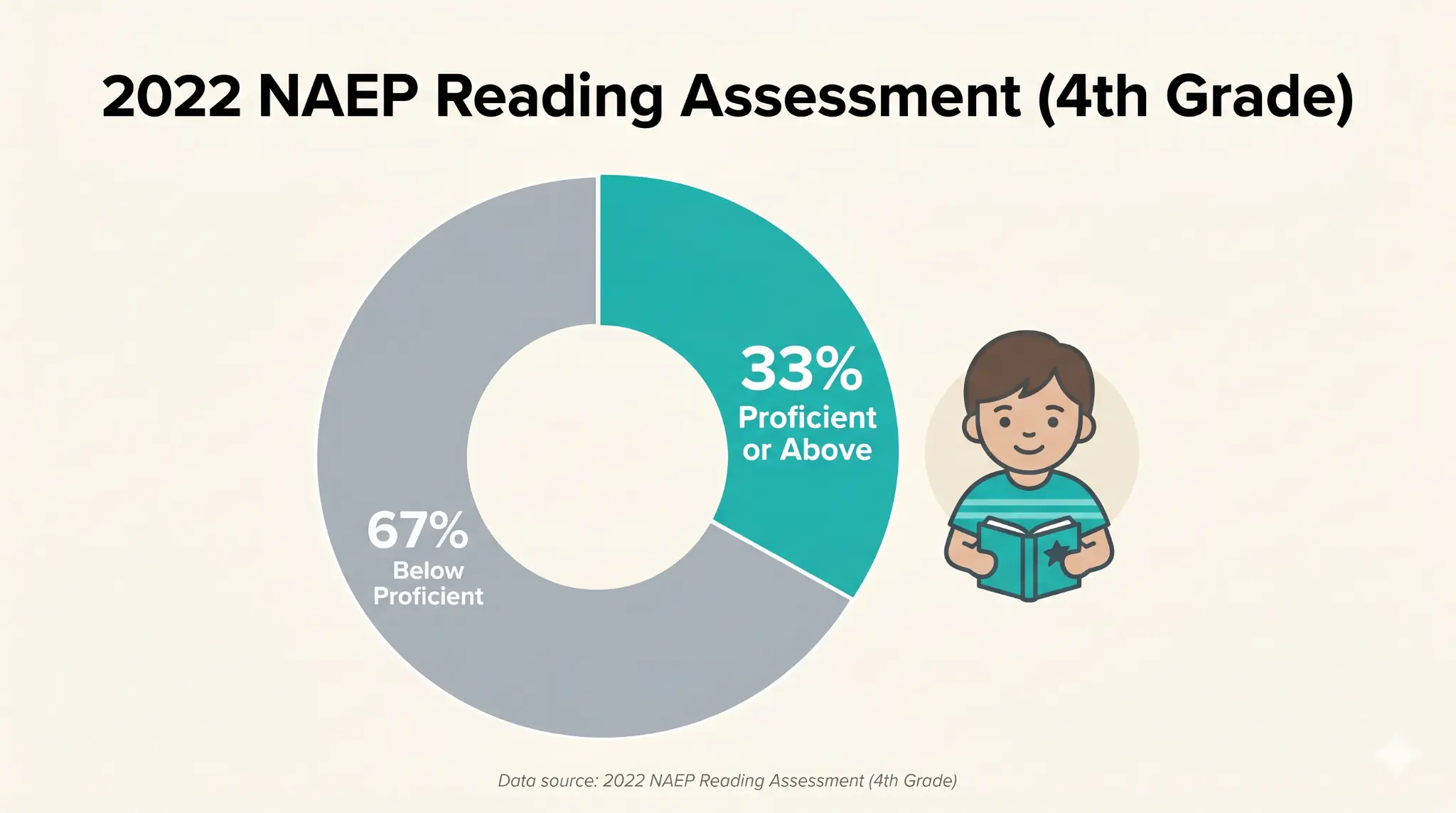
Second grade is a pivotal year in a child's literacy journey. During this time, students are expected to apply their foundational phonics knowledge to increasingly complex texts, build automaticity in their reading, expand their vocabulary, and significantly strengthen their reading comprehension skills. However, achieving these milestones is not always straightforward. According to the 2022 National Assessment of Educational Progress, only 33% of fourth-grade students performed at or above the proficient level in reading, highlighting a critical need for effective, early literacy support.
To bridge this gap, educators and parents are increasingly turning to digital solutions. Reading apps for second graders serve as powerful, interactive tools that complement traditional explicit instruction. By providing targeted practice, immediate corrective feedback, and engaging, game-like experiences, these platforms can motivate 7- and 8-year-olds to practice essential skills like phonics, spelling, and fluency.
In this guide, we will explore what makes a reading app effective, how to evaluate the best reading apps for 2nd graders, and the best practices for integrating these digital tools into both classroom routines and home learning environments.
What Do 2nd Graders Need to Grow as Readers?
As students enter second grade, the focus of reading instruction shifts. While kindergarten and first grade heavily emphasize phonemic awareness and basic letter-sound correspondences, second grade demands more advanced skills. Students must navigate complex vowel teams, r-controlled vowels, and multisyllabic words. They are also expected to recognize irregular high-frequency words with automaticity, allowing their cognitive energy to focus on making meaning from the text.
Interactive platforms and digital learning tools can play a crucial role in this developmental stage. When paired with explicit, teacher-led instruction, reading apps for second graders offer the spaced repetition and adaptive practice necessary to solidify these skills. Furthermore, the gamified elements of these apps, such as earning badges or progressing through a narrative, provide the motivation that striving readers often need to persist through challenging tasks.
What Are Reading Apps for Second Graders?
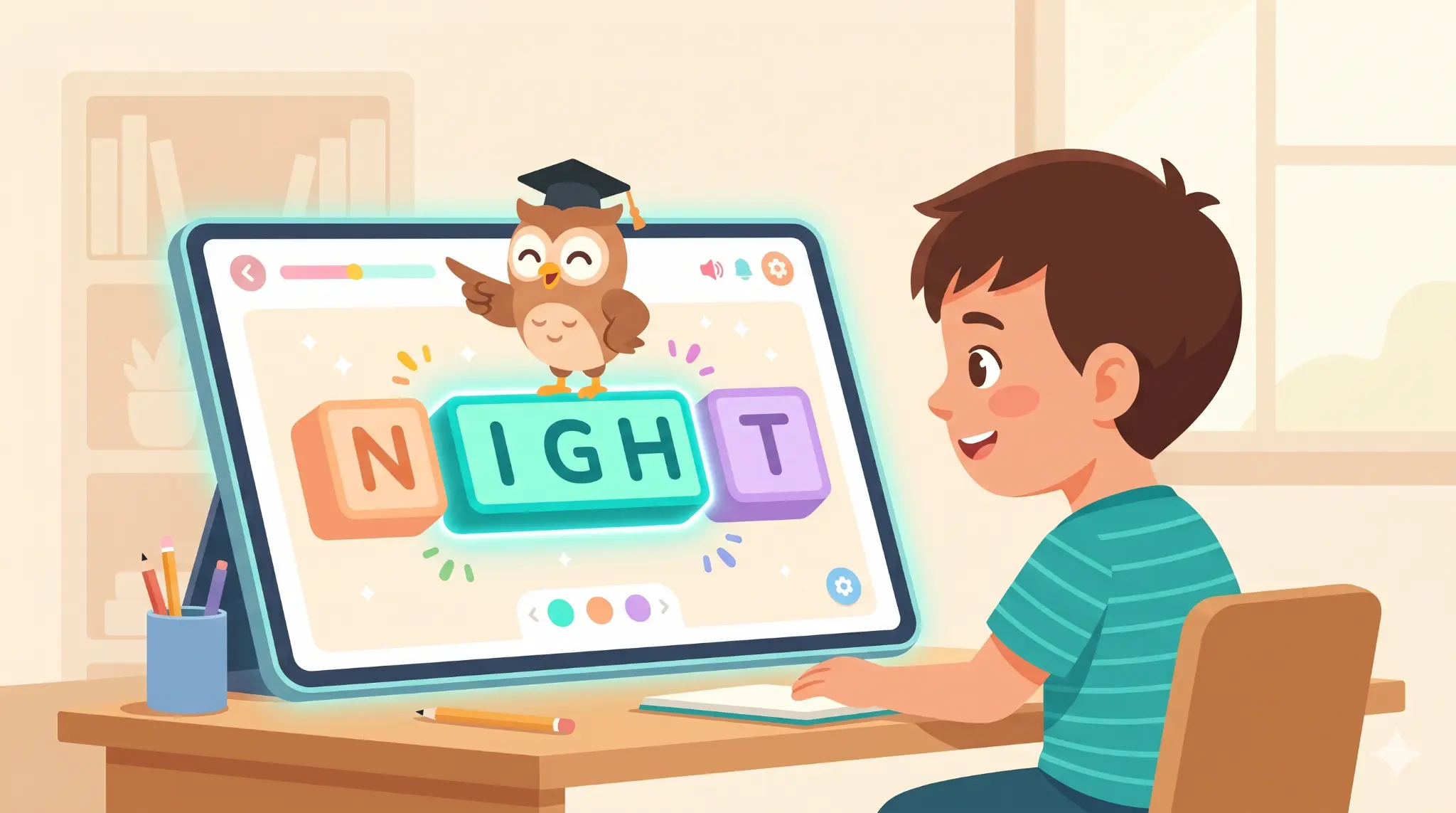
Reading apps for second graders are interactive digital tools specifically designed for 7- to 8-year-olds to practice foundational literacy skills. These applications target phonics, spelling, vocabulary, reading fluency, and reading comprehension through structured lessons, engaging games, decodable texts, and read-alouds. By offering progress tracking and adaptive learning pathways, these apps complement teacher- or parent-led instruction, providing individualized practice that meets each student at their specific instructional level.
How Can You Identify the Best Reading Apps for 2nd Graders?
When searching for the best reading apps for 2nd graders, it is essential to look for evidence-based qualities that align with the science of reading. The most effective applications do not merely entertain; they provide systematic phonics instruction aligned to a clear scope and sequence. They offer decodable practice, cumulative review, and immediate corrective feedback to prevent students from practicing errors.
Furthermore, the best apps feature adaptive pathways that adjust to a student's performance, meaningful reward systems that encourage sustained effort, and comprehensive dashboards for teachers and parents to monitor progress.
Criteria and Rubric for Selection
To help you evaluate and select the most appropriate digital tools, consider the following criteria:
- Alignment to the Science of Reading: The app must explicitly address phonemic awareness, phonics, fluency, vocabulary, and comprehension.
- Quality of Content: Look for apps that include decodable texts, morphology practice, appropriate text complexity, and authentic reading passages.
- Adaptive Practice and Spaced Review: The platform should adjust difficulty based on student responses and revisit previously learned skills to ensure mastery.
- Feedback and Error Correction: Immediate, explicit feedback is crucial for correcting misconceptions in real-time.
- Teacher/Parent Controls and Progress Monitoring: Detailed dashboards that track time-on-task, accuracy, and specific skill mastery are essential for data-driven instruction.
- Accessibility: The app should incorporate Universal Design for Learning principles, offering dyslexia-friendly fonts, text-to-speech audio support, and translation features.
- Privacy and Data Protection: Ensure the app complies with COPPA and FERPA regulations to protect student data.
- Engagement Design: Features like goal setting, streaks, avatar customization, and narrative quests keep students motivated.
- Offline Access and Device Compatibility: Consider whether the app requires a constant internet connection and if it works across various devices (tablets, Chromebooks, etc.).
- Pricing Transparency: Understand the cost model, including free versus paid tiers, and options for classroom or district-wide implementation.
What Makes Good Reading Apps for 2nd Graders Different?
While the top-tier platforms offer comprehensive, adaptive experiences, good reading apps for 2nd graders still hold value by meeting baseline educational needs. These apps typically provide solid phonics practice, read-aloud functionalities, simple comprehension quizzes, and basic progress tracking.
However, they may fall short in areas such as advanced adaptivity, offering fewer decodable texts, or providing only modest reporting features. When using "good" apps, educators and parents can maximize their effectiveness by pairing them with print decodables or teacher-made activities. For instance, if an app focuses heavily on spelling games but lacks connected text reading, you can supplement the digital practice by having the child read a physical decodable book that targets the same phonics pattern.
How to Choose the Best Reading Apps for Second Graders by Category
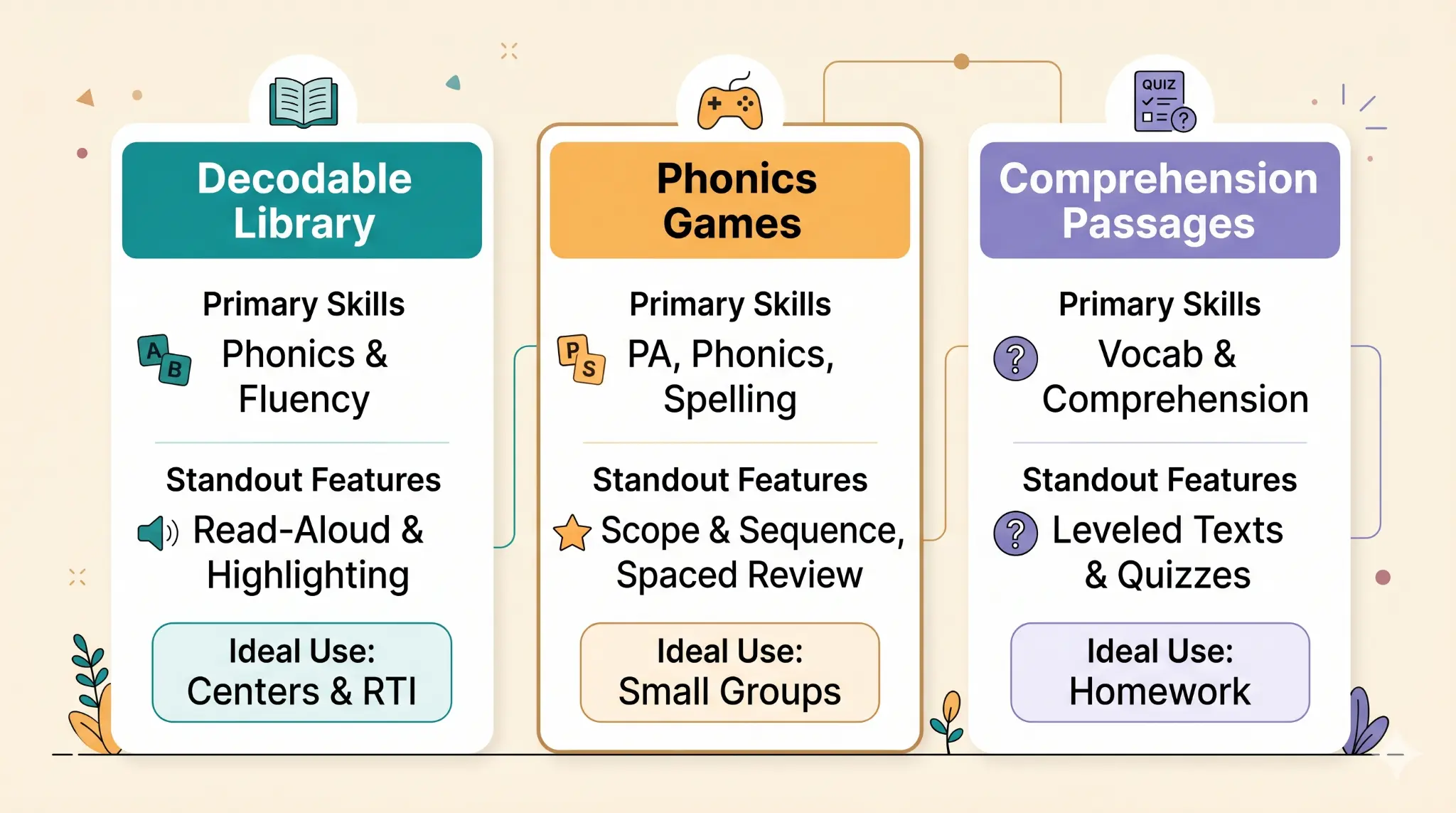
Selecting the best reading apps for second graders requires matching the app's specific category and features to your learning goals. Different scenarios demand different tools. For example, a classroom center might require an adaptive phonics game suite, while a homework assignment might be better served by a digital library of leveled comprehension passages.
App Categories to Compare
- Decodable Libraries and Read-to-Me Collections: Focus on applying phonics skills to connected text and building fluency through modeled reading.
- Phonics and Phonemic Awareness Game Suites: Target specific sound-spelling correspondences and phoneme manipulation.
- Spelling and Word Study: Emphasize phoneme-grapheme mapping and early morphology (base words, prefixes, suffixes).
- Vocabulary Builders: Use semantic mapping, context clues, and morphology to expand word knowledge.
- Comprehension Platforms: Provide leveled passages, varied question sets, and digital annotation tools.
- Fluency Tools: Offer repeated readings, audio modeling, and voice recording features for self-assessment.
- Writing-to-Read Tools: Include dictation exercises, sentence building, and simple publishing platforms.
- Assessment and Dashboards: Focus on placement tests and detailed growth reports to guide instruction.
What Are the Best Learning to Read Apps for 2nd Graders?
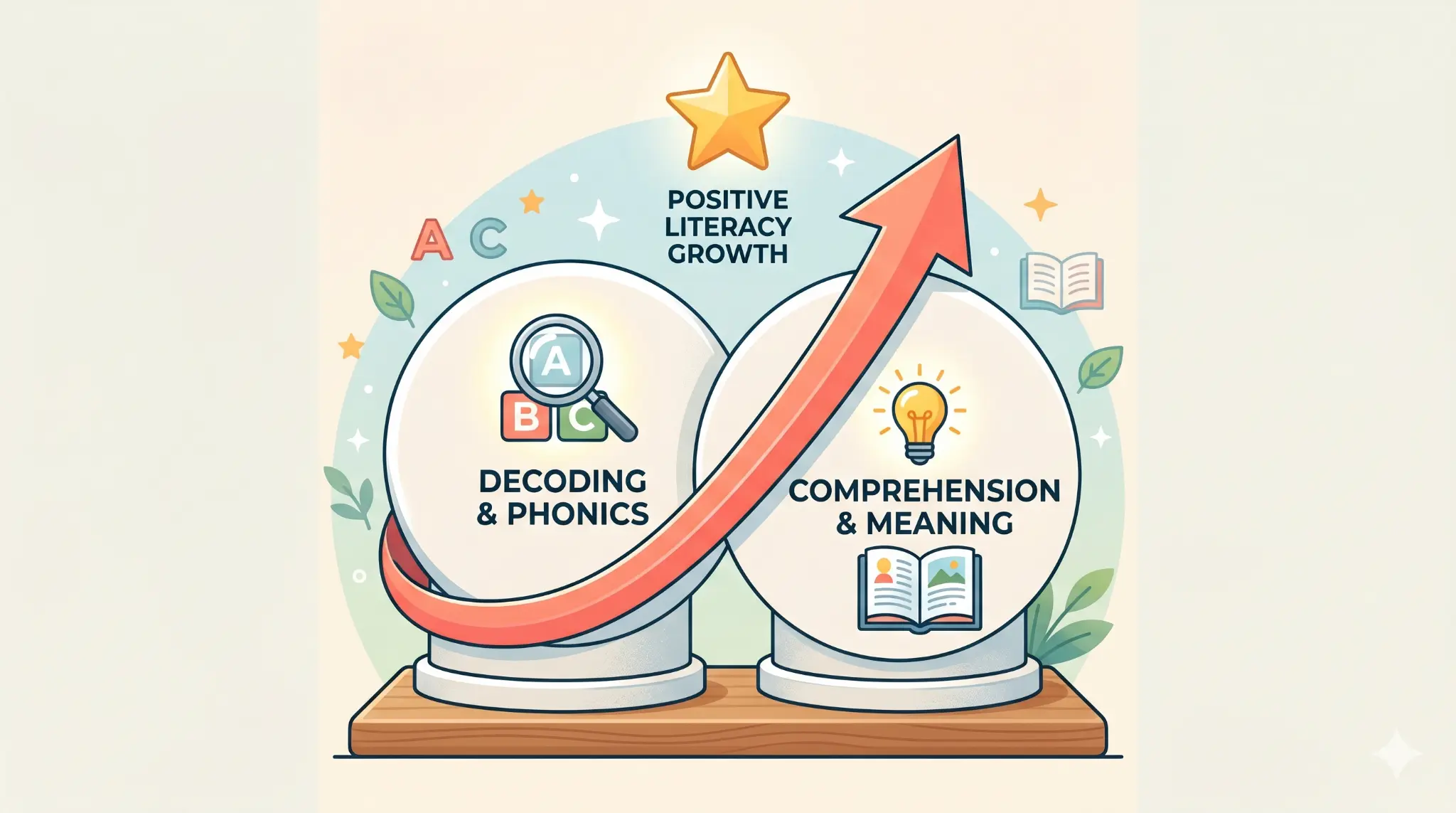
The best learning to read apps for 2nd graders prioritize systematic phonics instruction. They focus heavily on decodable practice, blending and segmenting sounds, and mastering irregular high-frequency words. Once these foundational skills are secure, the best apps bridge the gap to fluency, vocabulary, and comprehension by introducing controlled text that gradually increases in complexity.
Alignment With 2nd Grade Skills
To ensure an app is appropriate for a second grader, verify that it aligns with these specific grade-level skills:
- Advanced Phonics: Mastery of vowel teams, r-controlled vowels, and introductory prefixes and suffixes.
- Multisyllabic Decoding Strategies: Teaching students how to break longer words into manageable chunks or syllables.
- Irregular Word Practice: Building automaticity with words that do not follow standard phonetic rules.
- Vocabulary Growth: Exploring morphology, including understanding how base words change when affixes are added.
- Comprehension: Moving beyond literal recall to answer inferential comprehension questions.
How Do Reading Apps Keep 2nd Graders Engaged?
Engagement is a critical component of any digital learning tool. If a student is not motivated to use the app, the instructional design is irrelevant. Effective reading apps for second graders utilize several engagement strategies:
- Choice Boards and Avatars: Allowing students to choose their learning path or customize an avatar fosters a sense of ownership and autonomy.
- Narrative Quests: Framing skills practice within a larger story or mission makes learning feel like an adventure.
- Short Sessions with Frequent Feedback: Micro-sessions of 10–15 minutes prevent cognitive overload, while immediate feedback keeps students on track.
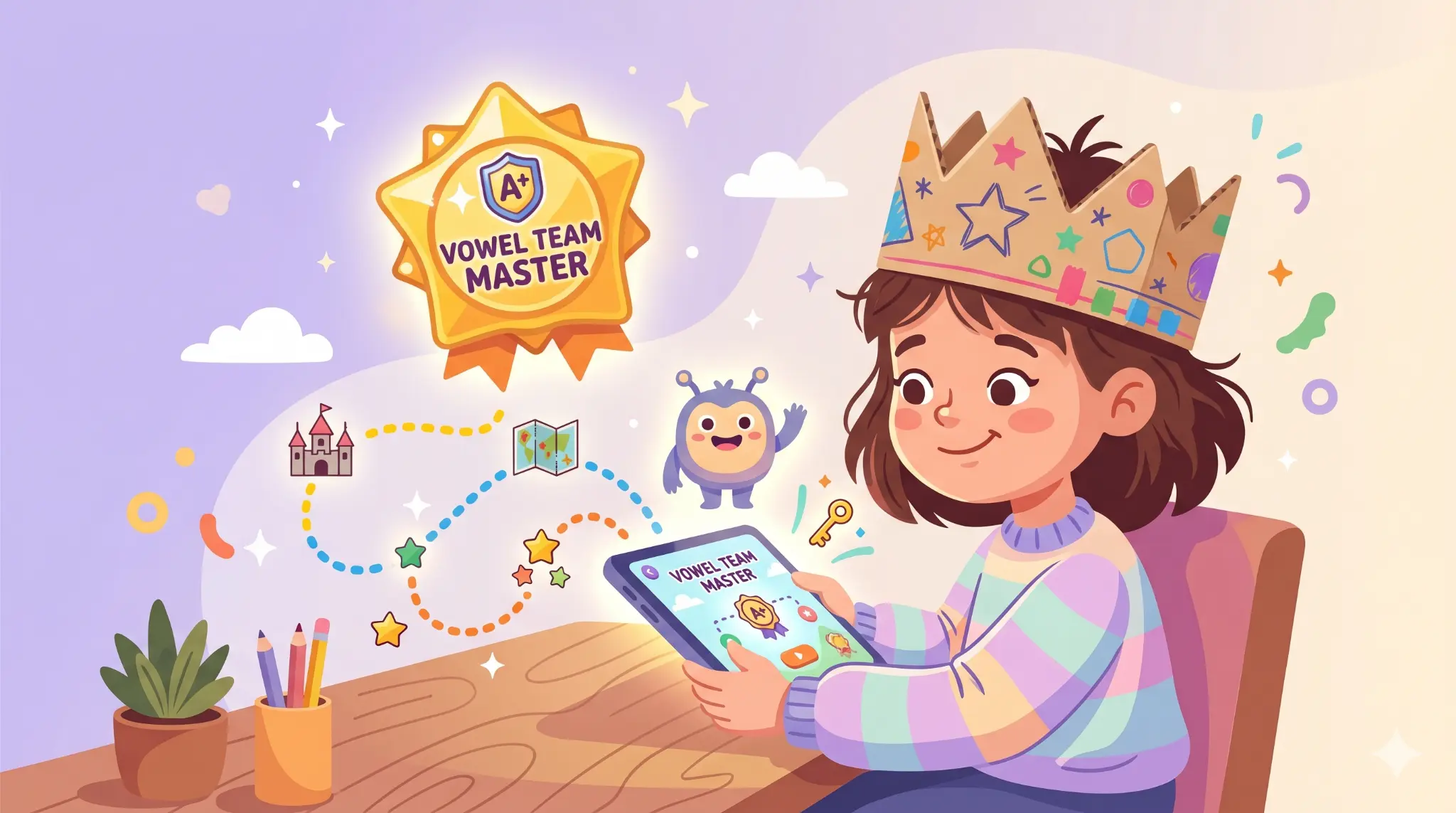
- Goal Setting and Badges: Tying rewards directly to learning targets (e.g., earning a "Vowel Team Master" badge) makes progress visible and rewarding.
- Cross-Curricular Topics: Integrating real-world reading tasks and topics from science or social studies increases relevance and interest.
How Should You Implement Reading Apps at Home and in the Classroom?
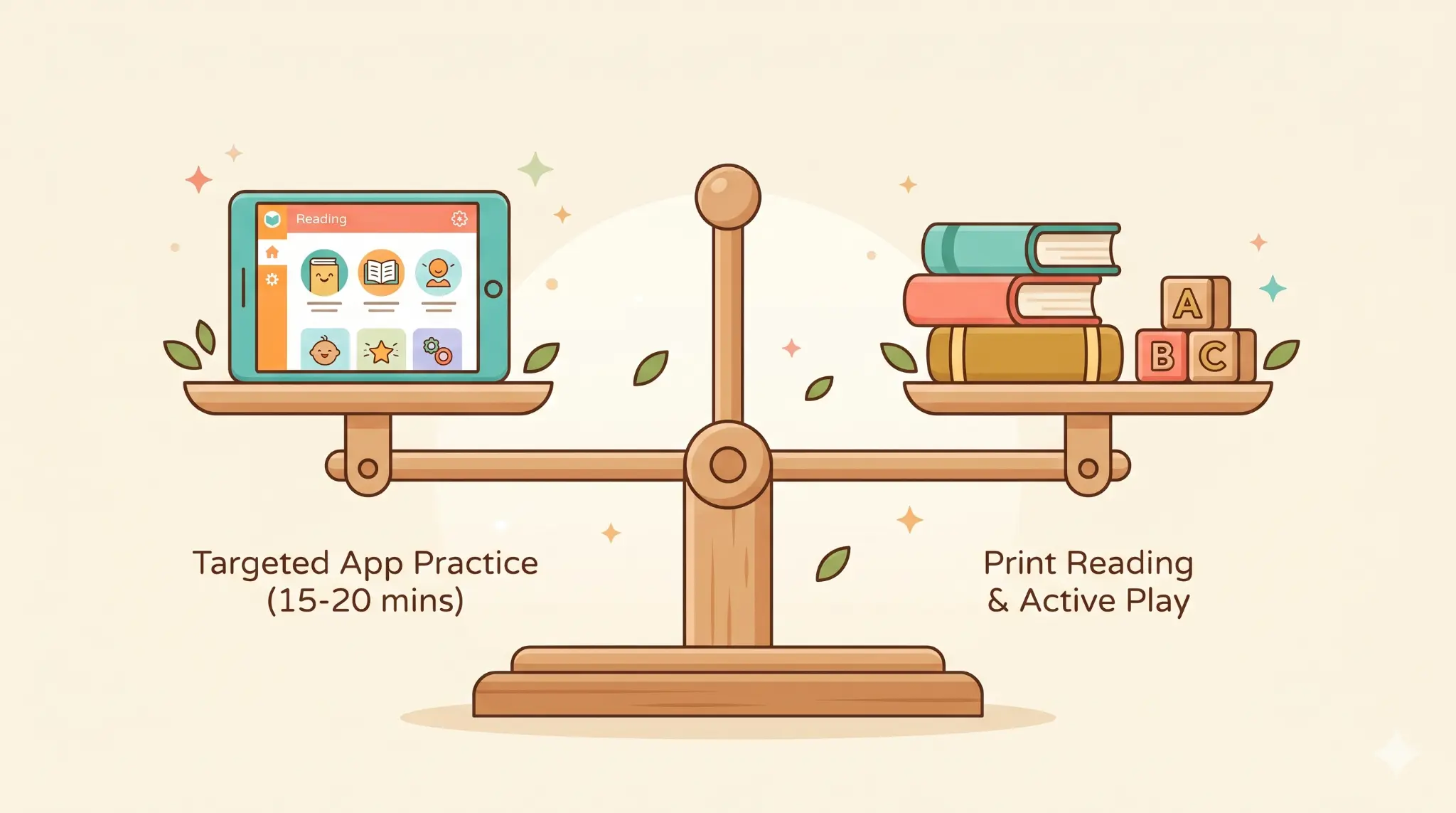
Successful implementation requires a strategic approach that balances screen time with traditional print reading. According to the American Academy of Child and Adolescent Psychiatry, non-educational screen time for children aged 6 and older should be limited to encourage healthy habits. Educational screen time, while beneficial, must also be carefully managed.
Classroom Implementation
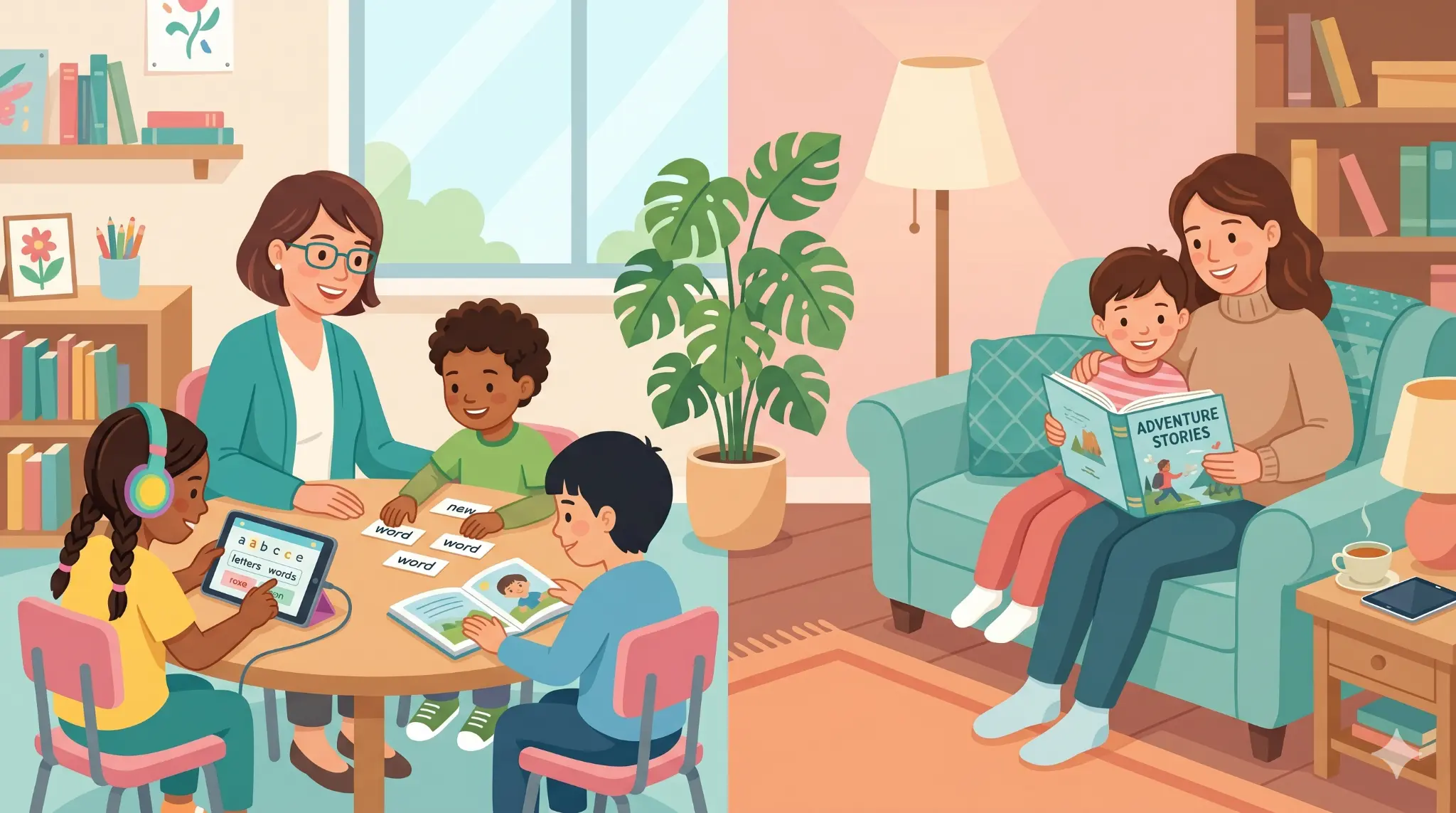
In the classroom, reading apps are highly effective during small-group rotations or literacy stations/centers. While the teacher works directly with one group, other students can engage in targeted, adaptive practice on their devices. These apps are also valuable during Response to Intervention Tier 2 blocks, providing intensive, systematic instruction on specific foundational skills. Research suggests that Tier 2 interventions should occur in small groups of 3-4 students, meeting 3-5 times a week for 20-40 minutes.
Home Implementation
At home, parents can use reading apps to reinforce the weekly skill focus from school. Establishing family reading routines that blend digital and print reading is ideal. For example, a child might spend 15 minutes on a phonics app and then read a physical book with a parent for another 15 minutes. Many apps also offer offline printables to extend learning beyond the screen. A suggested schedule is 60–90 minutes per week per app category, split across 3–5 short sessions.
How Do Apps Support Differentiation for Diverse Learners?
One of the greatest advantages of digital learning tools is their ability to differentiate instruction for diverse student populations. Personalized learning pathways ensure that every student receives instruction at their instructional level.
- For Striving Readers: Apps can provide decodables at the student's exact instructional level, offer extra phonemic awareness practice, and deliver more frequent, corrective feedback.
- For Advanced Readers: Platforms can introduce morphology, Tier 2 and Tier 3 vocabulary words, and extended, complex comprehension tasks.
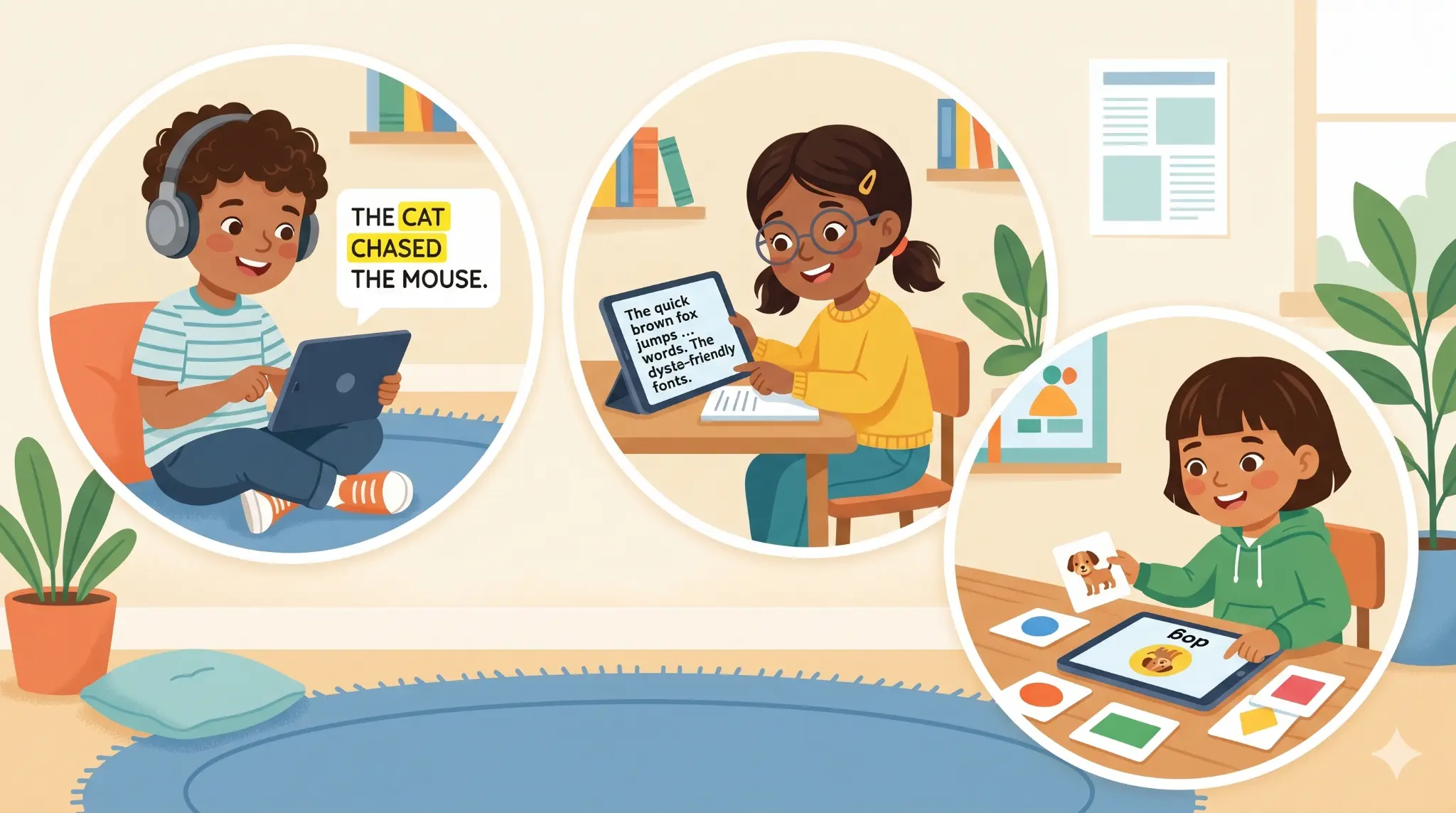
- For English Learners: Essential features include picture glossaries, translation options, audio support, and activities that build cognate awareness.
- For Students with Dyslexia: Look for apps that follow strict, systematic decodable sequences, provide explicit phonics instruction, utilize fonts with clear letterforms, and offer robust text-to-speech capabilities.
What About Privacy, Safety, and Accessibility?
When selecting reading apps for second graders, privacy and safety are paramount. Ensure the platform has clear data collection transparency and complies with child privacy laws like COPPA and FERPA.
Accessibility features are equally important to ensure all students can benefit from the tool. Key accessibility features include closed captions, high color contrast, keyboard navigation options, and audio pace control.
How to Navigate Budget and Licensing for Reading Apps
Understanding the cost model is crucial for both schools and families. Evaluate the differences between free and paid tiers; often, free versions lack the detailed reporting and adaptive features necessary for meaningful intervention.
For schools, explore classroom, grade-level, and district-wide licensing options. Additionally, look for platforms that offer tips or discounted access for family use and summer continuity to prevent the "summer slide."
How Can Teachers and Parents Measure the Impact of Reading Apps?
To ensure the chosen reading apps are effective, educators and parents must actively measure their impact.
- Set Weekly Goals: Establish clear targets, such as achieving ≥ 90% accuracy on phonics games, increasing Words Correct Per Minute in fluency tasks, or passing vocabulary quizzes.
- Utilize Teacher Dashboards: Regularly review data to identify error patterns and target small-group instruction accordingly.
- Collect Quick Checks: Supplement app data with offline, formative assessments like 1-minute reads, dictation sentences, and exit tickets to verify that digital skills are transferring to print reading.
Reading apps for second graders represent a powerful complement to traditional literacy instruction when selected thoughtfully and implemented strategically. By aligning app features with the science of reading, maintaining a balance between digital and print experiences, and personalizing learning for diverse students, educators and parents can leverage these tools to support every child's literacy journey. The key is choosing apps that prioritize evidence-based instruction, meaningful engagement, and comprehensive progress monitoring, ensuring that second graders not only learn to read but develop a genuine love of reading that will serve them throughout their academic careers.